Nick Cannon’s tattoos cover his chest, back, arms and neck. They include a chest compass, hometown lettering, large sleeve work, and a back piece that covered an older tattoo of Mariah’s name. He has described tattoos as taboo in his childhood home, then later used them to mark different parts of his life.
The pieces don’t all share one style. Some are personal references; others follow the separate themes Cannon has described for his arms. The photos show both the larger designs and the smaller marks around them.
Nick Cannon’s chest and shoulder tattoo coverage
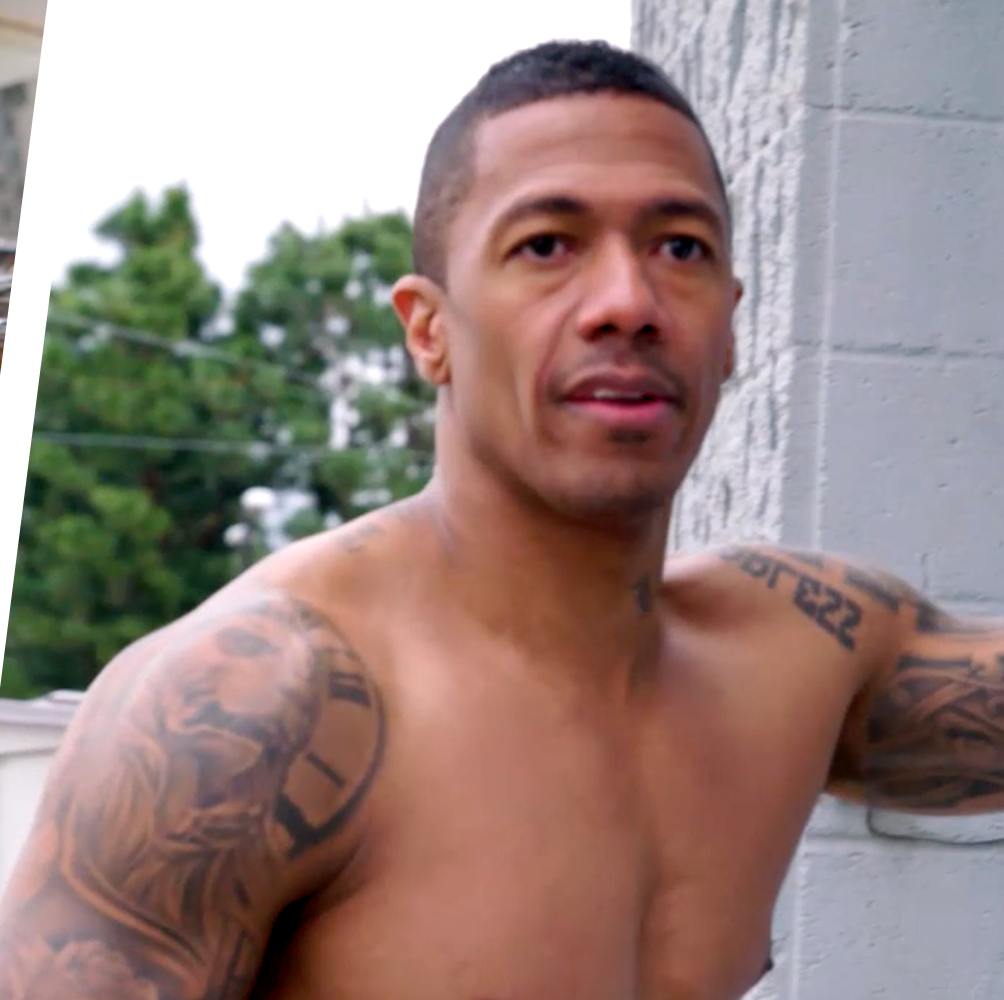
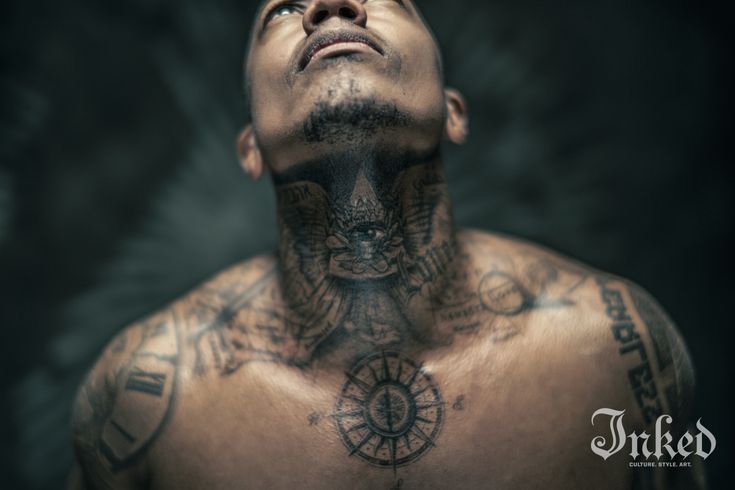
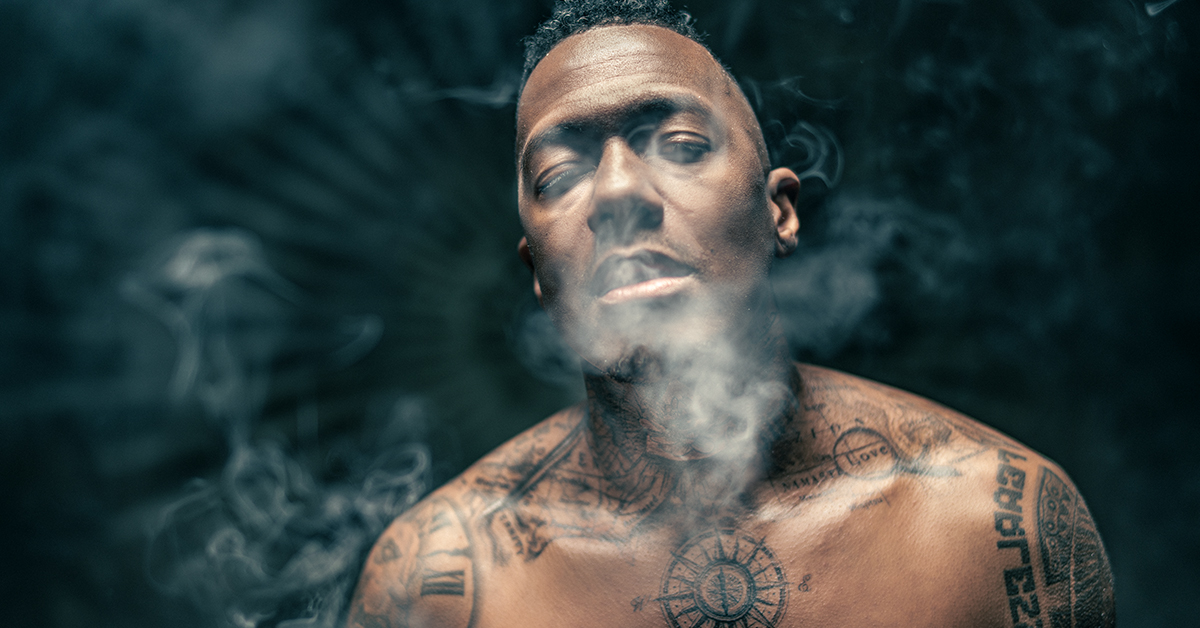
A compass sits in the centre of Cannon’s chest. It has a traditional face and circular outline, with lines continuing toward the neck and shoulders so it reads as part of a larger layout.
Cannon has described the compass as a reminder of direction, balance, and staying grounded through change. He has also connected it to his path from southeast San Diego into music, comedy, television, business, and family life.
The chest gives the circle room for its cardinal points and smaller markings. A stencil should be checked while standing and moving, since the chest and shoulders shift as you breathe and raise your arms. A map line, star, or date can add a personal detail without crowding the compass.
The 2021 chest-and-neck session at Inked NYC
Inked’s 2021 coverage identifies Maria Garza and Sherri Austria-Portela as the artists who worked on Cannon’s chest and neck over two days. Cannon described the compass as a symbol of direction, balance and staying grounded. The photographs from that session show how the compass connects with the surrounding neck work.
Read Cannon’s own explanation in his Inked interview.
Nick Cannon’s full back crucifix and cover-up tattoo
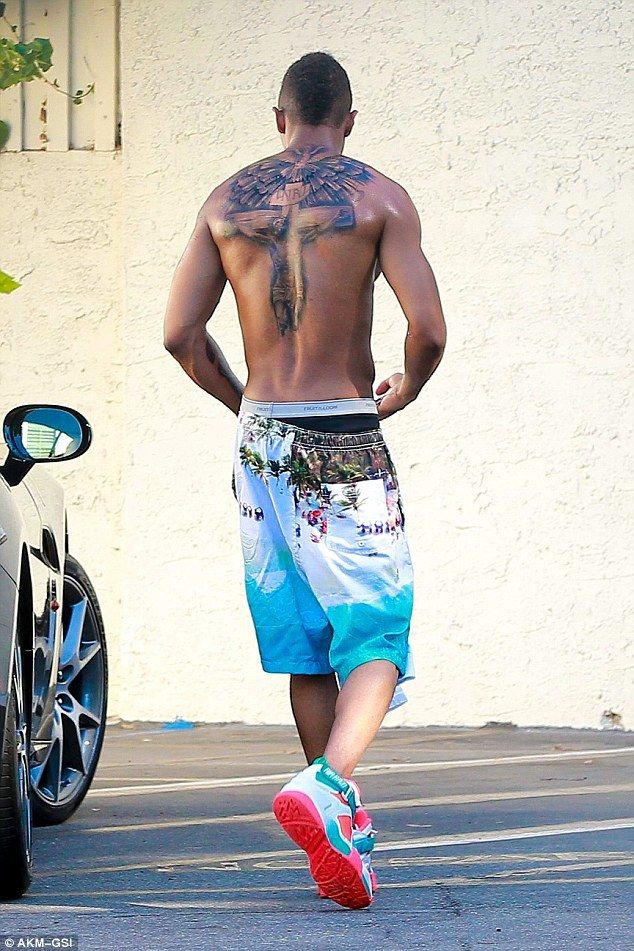
Earlier photos show the name Mariah across Cannon’s back. After their relationship ended, he covered it with a large religious design showing Jesus on the cross, wings, and layered shading across the upper back.
A cover-up has to work over the old lettering, not on blank skin. The cross, wings, and shading needed enough scale and contrast to cover the previous tattoo. That is why the replacement design extends across most of the upper back.
For a cover-up, an artist needs clear photos of the old work and its touch-ups. The existing ink affects which shapes and sizes will work. The new design may need to be larger than the original.
Religious imagery can be handled in many styles. Cannon’s piece is a large, shaded composition; a smaller cross, wings, or scripture can make a different design with the same subject.
Nick Cannon’s layered arm sleeves and hometown lettering
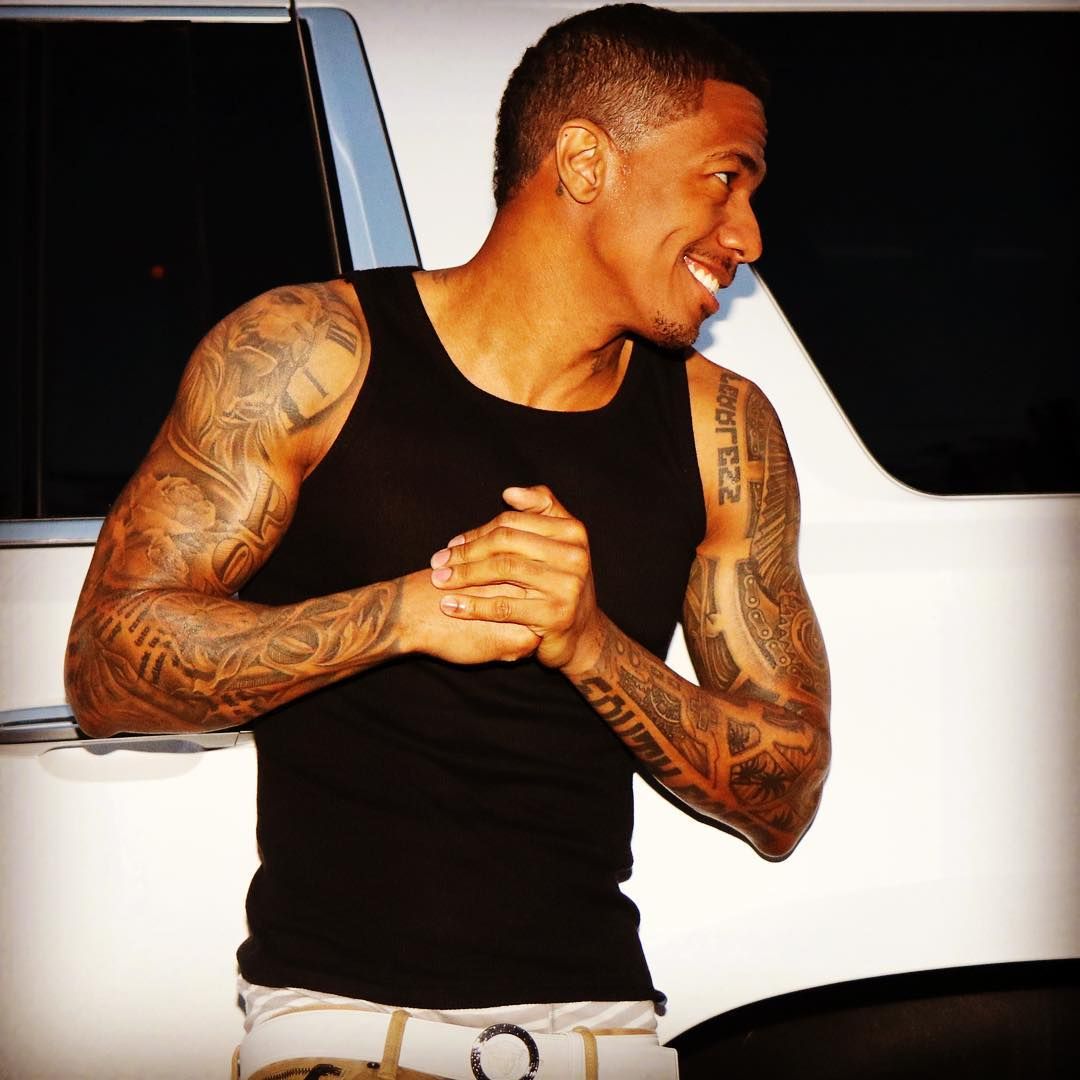
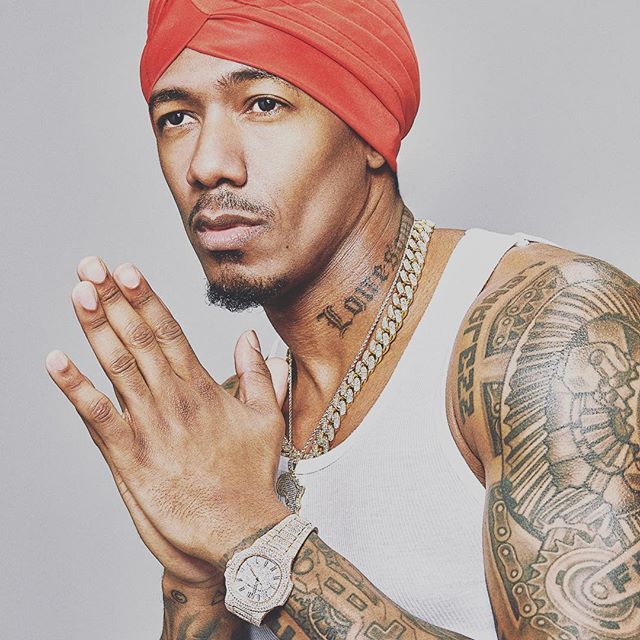
Cannon’s arms combine portraits, shaded figures, lettering, clocks, ornamental shapes, and darker blocks. He has talked about the words “South East” on his forearm, a reference to the part of San Diego where he was born and raised.
The place name gives the sleeve a direct link to his hometown. Larger images and shading sit alongside it, with different sizes and textures keeping the arm from reading as one uniform patch.
The photo shows how the lettering and larger images fit together. A place name or phrase can act as one anchor in a sleeve, with other designs arranged around it. Open space helps the small text remain readable as the arm bends.
Nick Cannon’s chest and neck lettering tattoos
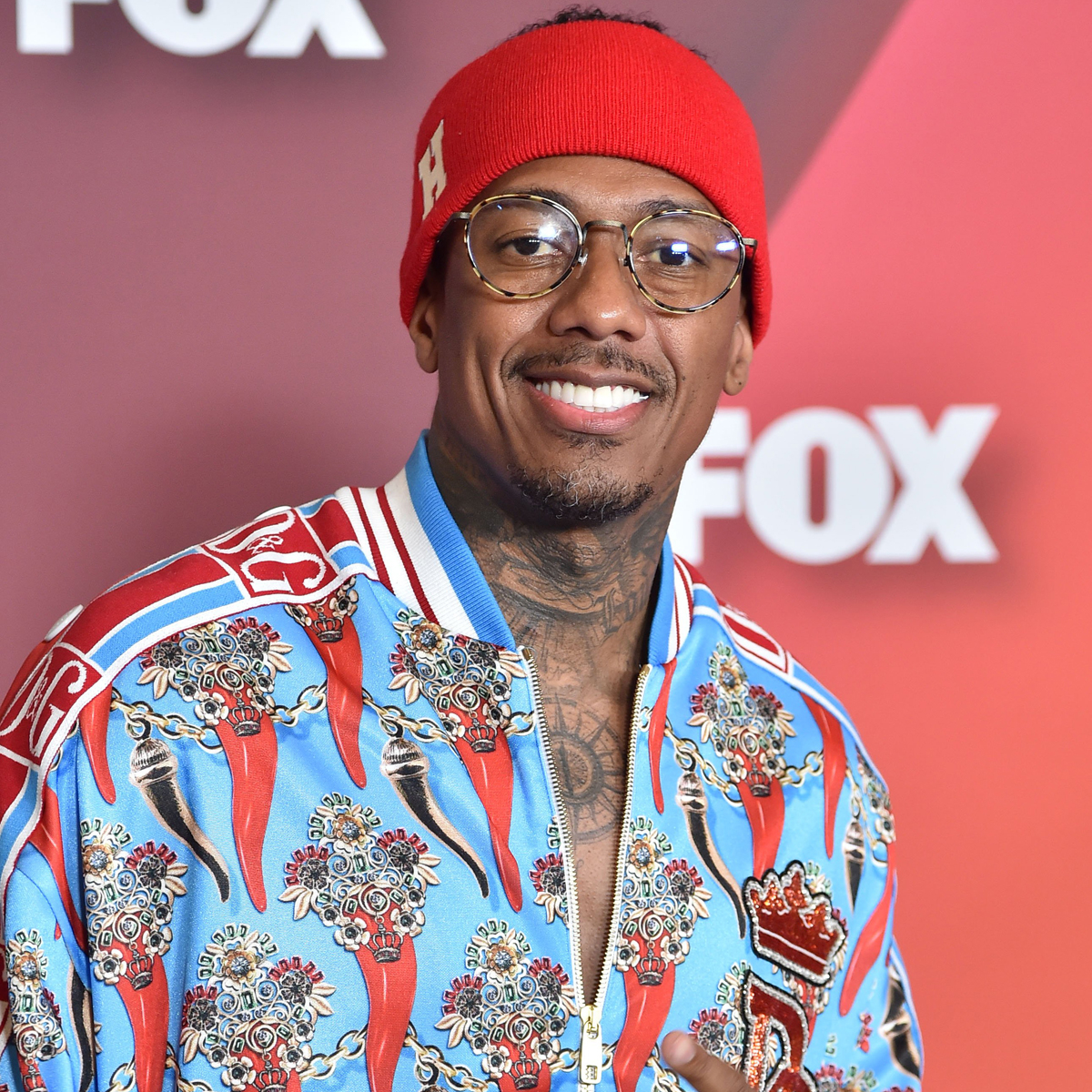
The upper chest carries larger symbols, while the neck has bold lettering and ornamental shading. The word “LOST” is often visible around the neck, beside lines that link the compass with the upper-body work.
Neck tattoos are harder to cover than arm pieces. The skin curves and moves, so lettering needs to remain readable at a normal distance. Cannon’s dark shapes make the word visible in close portraits; a high-chest placement offers a similar area with more coverage.
The compass gives the lettering and surrounding lines a point of reference. A short phrase can follow the curve of the neck and collarbones, but it doesn’t need to copy Cannon’s wording or layout.
Nick Cannon’s digital and analog arm tattoo themes
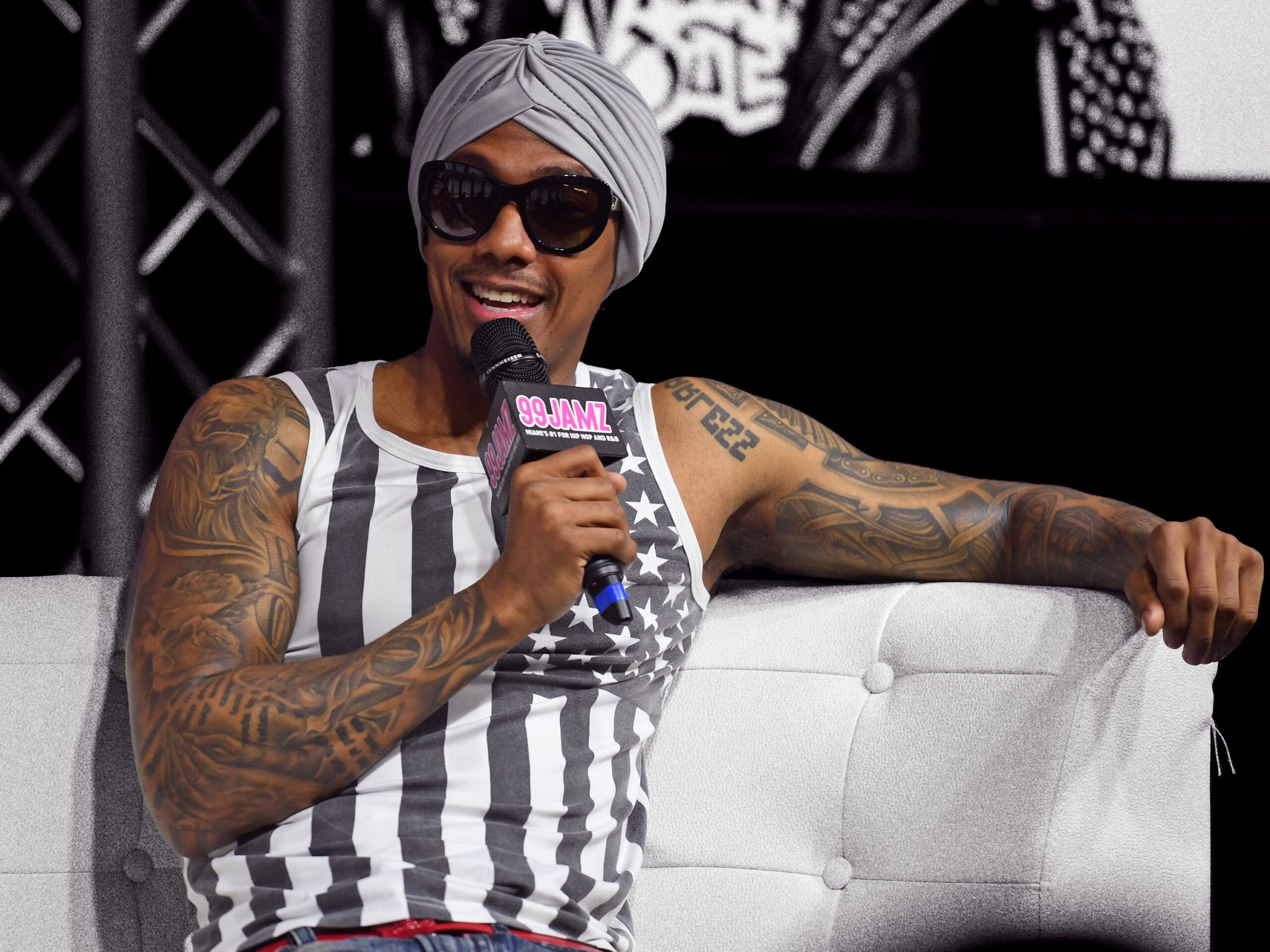
Cannon has described the two arms as having different themes. One side is more artistic, historic, and analog; the other includes digital references such as time displays, Nintendo controllers, the Terminator, and mechanical gears.
A theme can connect designs without making them all the same. For a pair of sleeves, the organizing idea might be two different interests or parts of a life. It can guide choices even if other people don’t recognize it.
The digital side includes recognizable objects and machinery; the other can use portraits, maps, or traditional imagery. Different subjects can sit together when the layout has a plan.
Cannon’s explanation makes the concept clearer than trying to infer a theme from one photo. His collection combines several distinct images, while each arm has a direction that he has described.
The chest compass, back cover-up, “South East” lettering, and two arm themes point to different parts of Cannon’s life. The designs don’t need to match for their placement and meaning to connect them.
More musician tattoo guides
More photographs of Nick Cannon’s tattoos