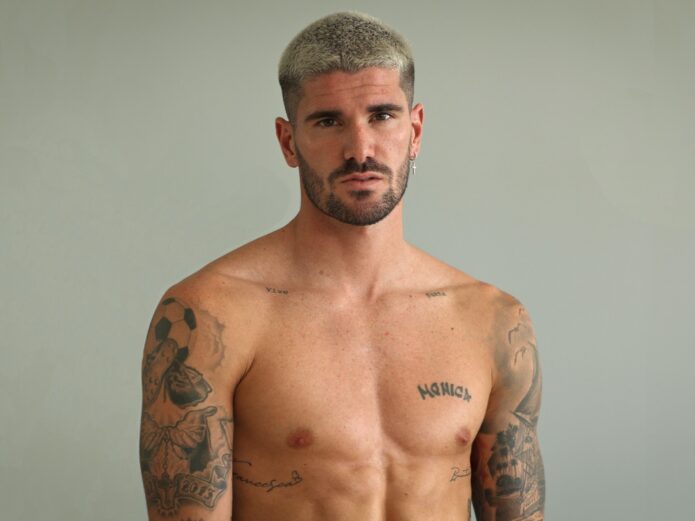
Rodrigo De Paul’s tattoos spread across his chest, arms and back. In match photos, most are covered by his shirt; clearer portraits show the family lettering, relationship names, religious details and larger artwork. The photos make it easier to judge where each piece sits and how much space it takes up.
The featured portrait is separate from the six tattoo photos below. Together, those images show the chest, sleeves and tiger back piece from different angles. Where De Paul hasn’t explained a symbol, I’ll stick to what the photograph shows.
Rodrigo De Paul’s Monica lettering keeps family close
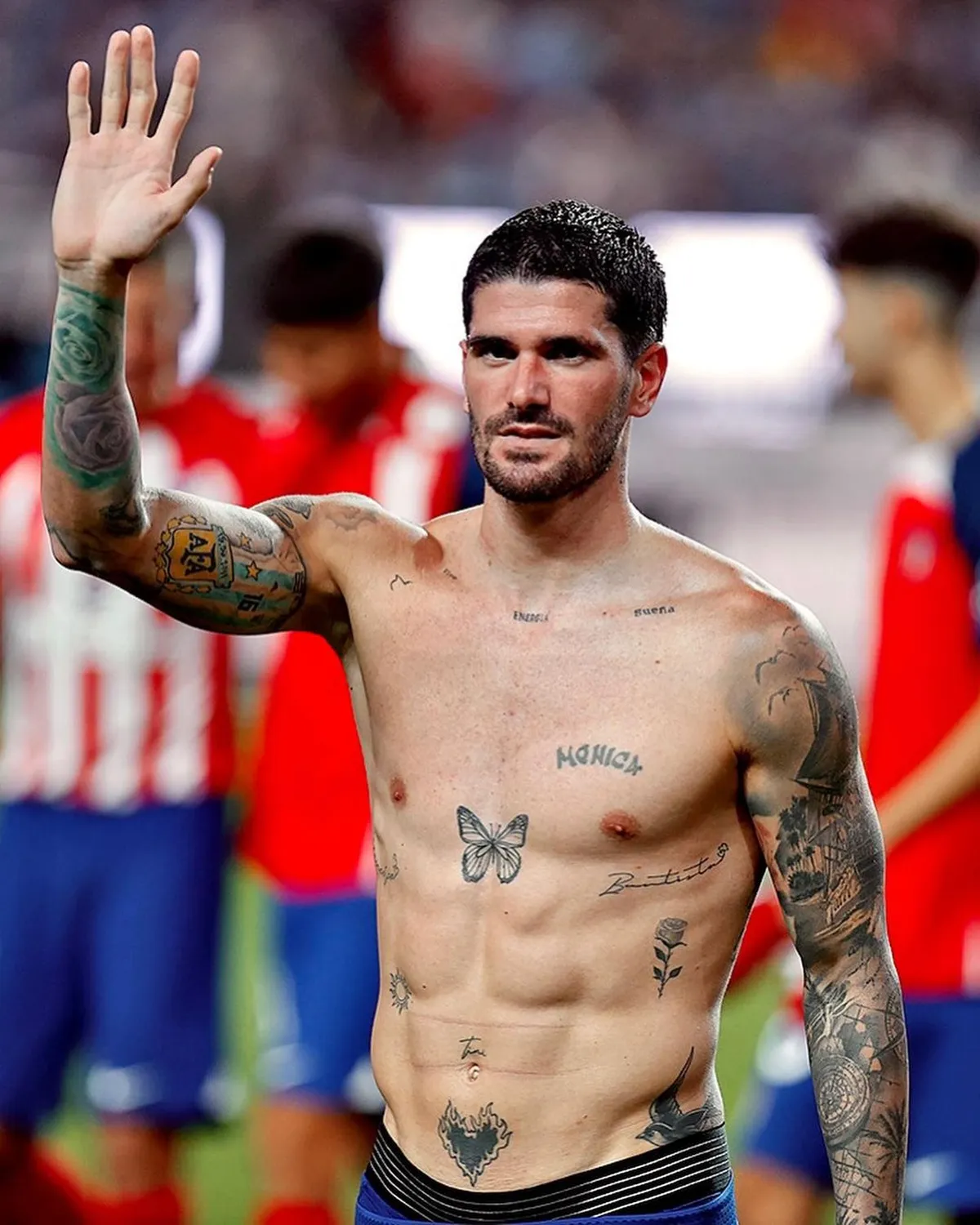
In this front-facing photo, the word Monica is one of the easiest pieces to read. It sits among smaller marks on De Paul’s chest and arms, with a butterfly and darker linework nearby.
The lettering is fine and open, while the surrounding tattoos use heavier shading and outlines. The mix looks like it took shape over time, rather than being planned as one continuous design.
The Monica lettering stands out in a regular portrait. The surrounding work frames it, so the name feels part of a larger collection instead of a single isolated word.
The butterfly on his chest is one of his clearest symbols
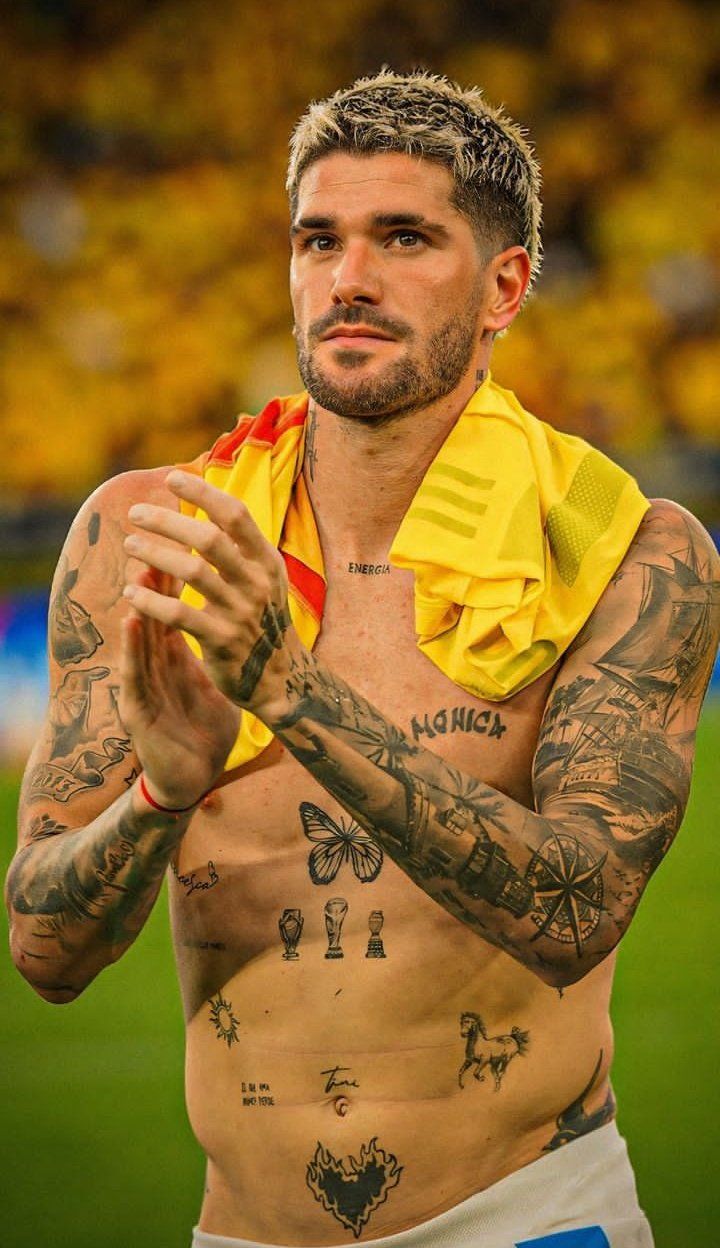
The butterfly sits high on De Paul’s chest. Its wings give the front a softer shape beside the lettering, while the darker arm work makes the design easier to pick out.
The second photo catches the chest from another angle. As his shoulders turn, the light falls differently across the shading, and lines that disappear in a straight-on crop become clearer. The tattoos follow a surface that moves, so no one view captures them all equally well.
The butterfly gives the front some open space. His arms carry denser work; the lighter chest image keeps the torso from reading as one dark block.
A tiger covers De Paul’s back
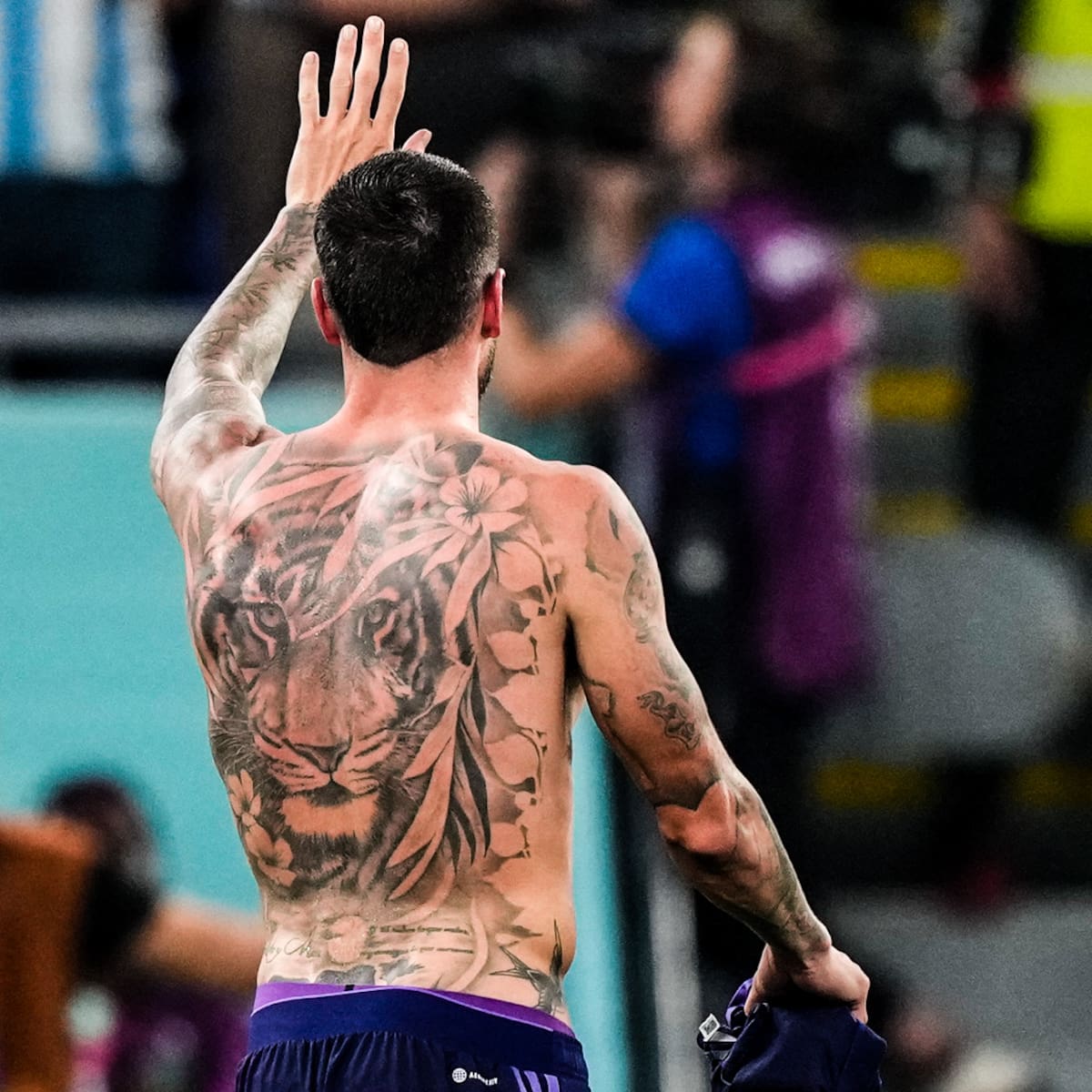
A large tiger with flowers around it covers much of De Paul’s back. The rear-view photo shows the piece across the shoulders and down the middle of his back, where the animal gives the design a clear centre.
Most football photos show De Paul from the front, and a shirt hides this work during a match. The back view fills in what those pictures miss: the collection includes a large piece behind the chest and sleeves.
The tiger changes the scale of the collection. The names and smaller marks sit up close; the animal and its stripes can still be made out in a phone-sized photo.
His sleeves mix football, faith and family details
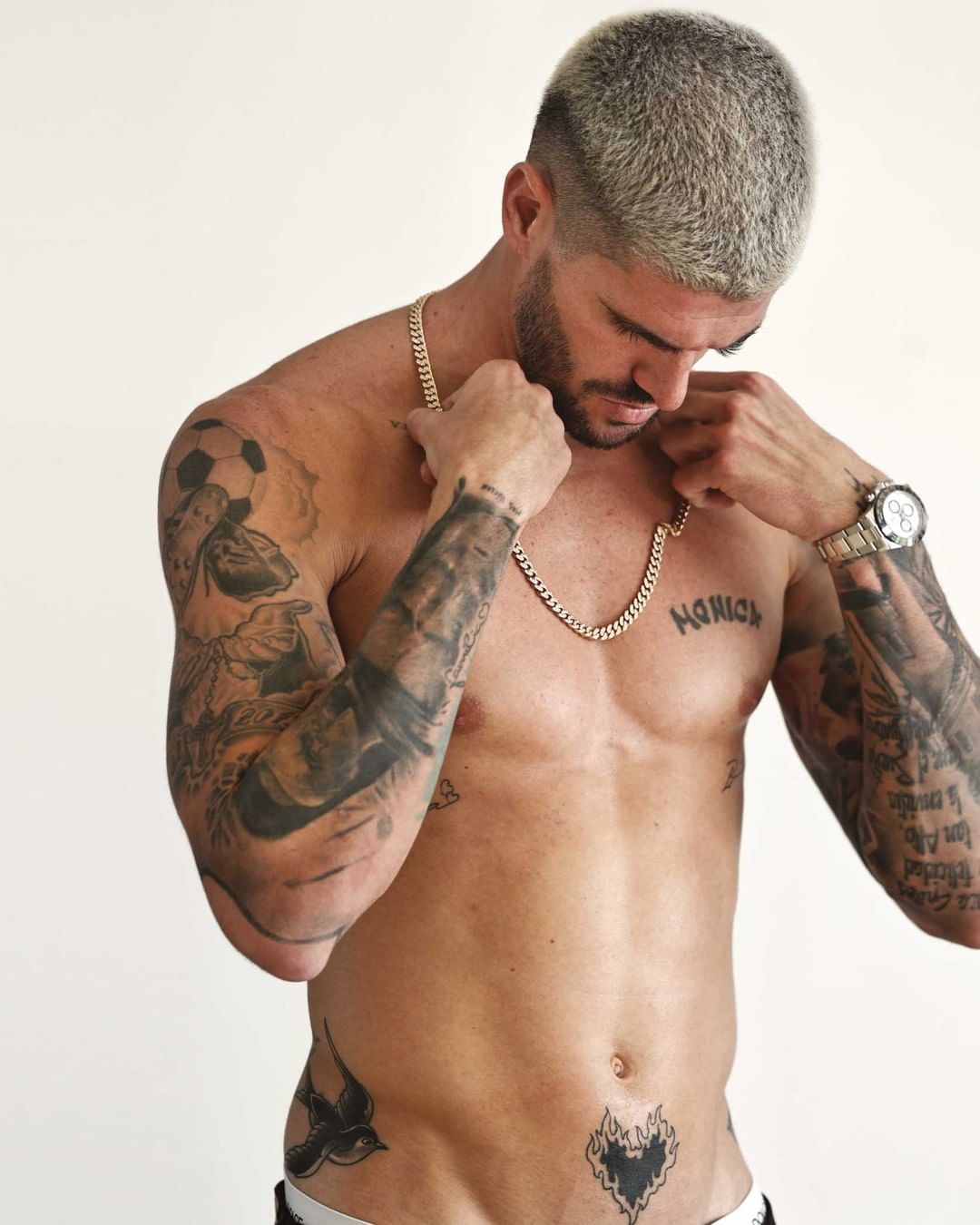
De Paul’s sleeves combine lettering, shaded images and small religious details. The two arms don’t look like matching panels: some areas are packed with ink, while others leave skin showing between pieces.
A studio portrait makes the upper arms easier to see without a football shirt covering them. Names, compact symbols and darker shapes run from shoulder toward forearm, with each arm arranged a little differently.
Family and faith references sit alongside the football context. The photos don’t explain every mark, so the description can stay with the visible mix of script, shading and smaller symbols.
The Tini lettering became a very public tattoo story
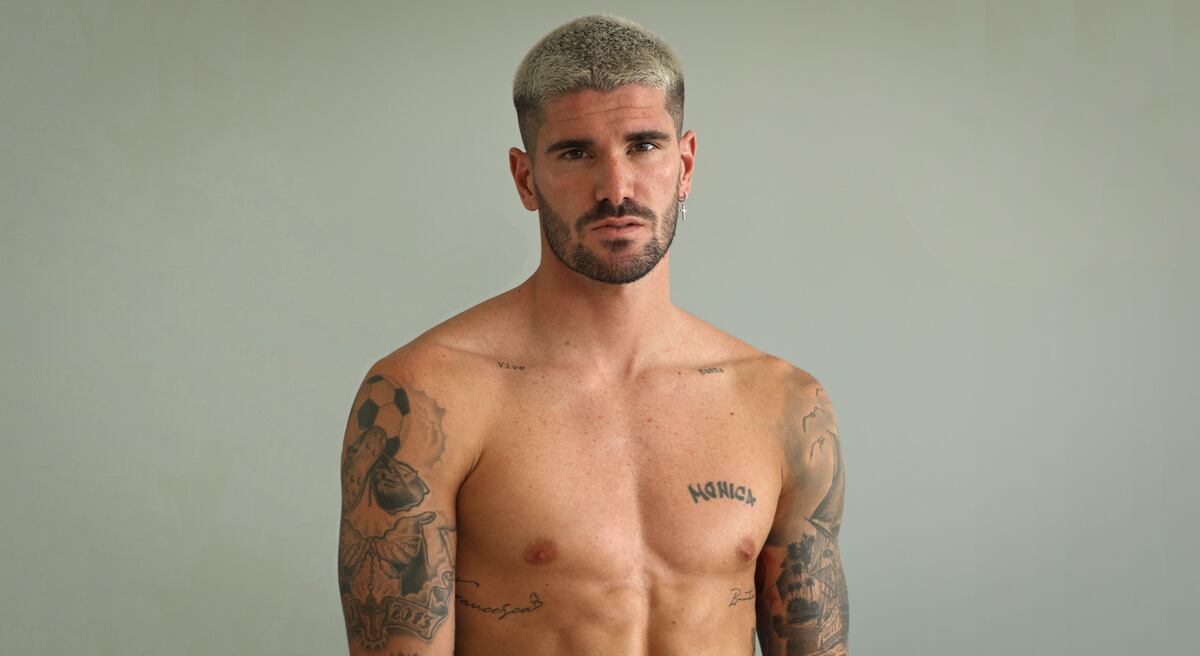
The Tini lettering drew attention while De Paul’s relationship with Tini Stoessel was widely discussed. News coverage focused on the name and its timing. The torso photo also shows how the lettering fits among the tattoos already on his chest and arms.
It sits near the Monica script, the butterfly and other smaller marks rather than on a blank patch of skin. In that view, the newer letters become one part of a layered collection.
“Tini” is easy to read in the photograph. The image shows its placement and scale; it doesn’t confirm every claim made about the tattoo or the relationship.
Compass, trophies and small symbols fill the gaps

Smaller pieces sit between the larger tattoos: compass-like shapes on the chest, football references and marks around the forearms. They link the chest and sleeves without taking up the same space as the tiger or the heavier arm work.
The Argentina kit photo shows how the tattoos appear in the setting fans usually see. His shirt covers part of the chest, but the forearm ink remains visible. The face is also clear, making this a useful view alongside the shirtless portraits.
Compass, football and family motifs add detail around the larger designs. The photos show their placement, even when they don’t reveal a confirmed meaning for every small mark.
How the different pieces sit together
The tiger takes up the back; the butterfly and names are visible from the front; the sleeves carry the densest mix of smaller designs. When De Paul is dressed for a match, some forearm tattoos are still visible while the chest and back are covered.
The collection doesn’t follow one subject. Relationship lettering sits beside family references, religious details and football-related imagery. Placement brings the pieces together: each design follows the body, changing shape as the shoulders turn and the arms bend.
The photos show how the collection has grown. New lettering sits among older work, and the large back tattoo gives the overall outline a different scale from the names and symbols on the front.
Some visual details are clear—Monica, Tini, the butterfly, tiger, script and religious marks. The photos don’t explain every small symbol, and there’s no need to supply a story for the ones De Paul hasn’t discussed.
Clear photos matter here. The rear view shows the full back piece; the close chest shots make the lettering easier to read; the Argentina portrait shows what remains visible in a match shirt. Together they give a fuller view than one generic portrait could.
For more athlete tattoos, browse the site’s athlete tattoo section. This guide uses the featured portrait separately and describes the tattoo details visible in the images.