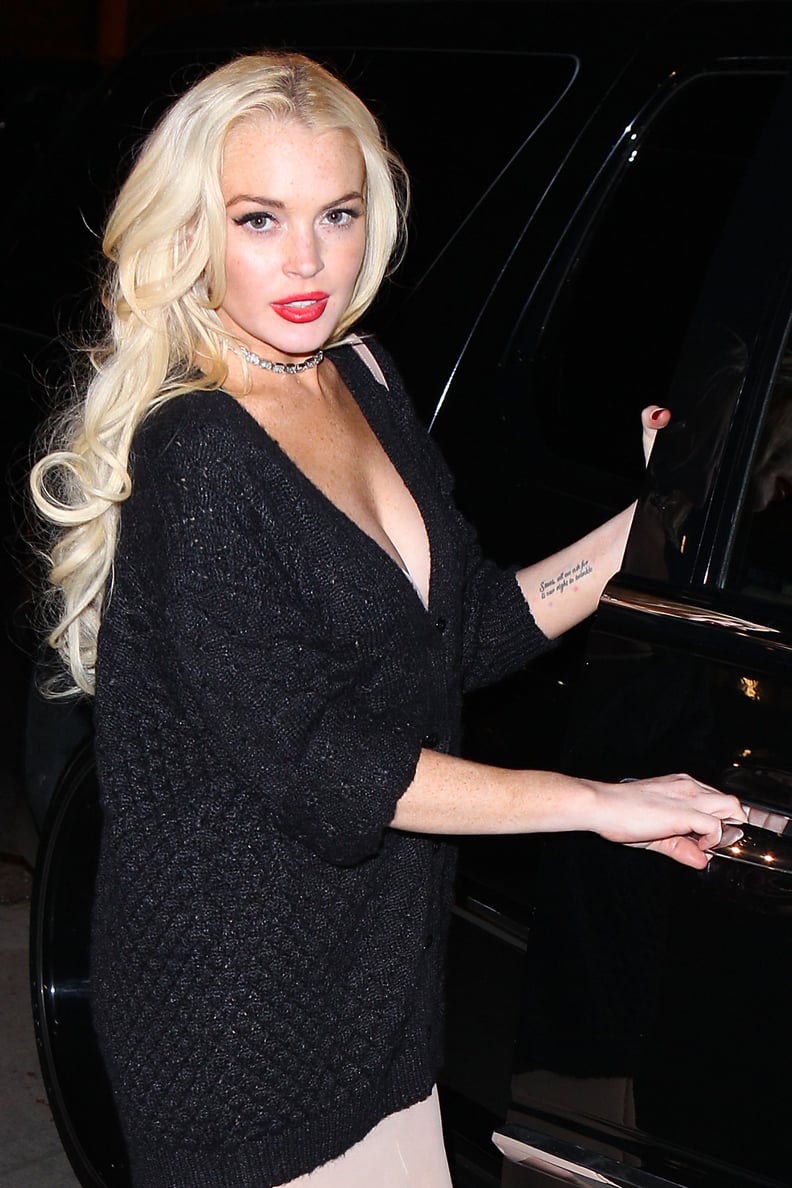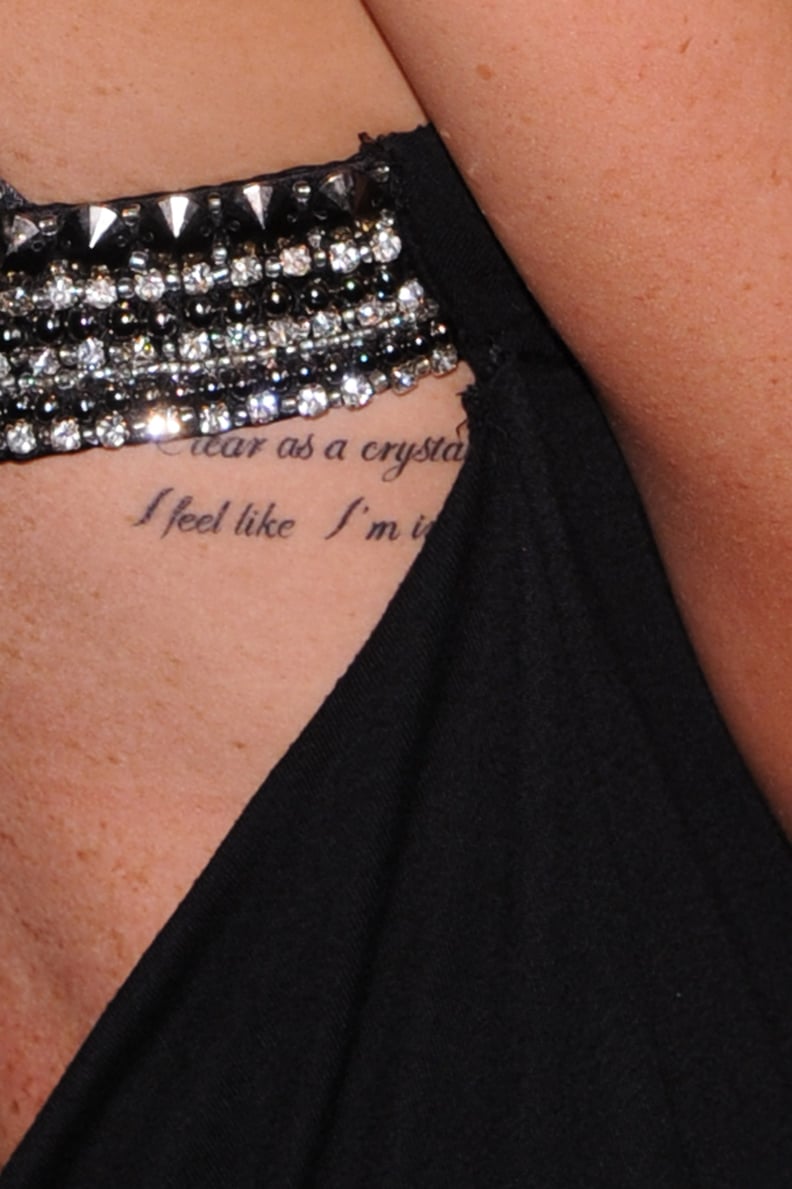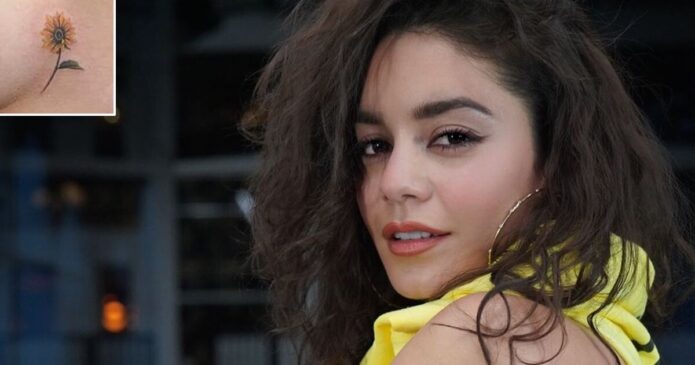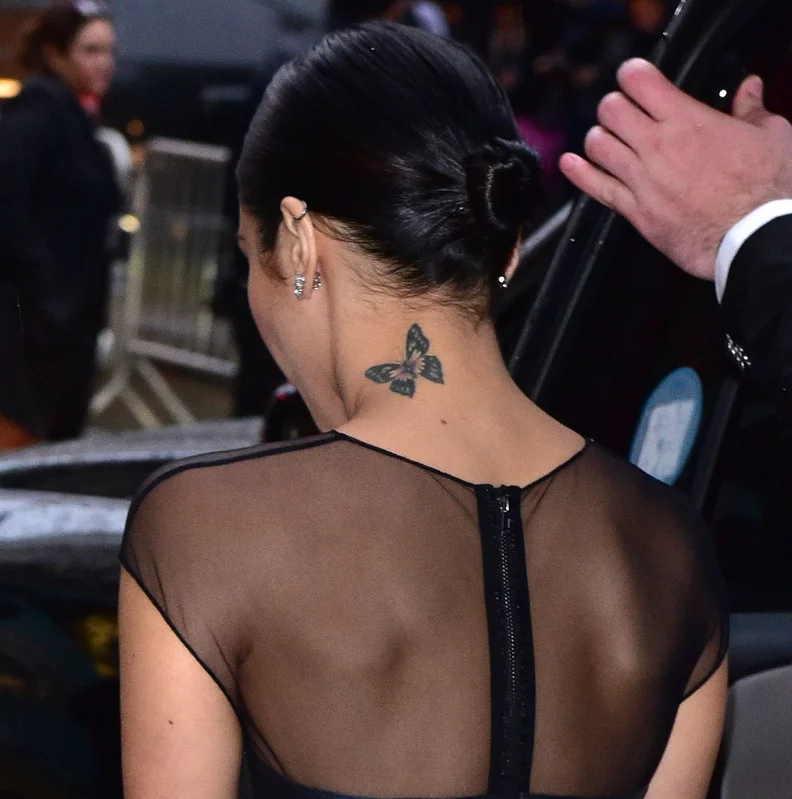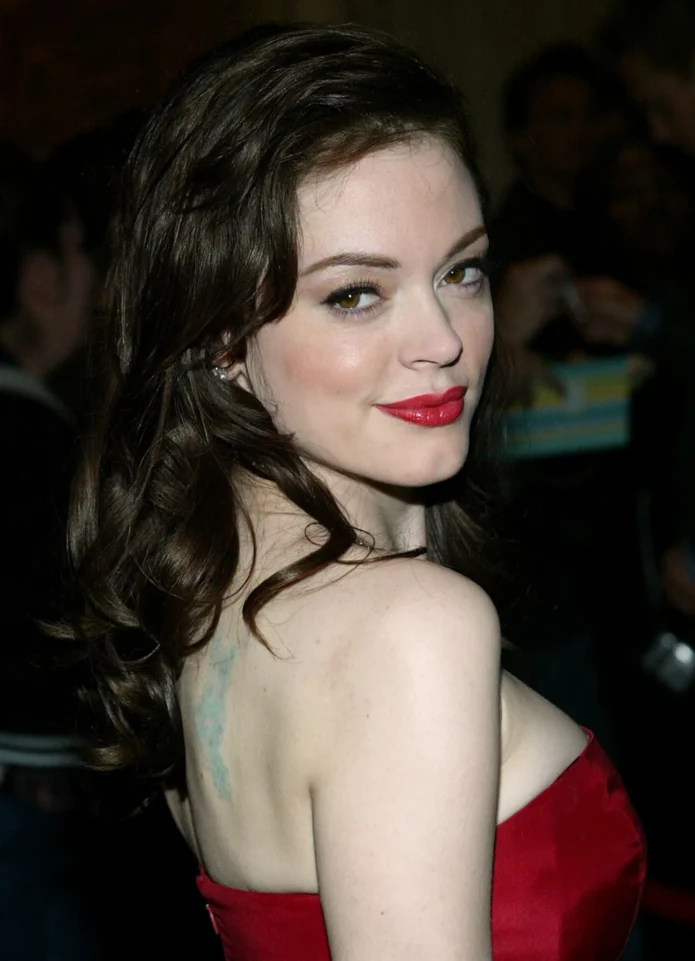
Actresses

Rose McGowan left one tattoo behind

Rose McGowan’s best-known tattoo was a 1940s-style pin-up on her right shoulder blade. She spent years having it removed. She has also talked about a tiny matching dot tattoo she shared with Asia Argento. The pin-up was large and public; the dot meant something to the two friends.

Together, they make a short but changing story: a visible back piece, a long removal process and a small friendship tattoo that later became part of a public falling-out. Photos show the pin-up at different stages, so the date and angle matter when comparing them.

The pin-up girl sat on Rose McGowan’s right shoulder blade
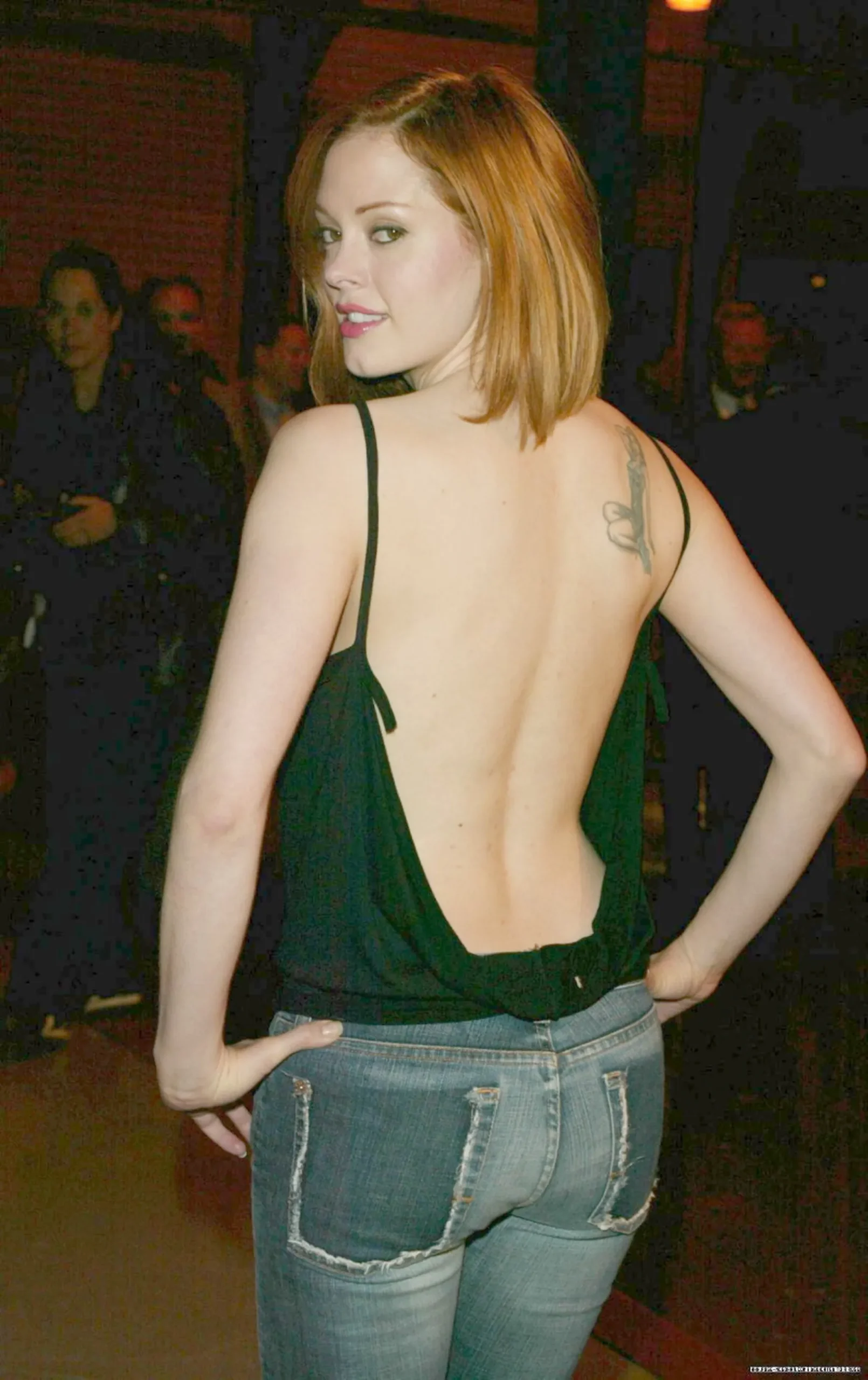
Rose McGowan pin-up back tattoo

McGowan’s signature tattoo was a large pin-up on her right shoulder blade. Tattoo histories and entertainment coverage describe it as a 1940s-style woman; some later summaries say she was riding a tiger. It showed whenever McGowan wore a backless dress, swimsuit or low-backed top.

The piece was visible in red-carpet photos through the late 1990s and 2000s. Its vintage look suited the old-Hollywood glamour of the time, but it wasn’t a character or logo from one of her films.

Photos vary in sharpness, and clothing, pose and lighting can hide part of the design. The clearest description is a large, 1940s-inspired pin-up on the right shoulder blade. Later accounts sometimes add the tiger, but the images don’t always make that detail clear.

The pin-up became a familiar part of McGowan’s early public image. It stood out during a period when her style was bold and confrontational.

Being known for a tattoo doesn’t mean being defined by it. McGowan’s acting, activism and writing have all moved through different phases. The pin-up belonged to one period of her image. It was memorable, but it wasn’t the whole story.

Why the large back tattoo was eventually removed
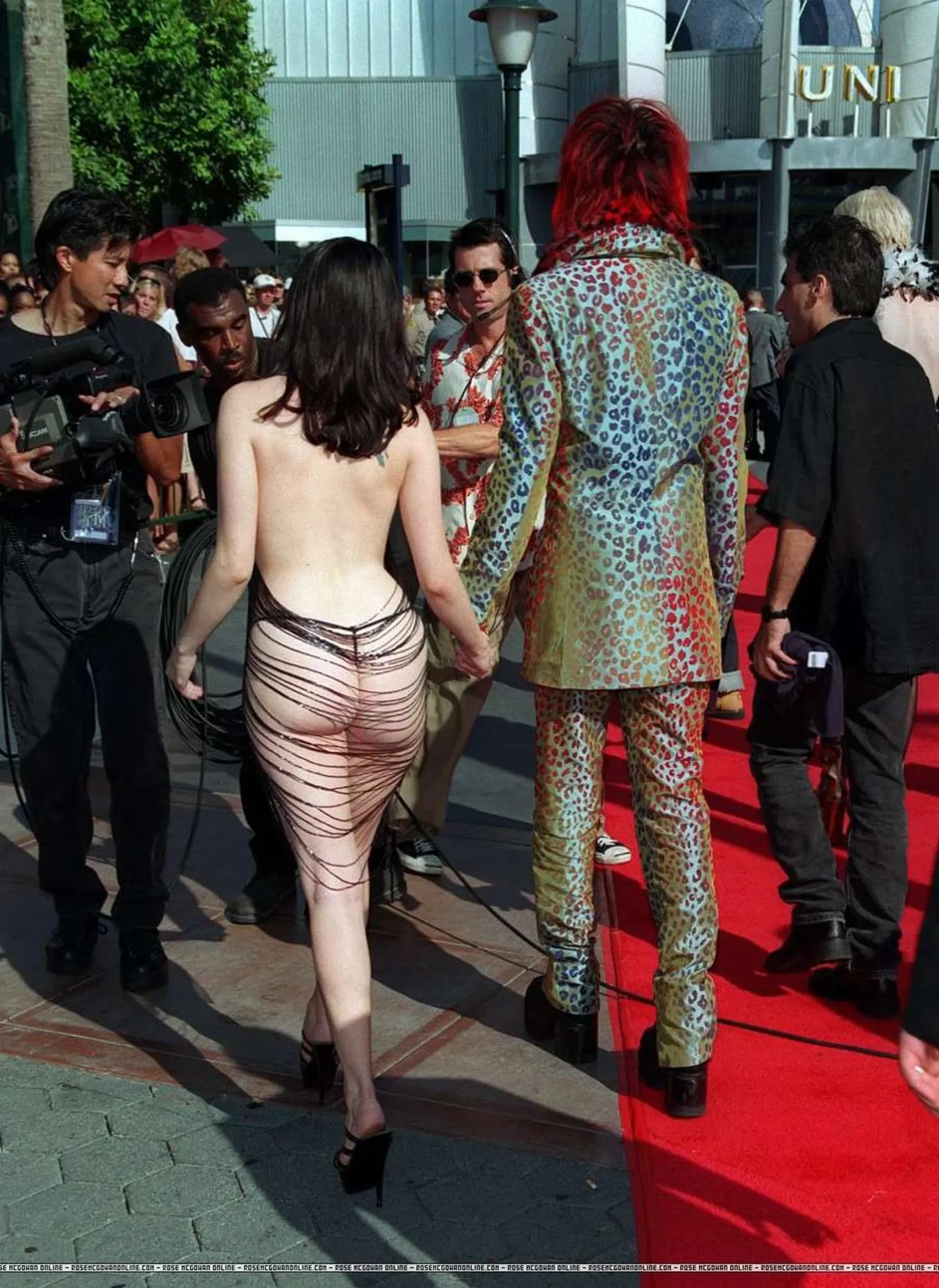
Rose McGowan back tattoo from another angle

McGowan later had the shoulder-blade tattoo removed over several years. A large, dark tattoo usually takes more than one laser session to fade, and the change can be gradual.

She hasn’t given a detailed public explanation for why she decided to remove it. Coverage confirms the removal, but doesn’t establish whether it was about regret, a change in taste or something else. It’s better to leave her private reasons open.

Older photos show the pin-up clearly; later ones may show faded outlines or traces. Those images can capture different stages of the same removal process, rather than different tattoos.

The shoulder moves with the back, and camera angle and flash can change how much ink appears in a photo. A mark that looks new may be the original pin-up at a later stage of fading.

The tattoo and its removal were two separate choices. The public record documents both, but not a precise explanation for the second.

The removal timeline is part of the tattoo’s story
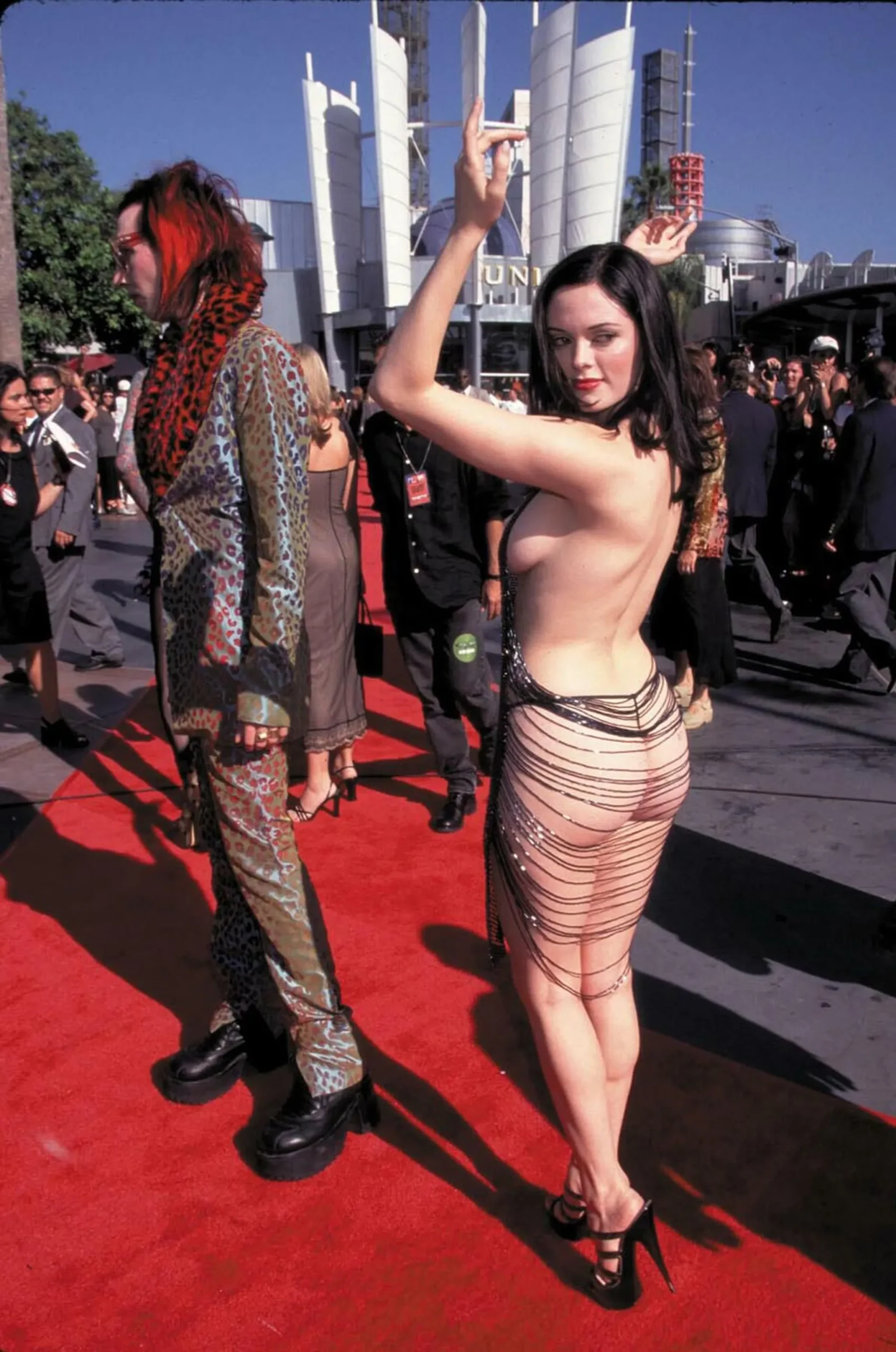
Rose McGowan shoulder blade tattoo

There isn’t a reliable list of removal-session dates. The broad timeline is clearer: McGowan once had a large, visible back piece; years later, she was having it removed; eventually, it became much less prominent in photos.

That explains why online galleries can appear to disagree. One shows a crisp outline, another partial fading, and a third very little visible ink. Without comparable dates and angles, those photos show change over time, not necessarily several versions of the design.

Celebrity tattoo stories often stop when the tattoo is new. McGowan’s story includes the years afterward. Removal was another deliberate decision, though the reason behind it hasn’t been explained in detail.

For years, the pin-up helped make McGowan recognizable from behind in photographs. As it faded, its absence became visible too. That change says something about how her public image shifted, even if it doesn’t tell us why she chose removal.

Calling it simply a “regretted tattoo” goes further than the public record allows. McGowan may have had several reasons, but she hasn’t laid them out publicly. The removal is documented; the motive remains private.

A tattoo can take on a different meaning as the person wearing it changes. McGowan’s fading shoulder piece makes that change visible.

Rose McGowan and Asia Argento shared a tiny dot tattoo
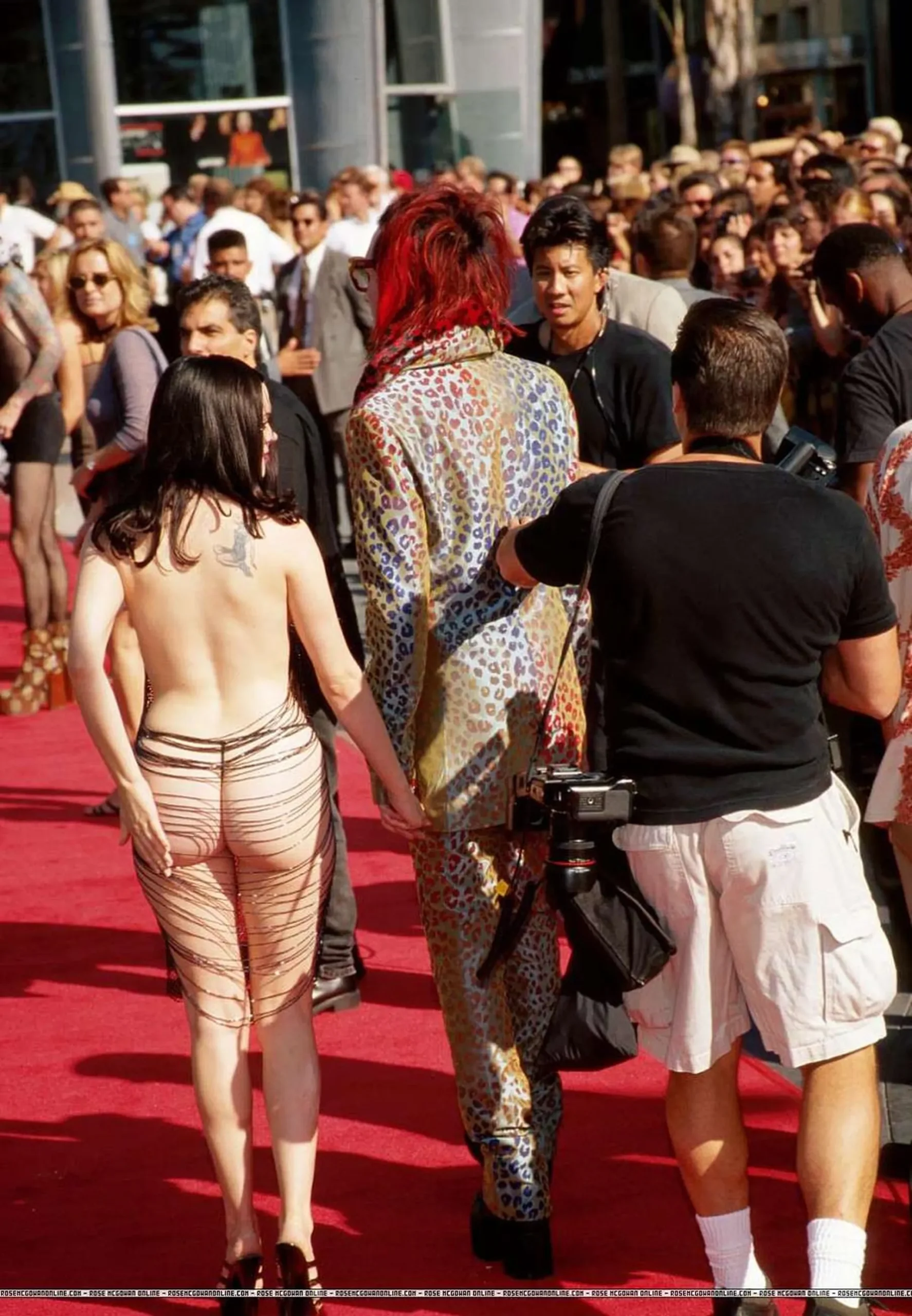
Rose McGowan tattoo visible at a red carpet event

McGowan said in a 2018 interview about their friendship that she and Asia Argento got matching dot tattoos. It was a tiny mark, very different in scale from the pin-up and tied to their relationship.

The public account identifies the tattoo as a dot but doesn’t establish its exact location. Small marks are easy to miss in photos, and jewelry or skin texture can obscure them.

The matching tattoo came up again after their friendship ended. Argento later covered her dot with a bloody dagger; that was Argento’s tattoo, not part of McGowan’s collection. The cover-up is separate from the pin-up removal.

For McGowan, the dot marked closeness at one point in the friendship. Later, it became part of the public story of their falling-out. The tattoo stayed the same; the relationship changed.

A dot can be almost invisible to anyone outside the friendship. Its context is clear here because McGowan spoke about it herself.

What can be said confidently about her current ink
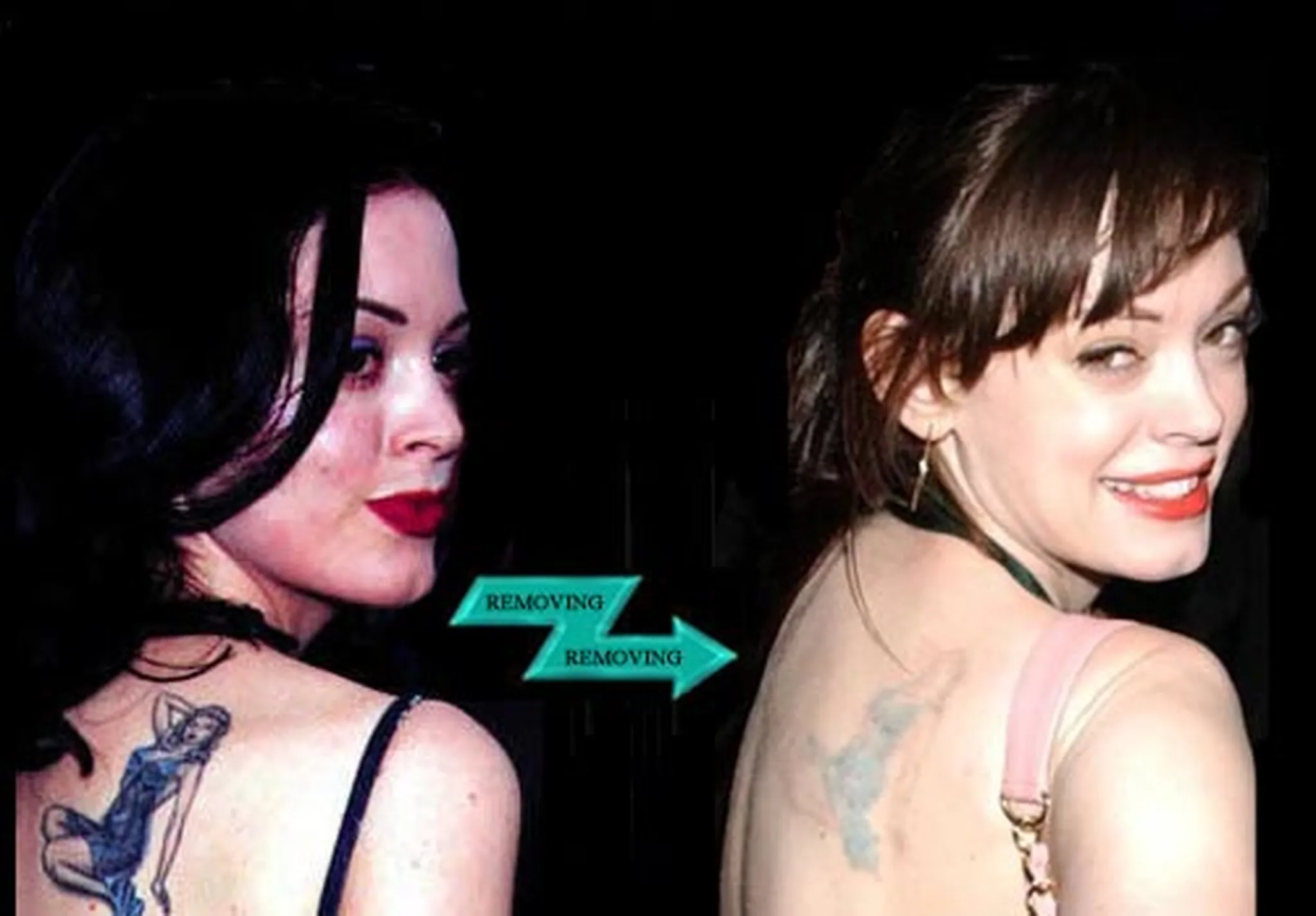
Rose McGowan tattoo removal before and after

The best-documented pieces are the large vintage-style pin-up on McGowan’s right shoulder blade, which she had removed over several years, and the matching dot tattoo with Argento. Some descriptions say the pin-up showed a woman riding a tiger, but the photos don’t always confirm that detail.

There may be other small marks in individual photos, but the available scans and cropped images aren’t enough to identify them confidently. A clear account leaves uncertain details unresolved.

The pin-up wasn’t intact in every period: older photos show it clearly, while later ones show its removal. The dot was a separate, tiny shared tattoo, not part of the back piece.

One large image became part of McGowan’s early public style, then faded from view. The dot recorded a friendship and later appeared in coverage of its breakdown. The two tattoos tell different stories, even though both changed meaning over time.

Rose McGowan’s ink is really a story about changing identity
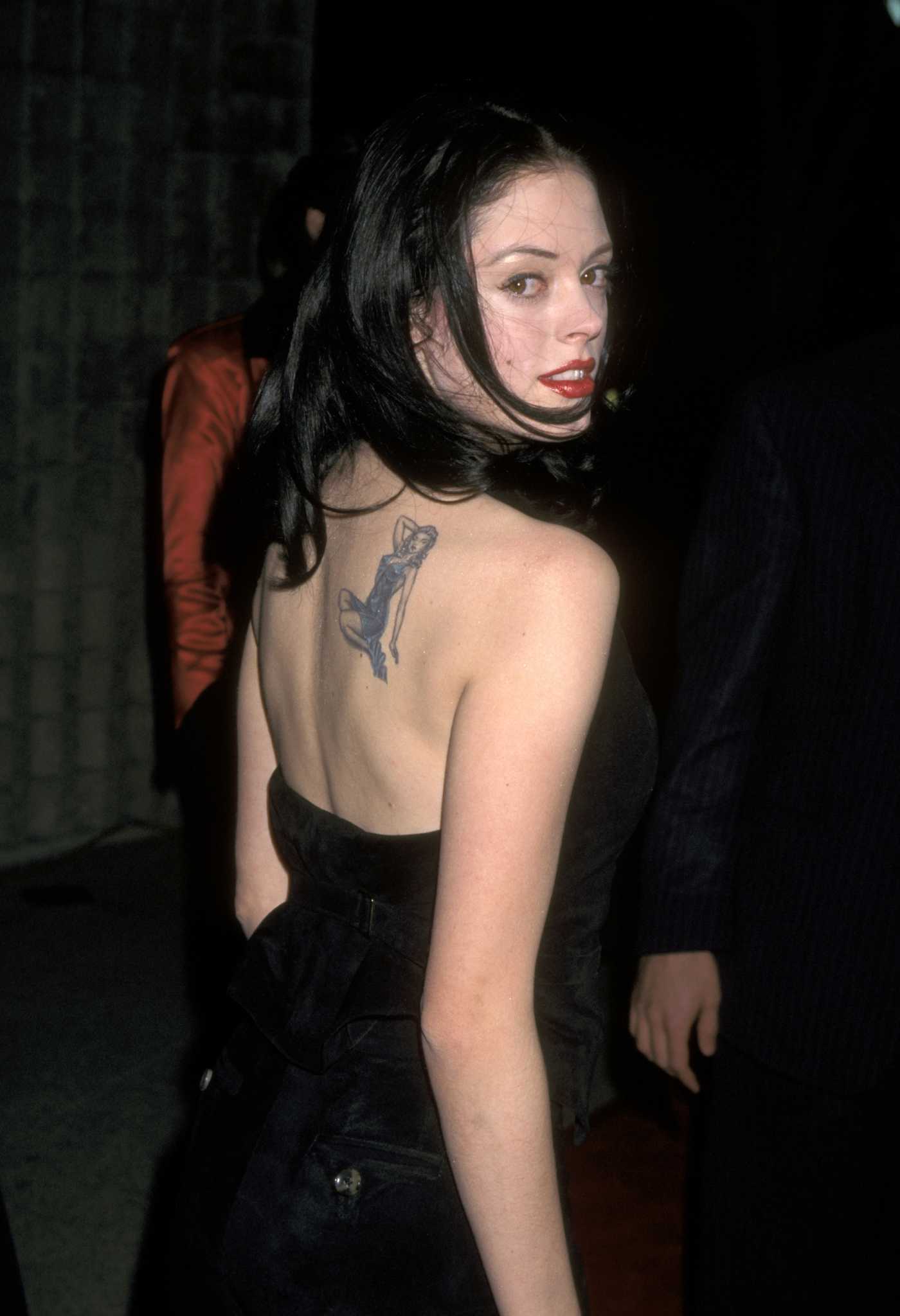
Rose McGowan early back tattoo

The back piece and the dot were very different. The pin-up was large and easy for photographers to capture; the dot was small and meaningful because Argento had one too. One was part of McGowan’s public image, the other a private connection between friends.

As the pin-up faded, photos recorded a change in McGowan’s appearance over several years. The images show that the tattoo was there, then gradually less visible. They don’t explain every reason behind her decision to remove it.

The public record gives us the design, the removal and the matching dot. It doesn’t give us a full account of McGowan’s private motives. That’s enough to see how the tattoos changed alongside her life without guessing at what she hasn’t shared.

Watch a Rose McGowan interview

No dedicated tattoo-tour video focused on McGowan’s ink was available in the material reviewed, so this broader interview is included for context. The tattoo details above come from published coverage and McGowan’s own comments.
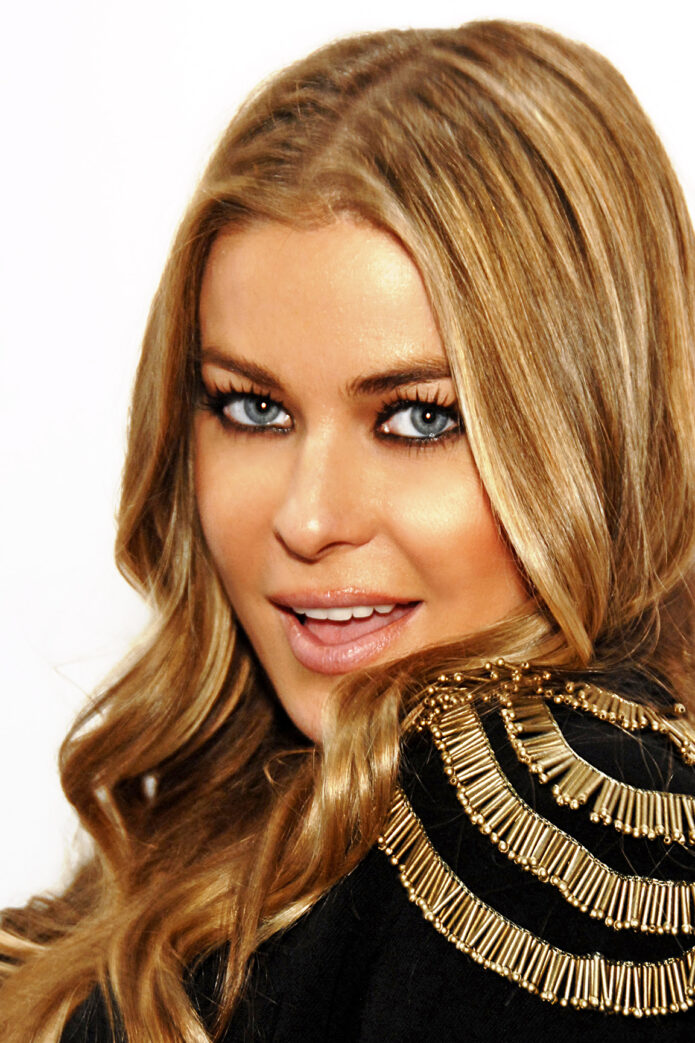
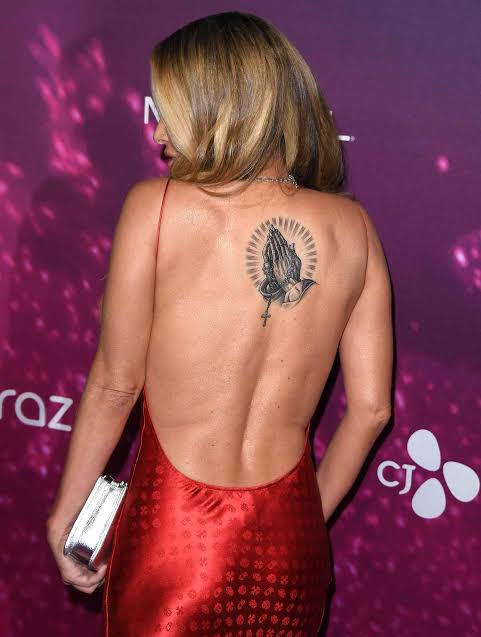
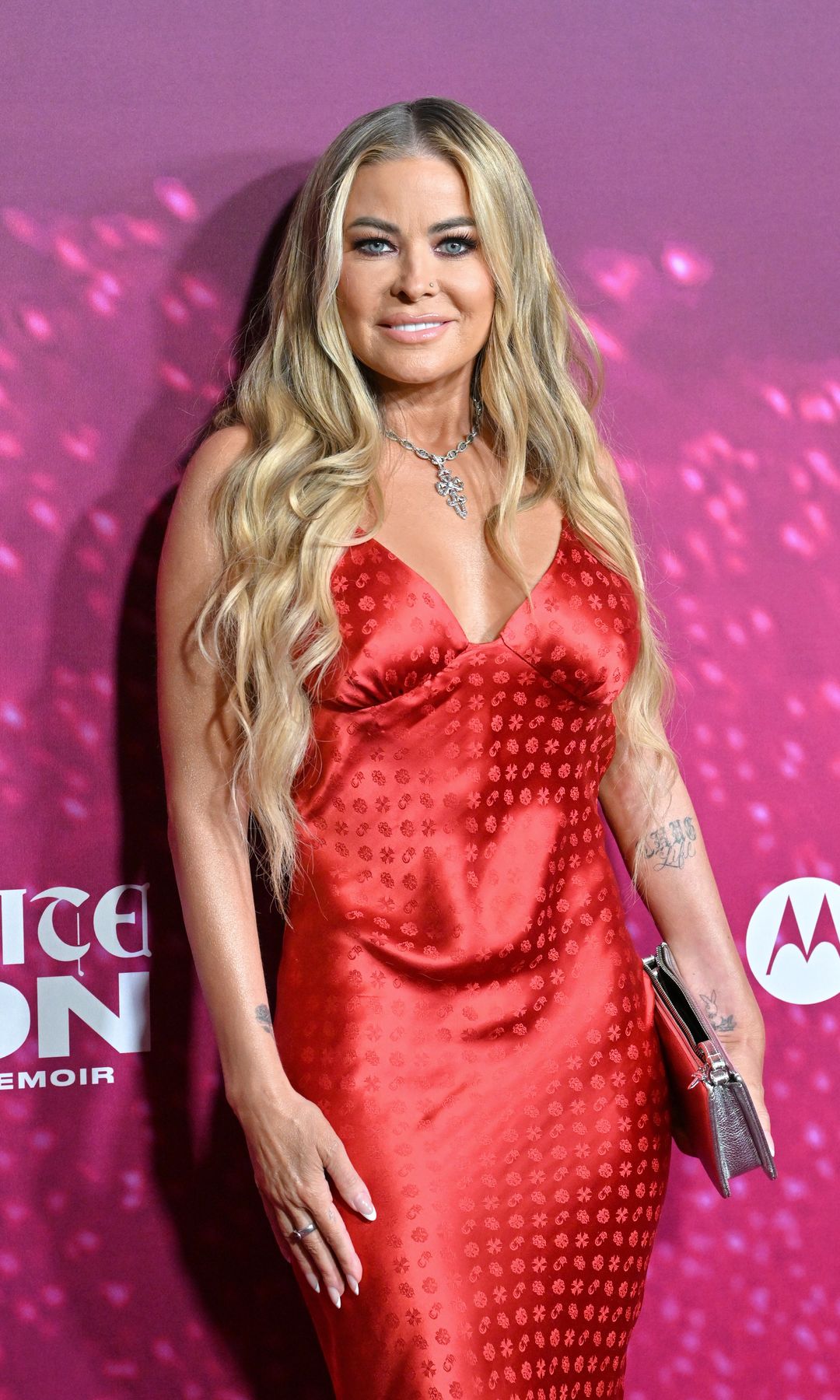
Carmen Electra turned a new back tattoo into a warning

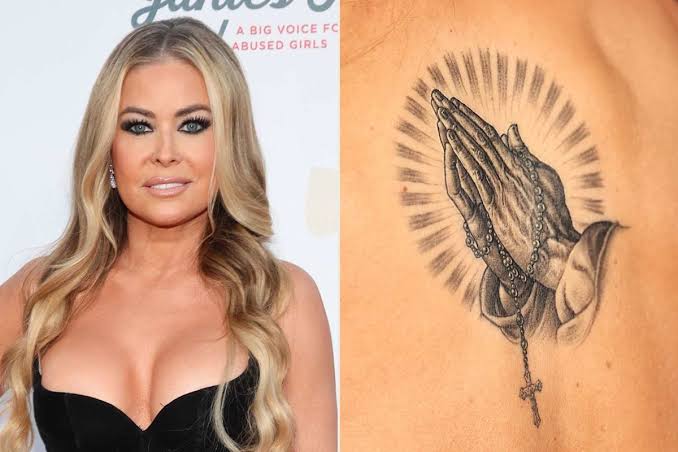
In early 2026, Carmen Electra showed a large new tattoo across her back: a rosary, praying hands and several swords. She told PEOPLE the design was inspired by people with bad intentions who had “stabbed me in the back.” It’s a striking piece, and not her first tattoo.

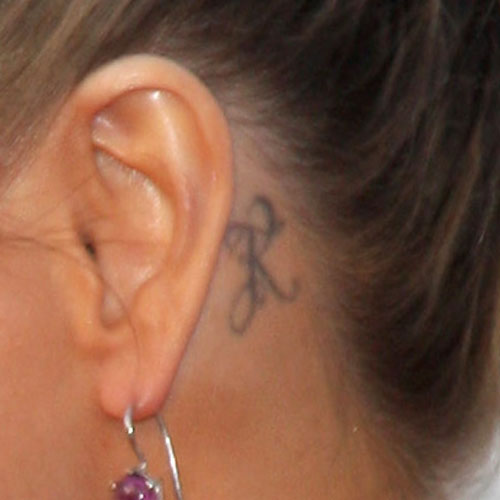
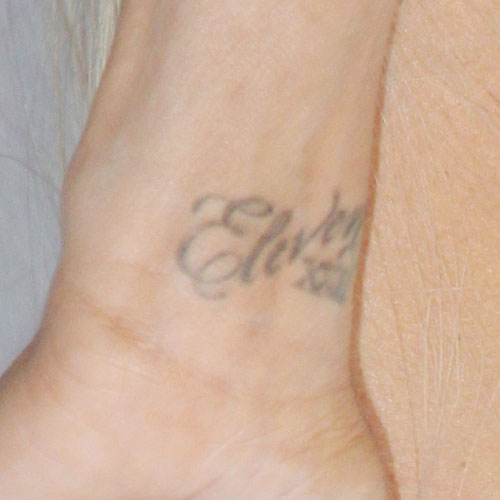
Older references list Roman numerals, writing on her wrist and an initial behind her ear. Those small pieces are a sharp contrast with the new back tattoo. Together they show how her ink has changed in scale and visibility.

The new back piece turns betrayal into a picture

Carmen Electra rosary back tattoo

The tattoo that brought Electra’s ink back into the news is a large design across her back. Photos show a giant rosary, praying hands and several swords. She told PEOPLE that the idea came from people who had “stabbed me in the back.” The imagery brings together prayer and defense.

The praying hands and rosary sit at the centre of the design; the swords give it a sharper edge. Photos vary in angle and detail, but those are the three elements consistently named.

Electra has connected the tattoo to betrayal and to people with bad intentions. She described it as a design about protecting herself after being hurt. The large back placement gives the composition room, and she can choose when to show it.

The rosary and praying hands are familiar religious images, while the swords make the design less like a quiet devotional tattoo. The full piece is bold and dramatic, in keeping with Electra’s public style.

The tattoo holds both parts of the story she told: the hurt and the response. Prayer and defense share the same design.

Why the swords matter as much as the rosary

Carmen Electra swords back tattoo

Calling it a rosary tattoo misses the swords, which connect the image to Electra’s “stabbed in the back” explanation. They make the design feel like a response to the people she says acted against her.

The swords cross and point through the rest of the imagery. Their placement gives the tattoo movement across her back, and different photo crops bring different parts forward.

Electra has described the broad inspiration, but she hasn’t named every person she had in mind. The tattoo’s meaning doesn’t require turning a private conflict into a list of names.

Her older Roman numeral, wrist writing and ear initial are smaller, more private marks. The back piece is immediately visible when she chooses to show it. Together, they give her collection both quiet details and one large statement.

Electra could have put the idea into a phrase, but the design uses images instead: prayer, hands and swords. The meaning she has shared is about betrayal and bad intentions.

The praying hands keep the message from being only revenge

Carmen Electra forearm tattoos

The praying hands change how the swords read. On their own, the weapons could suggest a straightforward response to betrayal. Beside the rosary and hands, the tattoo has a religious element too.

“Stabbed in the back” is a charged phrase, but Electra’s design doesn’t have to be read as a permanent record of anger. The prayer imagery leaves room for a meaning beyond revenge.

The public record doesn’t explain every belief behind the design. Electra has shared the inspiration, and photos show the rosary, hands and swords. Her personal meaning may go further, but it’s hers to explain.

A large tattoo across the back can look different as the person turns. One sword may seem separate in a cropped photo, so the available images are best read as different views of the same composition.

The new tattoo is much larger and easier to see than Electra’s older wrist writing or ear initial. She has made a personal experience visible through a design she can show when she wants to.

The older Roman numeral and wrist writing are quieter pieces

Carmen Electra behind-ear tattoo

Before the back piece, the most commonly reported details were a Roman-numeral tattoo, writing on her wrist and an initial behind her ear. These marks are harder to see in red-carpet photos, and the new tattoo has drawn more attention.

Roman numerals can mark a date or another personal reference, but the sources reviewed don’t confirm what Electra’s design represents. It’s safest to describe it as a Roman-numeral tattoo without assigning it a meaning.

The writing on her wrist is also difficult to read in some photos. Wrist lettering can be cropped or partly covered, so it shouldn’t be turned into a quote unless the words are clear and documented. The exact wording hasn’t been confirmed here.

The small initial behind her ear is another commonly listed piece. An initial may refer to a person or something else, but public sources don’t give a complete explanation of Electra’s mark.

Those older tattoos are a useful contrast with the 2026 back piece. The smaller marks reveal less at a glance; the new design is large and carries a message Electra has discussed publicly.

Her tattoo timeline now has two very different moods

Carmen Electra wrist tattoo

Electra’s earlier tattoos were small: Roman numerals, wrist writing and an initial behind her ear. The newer rosary, praying hands and swords cover much more of her back. One group is discreet; the other is visible when she chooses to show it.

That difference in scale doesn’t tell us which tattoo matters more to her. The sources don’t provide enough detail about the older pieces to compare their personal meaning with the back tattoo, which Electra has explained publicly.

The pieces also give Electra different ways to share her story. The older tattoos leave some details private; the back design comes with a broad explanation, while she hasn’t named every person involved.

Some coverage uses “karma” to describe the tattoo. Electra’s own explanation is more specific: she connected it to being stabbed in the back by people with bad intentions. The rosary, hands and swords are visible parts of the design; claims beyond that should stay grounded.

New photos may show details that weren’t clear at first. Until those are documented, the inventory remains the large back tattoo and the earlier Roman numeral, wrist writing and ear initial.

The new tattoo is a boundary, not just a warning

Carmen Electra arm tattoos

The back piece combines symbols of prayer with swords. Electra’s explanation ties it to betrayal and to people with bad intentions; the design makes that response visible.

The tattoo can be read as a warning, but it also marks a choice to protect herself. It remembers the hurt while leaving room for boundaries.

The smaller Roman numeral, wrist writing and ear initial are a different kind of ink. They can carry personal meaning without being legible across a red carpet. The back piece is designed to be seen.

Electra may see the design differently over time. For now, the documented story is that it was inspired by people who had bad intentions and the feeling of being stabbed in the back.

Watch Carmen Electra explain the new tattoo

In this interview, Electra discusses why she got the back tattoo at 53. Her comments add context to the photos.

Drew Barrymore keeps her family story close in Tattoos

Drew Barrymore’s tattoos vary in size and style. Some are easy to spot; others show only when she moves her wrist or changes clothes. They record family, recovery, old friendships and choices she made when she was younger.

The record isn’t always consistent. Reports differ about which wrist carries one design, and Barrymore has said some early tattoos no longer feel like her. Here’s what’s been shown or described publicly, with uncertain details kept that way.

Olive and Frankie are written on her inner wrist

Drew Barrymore bird and words tattoo

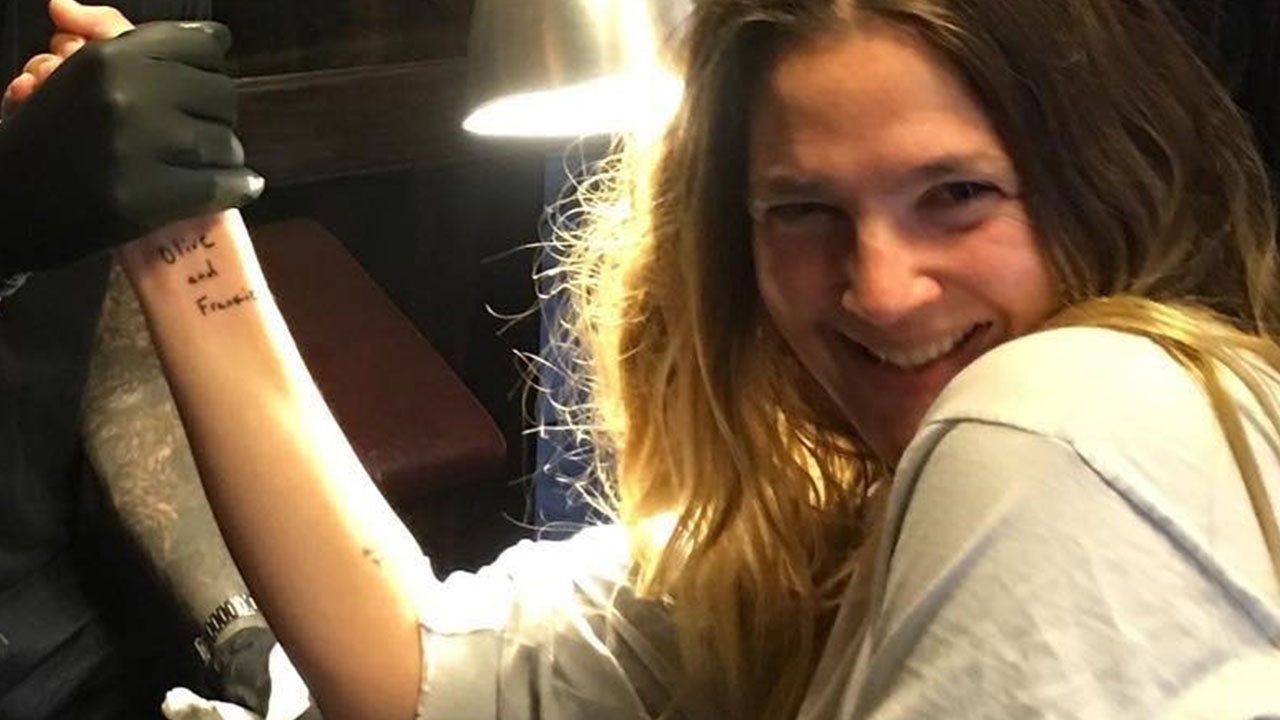
One of Barrymore’s clearest recent tattoos is the names “Olive and Frankie” in simple script. They’re her two daughters’ names, written without an elaborate frame or other decoration.

Reports place the names on the inside of her wrist. Inked says it’s the right inner wrist, while some later coverage and social posts say the left. The side isn’t settled, but the names are consistently identified. Barrymore shares Olive and Frankie with Will Kopelman.

There’s no symbol to decode here. The names keep her daughters close in an ordinary way. The placement lets her see them without putting the tattoo front and centre.

The design is small, but it carries a family connection Barrymore has spoken about publicly. It sits on the wrist, where she can see it during the day.

The cross and angels on her back point back to her mother

Drew Barrymore breathe tattoo

Barrymore has also been linked to a more ornate cross surrounded by angels on her lower back, connected in coverage to her mother, Jaid. The design is more traditional than the wrist names, with a religious symbol at the centre and figures around it.

Barrymore’s relationship with her mother has been publicly described as complicated. Some accounts read the tattoo as a tribute, but the exact dedication and original artist aren’t consistently documented. A tattoo can hold several feelings at once; the public account doesn’t spell out all of hers.

It’s safest to say that reports connect the angels-and-cross design to Jaid, without claiming a more detailed story than Barrymore has shared. The image has a memorial quality, but its full meaning is personal.

The lower-back placement is easy to conceal and can be shown when Barrymore chooses. That discretion is also part of how some of her other tattoos appear in public.

Birds, a butterfly and flowers fill out the collection

Drew Barrymore tattoo session
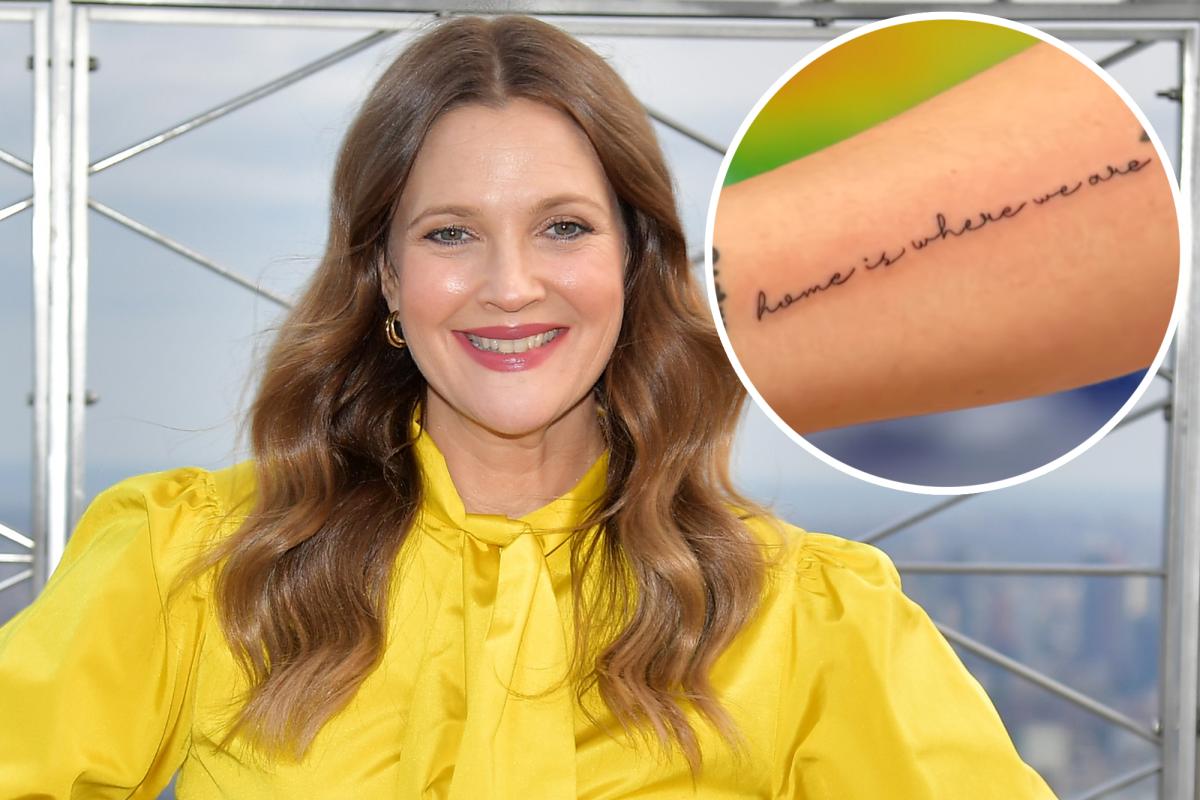
Drew Barrymore home is where we are tattoo

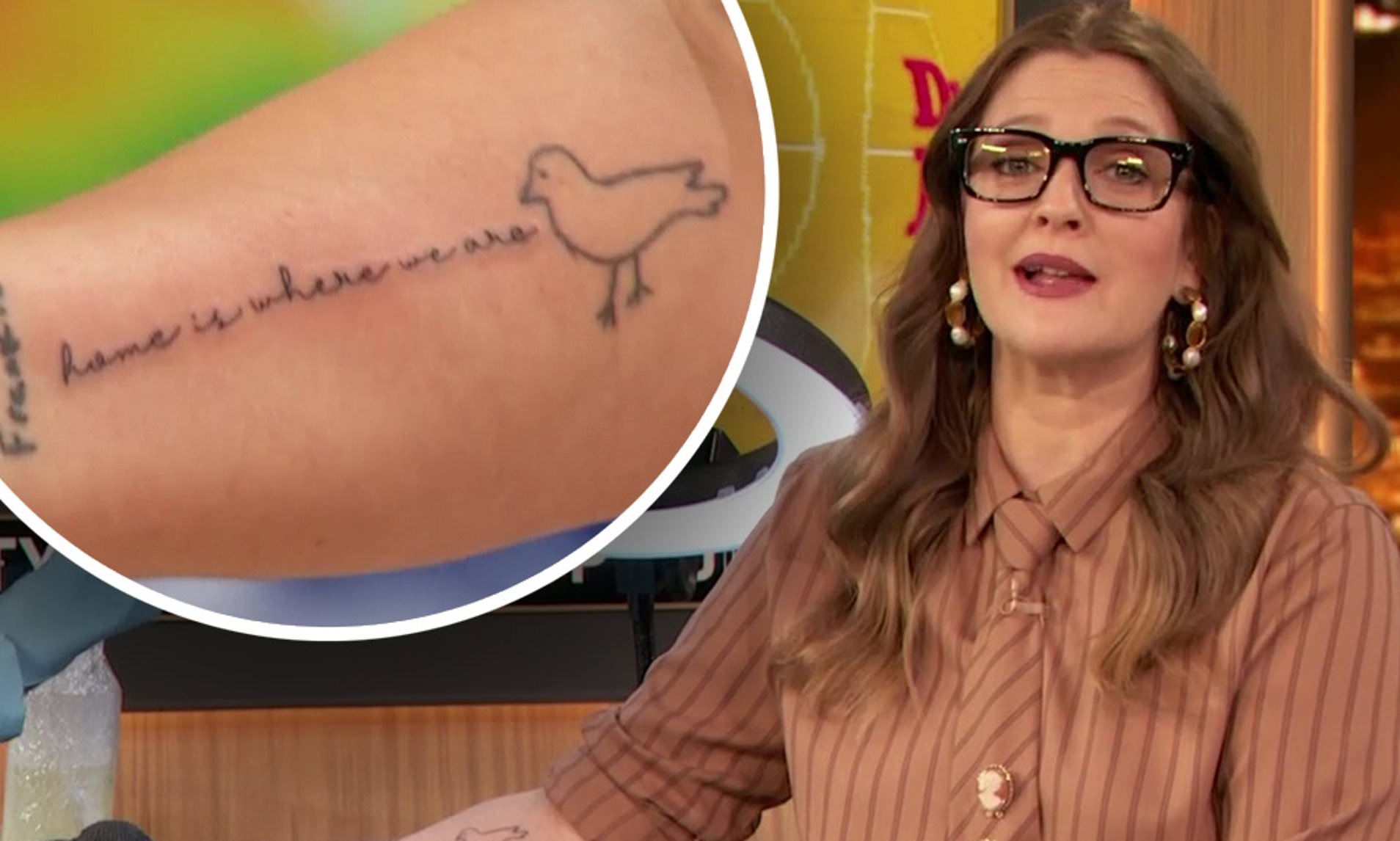
Public photos and tattoo roundups identify a light-outline bird on her right forearm, a butterfly below her navel and a flower bouquet on her left hip. They’re different designs from different periods, and photos of them are often brief.

The bird is usually described as an outline rather than a dense, realistic image. People often read freedom or movement into bird tattoos, but Barrymore hasn’t given a definitive explanation for this one. The butterfly is small and placed below her navel; public descriptions sometimes group it with the flowers.

The bouquet sits on her left hip. It’s a softer, more decorative design. The placements are worth keeping straight: flowers on the left hip, a bird on the right forearm and a butterfly below the navel.

Older descriptions also mention a crescent moon. It’s harder to see in recent photos than the wrist names or ankle cross, so its current condition is unclear. It may be a small standalone tattoo or part of her earlier collection.

The designs don’t need to share one theme. Some may simply be pieces Barrymore liked at the time. Her tattoos show changing tastes rather than a single planned set.

The smaller marks carry their own private history

Drew Barrymore new tattoo

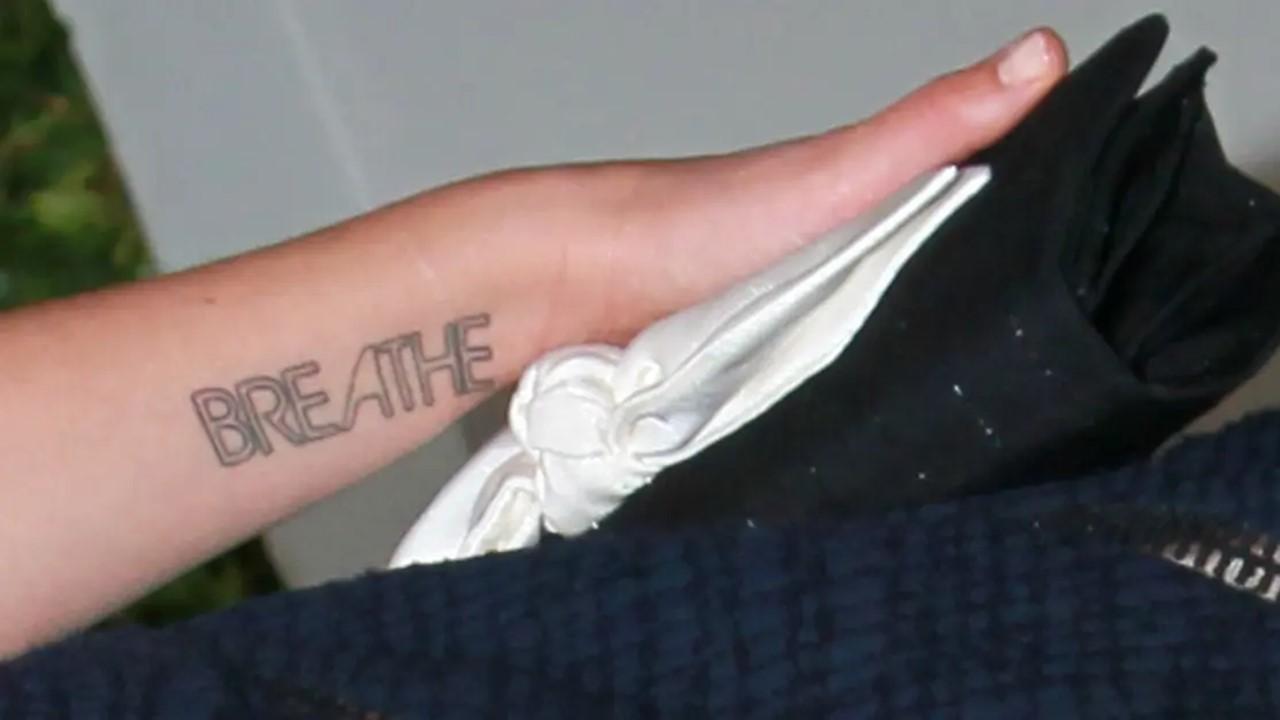
A word tattooed on Barrymore’s left forearm reads BREATHE. She has described it as a reminder to slow down and stay calm, and has joked that she can forget to do exactly that. It’s a prompt, not a promise that everything is always easy.

BREATHE and the Olive and Frankie names are sometimes discussed together because both are on her arm or wrist. They’re separate tattoos: one is a personal reminder, the other names her daughters.

Her cross on the right ankle is another long-running piece. Older coverage describes an ornate cross wrapped in flowered vines. Some reports connect it to her role in Poison Ivy; the details of that story vary, but the right-ankle placement appears consistently.

The ankle cross is more decorative than the simple wrist lettering. It can show with bare feet or cropped trousers, though it’s less visible than the names on her arm.

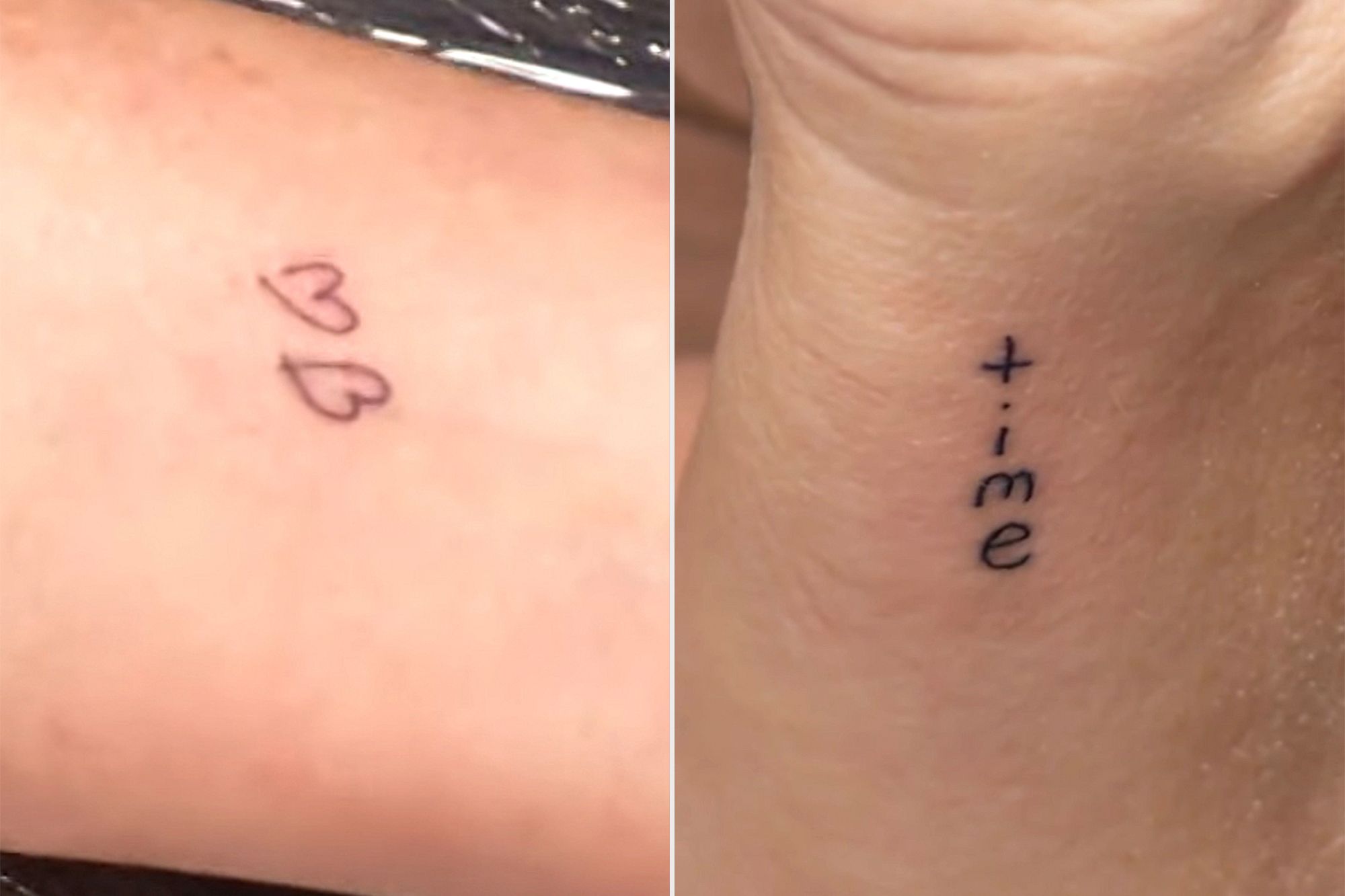
Older tattoo roundups also mention a design connected to the word time and other small tattoos from Barrymore’s youth. Photos don’t always make those marks legible, so those entries are less certain.

The collection includes names, a breathing reminder, crosses, angels, a bird, butterfly, flowers and moon imagery. Some pieces have a clear family connection; others are harder to place. They reflect different moments in her life.

Why Drew Barrymore’s ink feels so personal

Drew Barrymore Jack tattoo

Barrymore’s tattoos don’t follow one style. The lettering is simple, the flowers are softer, and the crosses are more ornate. The pieces come from different periods of her life.

Some of the newer tattoos have a clearer emotional connection, but that doesn’t make the older ones disposable. A design can feel right at one age and later become a marker of who you were.

The family pieces are the most direct: Olive and Frankie in script, the angels-and-cross design linked to her mother, and BREATHE as a personal reminder. The bird, butterfly, flowers, moon and ankle cross fill out the rest of the collection.

Keeping the details separate makes the inventory more useful: a daughter’s name on the wrist, a religious image on the back, a flower bouquet on the hip and a cross at the ankle. The designs are small, but their placements and stories differ.

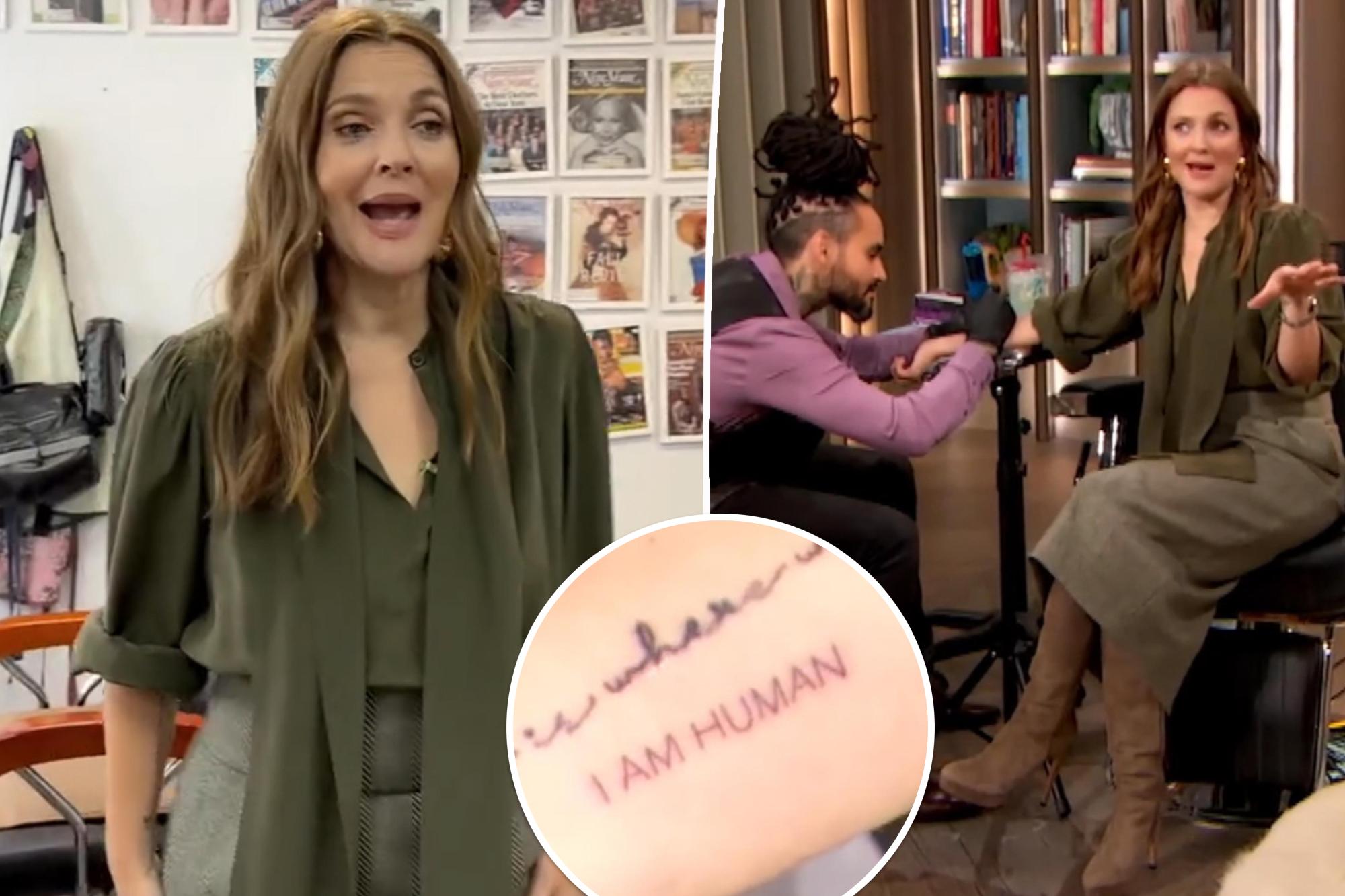
Watch Drew Barrymore get a new tattoo

Barrymore has discussed tattoos on her daytime show and added new ink on camera. This behind-the-scenes segment from The Drew Barrymore Show shows that process.

Arya’s tattoos still tells the story

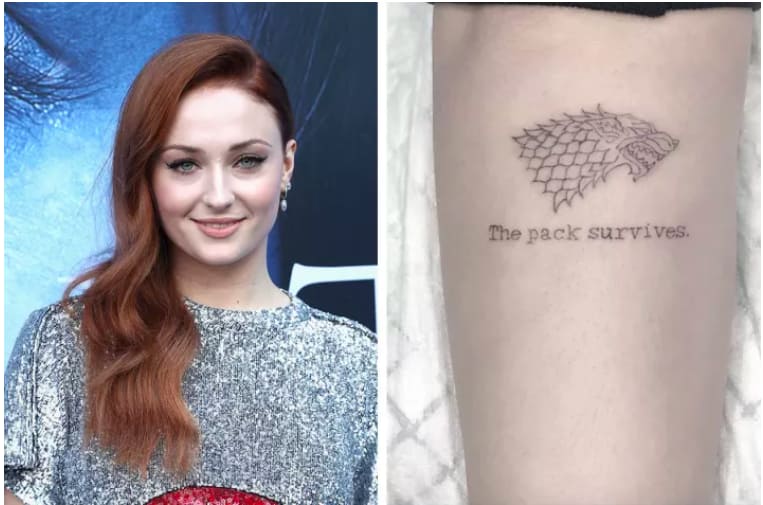
Most of Maisie Williams’s documented tattoos are small and easy to cover. Some refer to Game of Thrones and Arya Stark; others mark her friendship with Sophie Turner or a word she chose for herself. The exact count is harder to pin down: some lists include six pieces, others seven, and a few photos are too unclear to identify with confidence. Here are the tattoos that have been shown or discussed, with the uncertain details left open.

Maisie Williams’ best documented tattoos

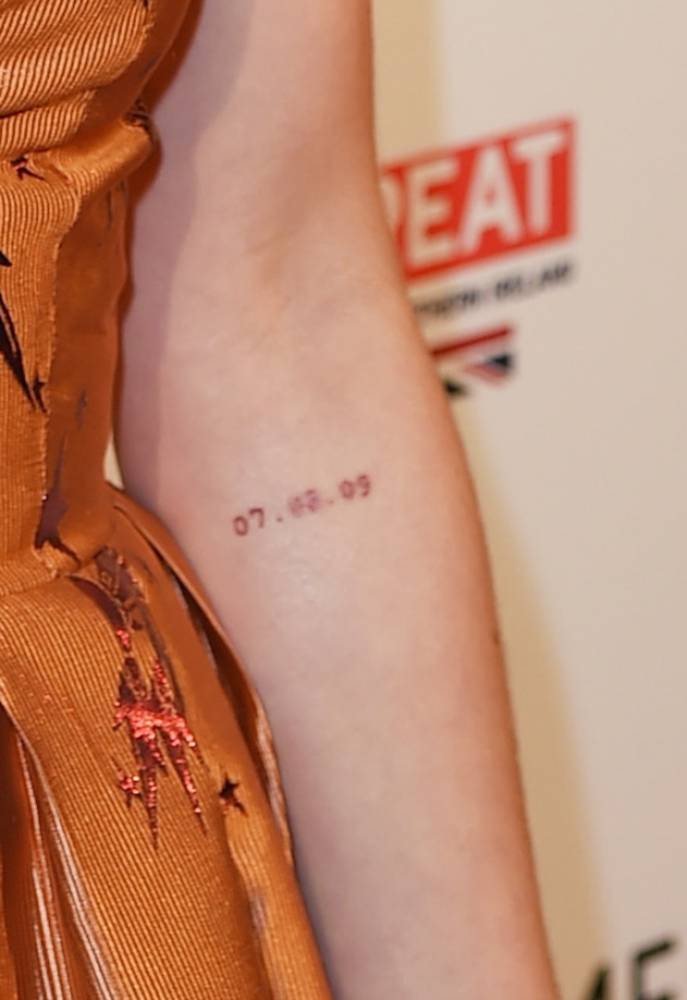
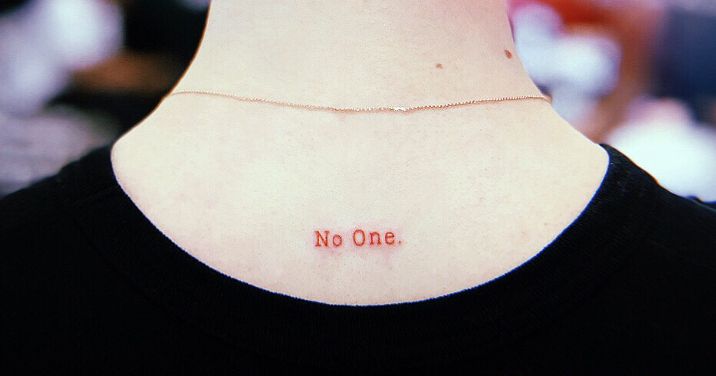
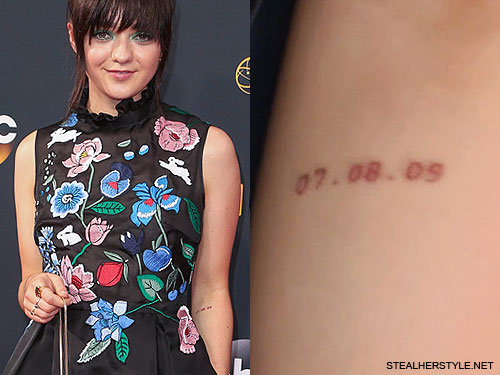
Maisie Williams matching date tattoo close-up One of the clearest pieces is the matching date tattoo Williams shares with Sophie Turner. It marks the first day they worked on the Game of Thrones set, when they were playing Arya and Sansa. The date remembers when they met, not a character or logo. Turner has talked about the matching ink in interviews, and the two have joked about their friendship becoming public as the show grew. Williams also has the words “No One” on her upper back. Arya learns the phrase while training with the Faceless Men, and it became one of her defining storylines. For Williams, it is both a keepsake of the role and a reference to Arya’s arc. Reports place the lettering high on her back, where it is easy to cover. It is a compact reference, not a large show logo. A second Arya-related piece is often reported as “Not today,” the phrase Arya uses when facing fear and death. Photos place it around Williams’s ribs, though early accounts differ on the exact wording and position. She did not announce the tattoo formally, so the clearest description is a small quote tied to Arya, with the lettering left qualified.
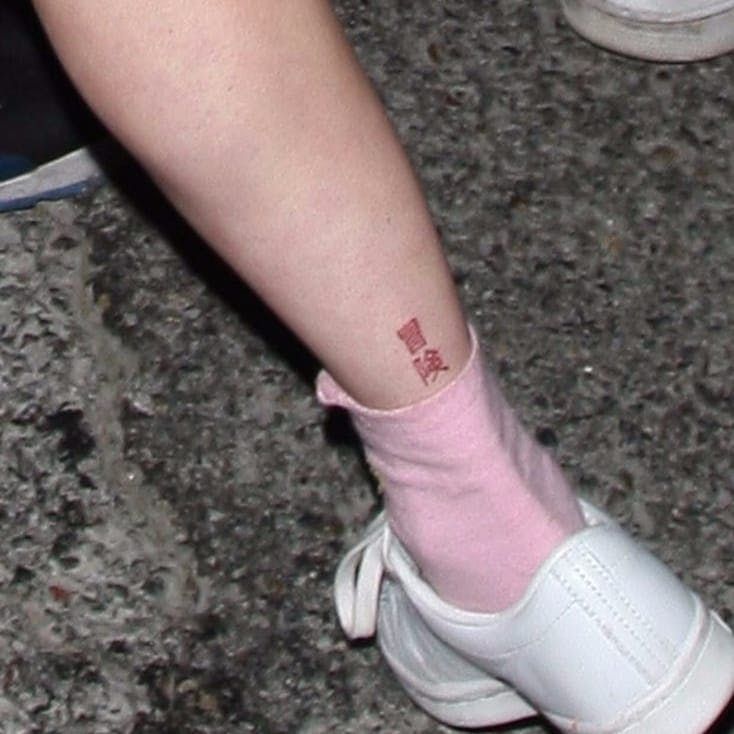
The Japanese word on her ribcage

Maisie Williams ikigai tattoo close-up Williams has also shown an ikigai tattoo on her ribcage. She teased it in a social post and used the word herself when discussing its meaning. Ikigai is commonly explained as a reason for being or a reason to get up in the morning, so this one is better documented than designs that appear only in fan roundups. The placement keeps it under ordinary clothes; it shows in a cropped photo, then disappears again. It reads like a private reminder, not something chosen to dominate a red-carpet look. That quiet placement suits the way many of her tattoos are seen: the meaning can be personal even when the tattoo is rarely on display.
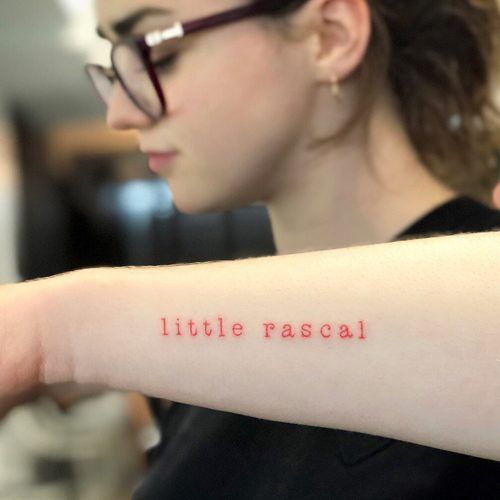
Small references, flowers and “Little Rascal”

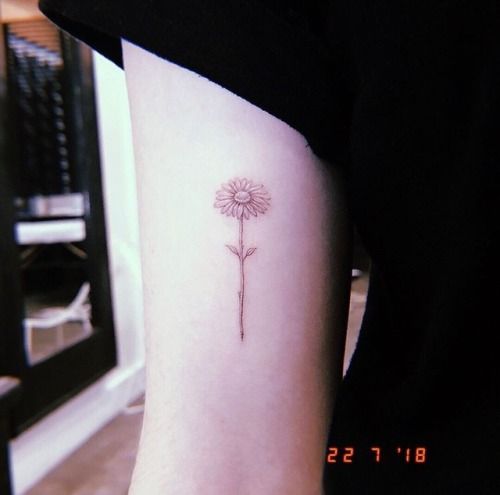
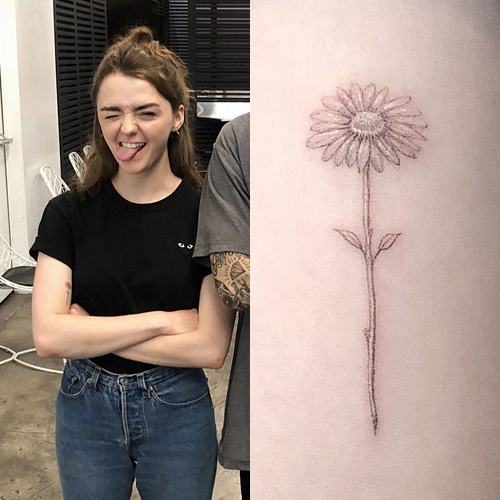
Maisie Williams Little Rascal forearm tattoo Maisie Williams daisy flower tattoo Tattoo roundups also list a few smaller designs on Williams’s arms and torso. One is a flower tattoo that has appeared in close-up photos of her arm. Another is the phrase “Little Rascal”, though public images do not always make its placement clear. A small text tattoo is usually read as “Mr K”. Fans have speculated about the letters, but Williams has not explained them, so it is safest to describe only what is visible. Lettering can be stylized or photographed at an angle; a repeated guess does not make it a fact. Williams has shared some meanings, but she has not published a complete catalogue confirming every tattoo’s size, location, or date. The mix of serious, sentimental and playful designs keeps the collection from looking like a single theme. It moves from show references and personal words to smaller details with no public backstory.
What the tattoos say about Arya and real life

Maisie Williams No One back tattoo The Game of Thrones pieces are the easiest part of Williams’s tattoo story to place. She played Arya from childhood into adulthood, and the role shaped much of her public life. “No One” and the quote usually reported as “Not today” recall Arya’s story. They may also remind Williams of the years she spent making the show, though she has not said that is what they mean to her. The date she shares with Turner has a different story: it marks when two young performers began their friendship, not a fictional sisterhood. The design is simple; most of its meaning sits in the date and the memory attached to it. A matching tattoo does not need an elaborate design to hold a shared memory. The ikigai tattoo points away from the show. The word is about purpose, but it does not prove anything about Williams’s private philosophy. She has worked across acting, producing, fashion, and other creative projects; the tattoo is one idea she has chosen to carry. Taken together, the pieces point to different parts of her life rather than one visual style.
Placements and what remains unclear

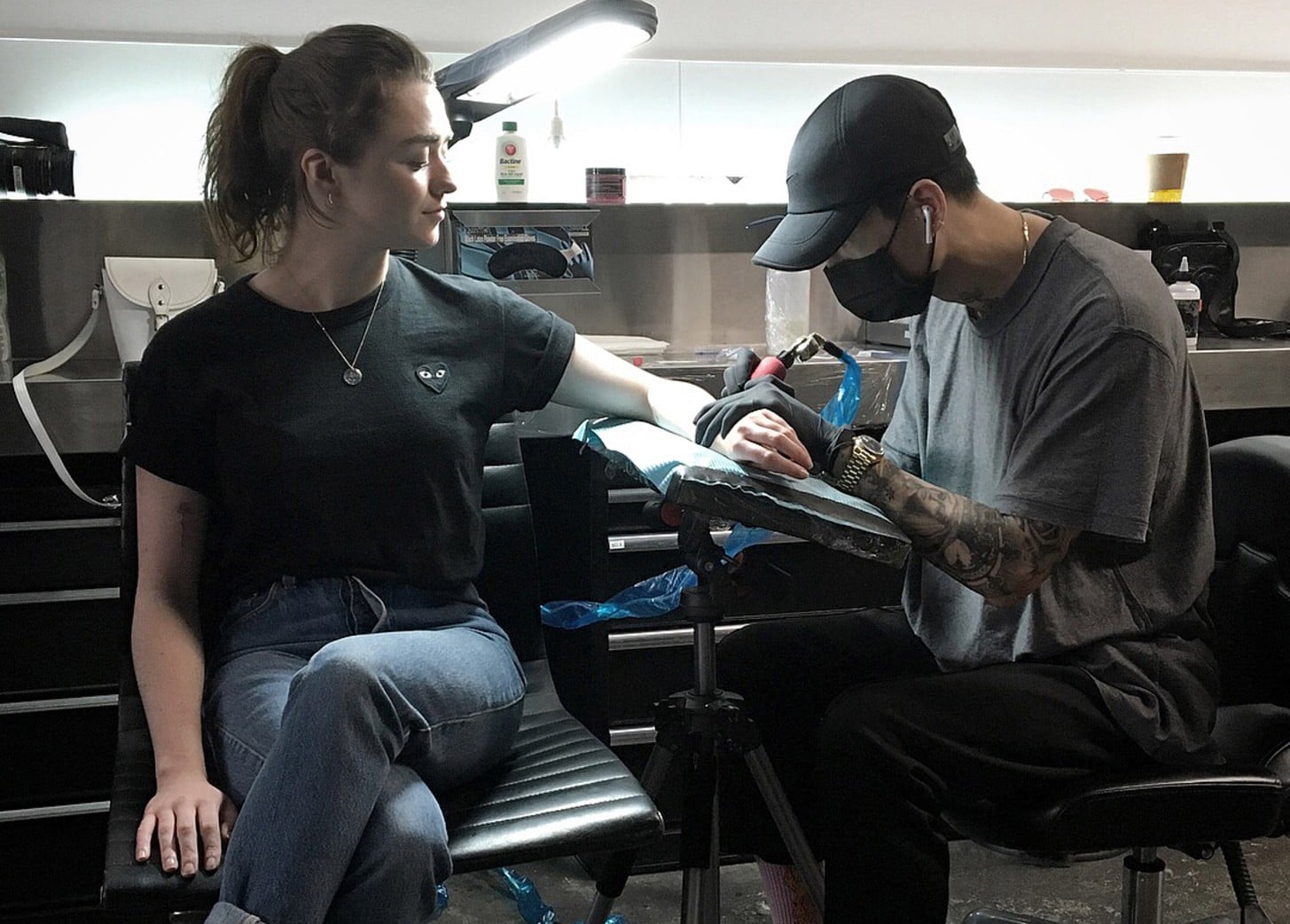
Maisie Williams getting a tattoo on her arm Photos and tattoo coverage place Williams’s ink on her back, ribs, arms, and other small areas. The back lettering is easier to see when she shows it, while rib tattoos tend to stay covered. Arm designs appear in more casual photos. There is no complete public inventory: some tattoos may not have been photographed clearly, and older articles sometimes describe the same small design in different ways. A repost or a new crop is not evidence of another tattoo. A letter can look different in a blurry photo; a Japanese word may have more than one English gloss; and a rib tattoo can seem higher when Williams twists for the camera. When the evidence is uncertain, the description should say so. That keeps the confirmed pieces clear without making the list sound more complete than it is.
Maisie Williams’ ink in one quick inventory

Maisie Williams flower tattoo close-up The designs covered here are the matching date with Sophie Turner; “No One” on Williams’s back; the Arya-related quote often reported as “Not today”; ikigai on her ribs; a flower tattoo on her arm; “Little Rascal”; and the small “Mr K” text design. Some guides list six pieces, while others list seven because they group the Game of Thrones references differently or count small text tattoos separately. The difference does not necessarily mean one list is wrong. There is no single style tying these designs together. A few point to the show, one marks a friendship, ikigai gives her a word about purpose, and the smaller tattoos leave room for play. Most are compact and easy to cover, which fits a life spent in front of cameras. Not every tattoo has to become part of a public image. The full inventory remains uncertain, but the tattoos she has discussed point to people, work, and ideas from different parts of her life.
Watch Maisie Williams talk about her first tattoo

Maisie Williams and Sophie Turner matching tattoo In the interview below, Williams talks about her first tattoo and answers questions about her ink. Her own account adds context to details that otherwise come from photos and tattoo coverage.
Jennifer Aniston keeps her closest bonds in ink

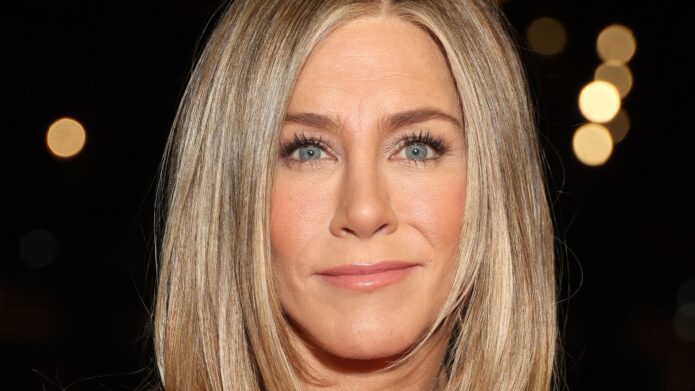
Jennifer Aniston’s best-documented tattoos point to two close relationships. The tiny “11 11” on her wrist is shared with longtime friend Andrea Bendewald; “Norman” on her foot honors her dog. Photos show a few smaller marks too, but tattoo guides do not agree on how many to count. This article keeps the two confirmed designs separate from less certain reports.

The 11 11 wrist tattoo is about more than luck

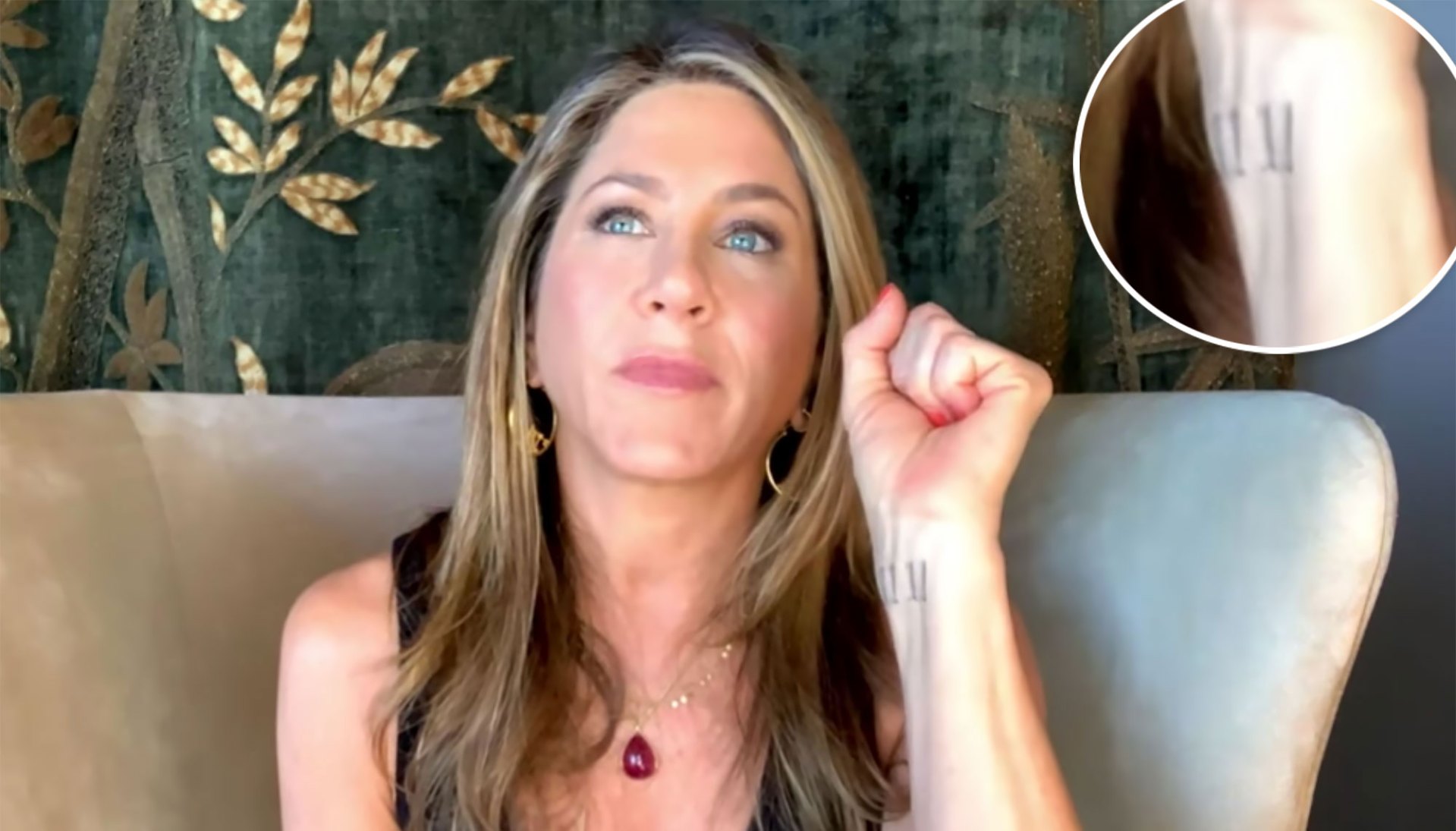
Jennifer Aniston 11 11 wrist tattoo Aniston’s most visible design is the “11 11” wrist tattoo. In 2021, coverage of an interview with her friend Andrea Bendewald connected the matching numbers to their long friendship and to the spiritual significance the number holds for them. Earlier guesses about birthdays or luck were just that: guesses. The tattoo is small and easy to spot when Aniston waves or rests her hand during an interview. The shared design matters as much as the number itself. It is a mark the friends chose together, not just a lucky charm. It works as a quiet reminder that can also show up in a photograph.
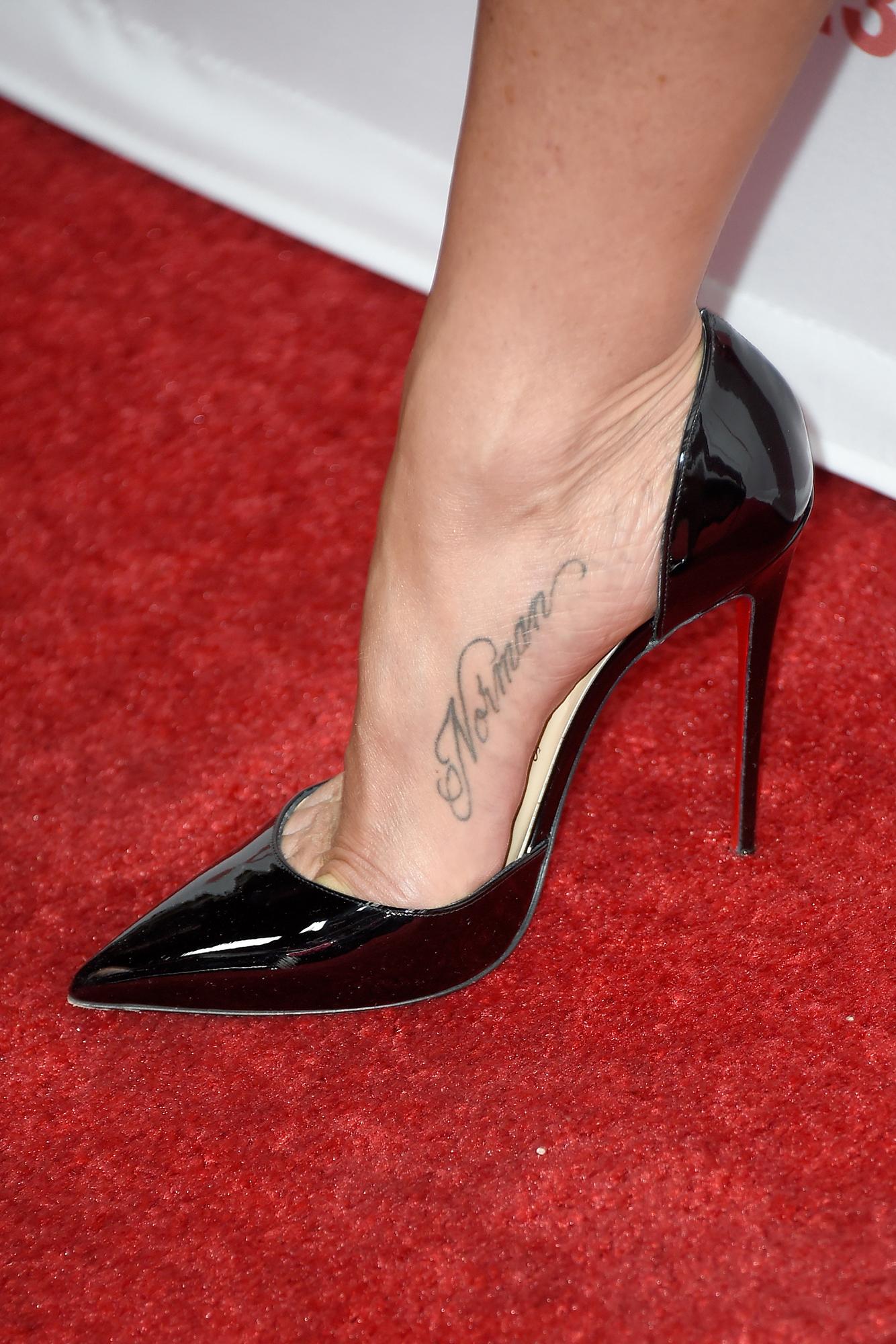
Norman’s name keeps a beloved dog close

Jennifer Aniston Norman foot tattoo Aniston has the name “Norman” tattooed on her right foot. The Welsh corgi-terrier mix died in 2011, aged fifteen. Aniston has spoken warmly about him, and the tattoo is a memorial. The lettering is larger than the tiny wrist numbers but still simple. Shoes usually hide the foot tattoo; it shows in barefoot or open-shoe photos. Her dog’s name is the most direct example of a memory turned into a tattoo.
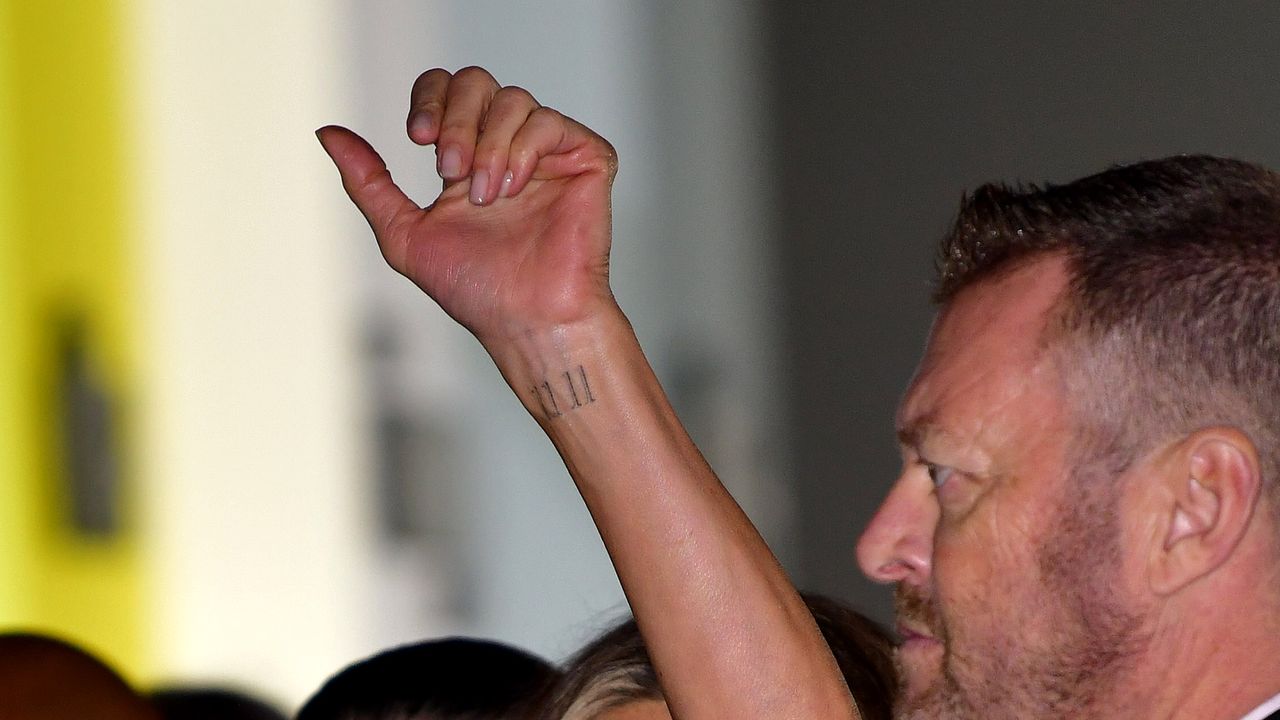
The matching friendship tattoo with Andrea Bendewald

Jennifer Aniston wrist tattoo Aniston and Bendewald have been friends since their teenage years. Their matching “11 11” tattoos are a small, visible sign of that history. Some accounts also connect the number to angel-number symbolism, but the clearest reported meaning is the friendship and the significance they give the number themselves. It’s a small mark shared by two friends who have known each other for decades. The design can sit quietly on the wrist; it doesn’t need to be a large illustration to mean something to the people wearing it.
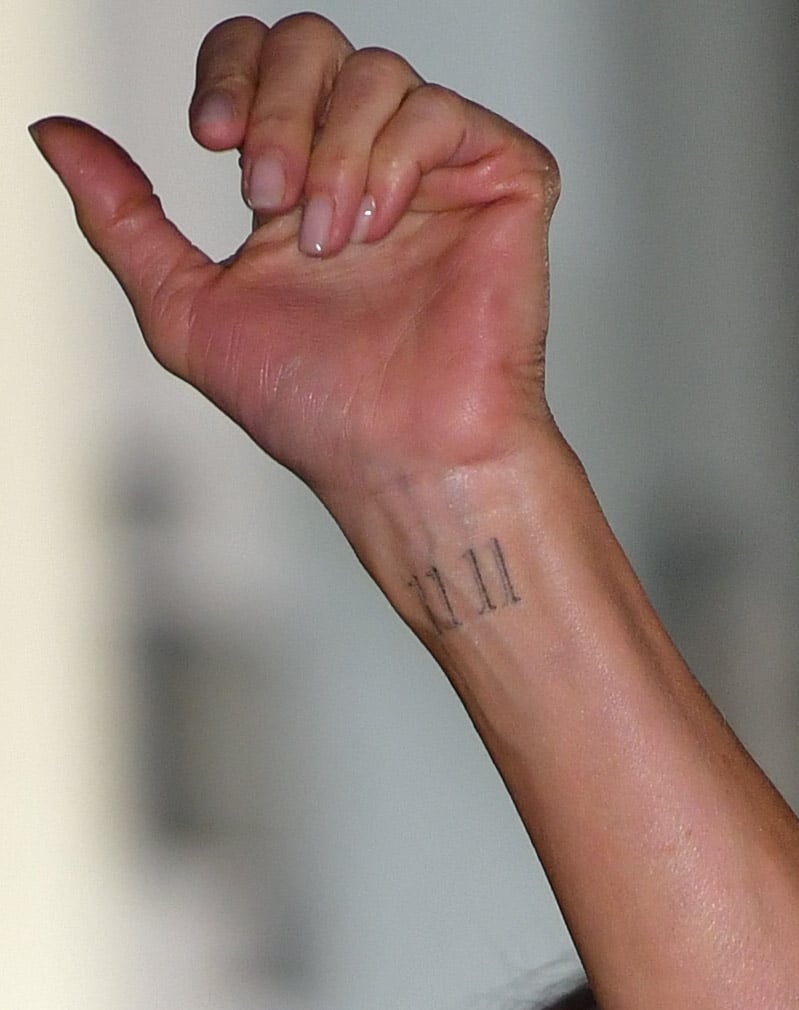
Other small pieces and why the totals vary

Jennifer Aniston tattoo meaning Older tattoo roundups mention tiny symbols and possible initials, but lists vary. Some include only the Norman memorial and “11 11”; others count smaller marks that are difficult to verify. The wrist tattoo also appears in many photographs, and the same design can be counted more than once when pictures are treated as separate evidence. Different photographs do not automatically mean different tattoos. The most reliable inventory stays with the two designs Aniston has shown and discussed clearly. Extra marks are better labelled uncertain unless she identifies them herself.
What the placements say about Aniston’s style

The wrist and foot placements make both tattoos easy to cover. A watch or bracelet can hide the numbers; shoes cover Norman’s name. The ink appears in some interviews and open-shoe photos, and disappears in others. That gives the tattoos a quieter look than a sleeve or large chest piece. The placements are clear; they do not tell us exactly why Aniston chose them. The stories she has shared are personal without requiring an elaborate reading of the designs. They are visible in some settings and out of view in others.

Adele and other celebrity tattoo comparisons

Aniston’s collection is sometimes compared with larger celebrity collections. The public record here centers on Norman and the matching “11 11” tattoo, rather than a long list of confirmed designs. That does not make the tattoos less interesting. The emotional centre is the relationship behind each mark. Comparisons are most useful when they stay with what is actually known; speculation about a celebrity’s private life can quickly outrun the evidence.

A quick inventory of Jennifer Aniston’s documented ink

The clearest public inventory includes the matching “11 11” tattoos on Aniston’s wrist and Bendewald’s, and “Norman” on Aniston’s right foot. The first is tied to friendship and the number’s spiritual significance; the second is a memorial to her dog. Broader guides list other small marks, but their exact shapes and meanings are less consistently documented. Her tattoos are small reminders of people who have mattered for a long time. A tattoo does not need to be loud to be permanent. The two confirmed designs take little space, but keep their personal references close.

Watch Jennifer Aniston revisit her sentimental tattoo

The video below discusses the “11 11” tattoo and gives a little more context for its sentimental meaning.

The dragon story stayed on Emilia Clarke’s skin

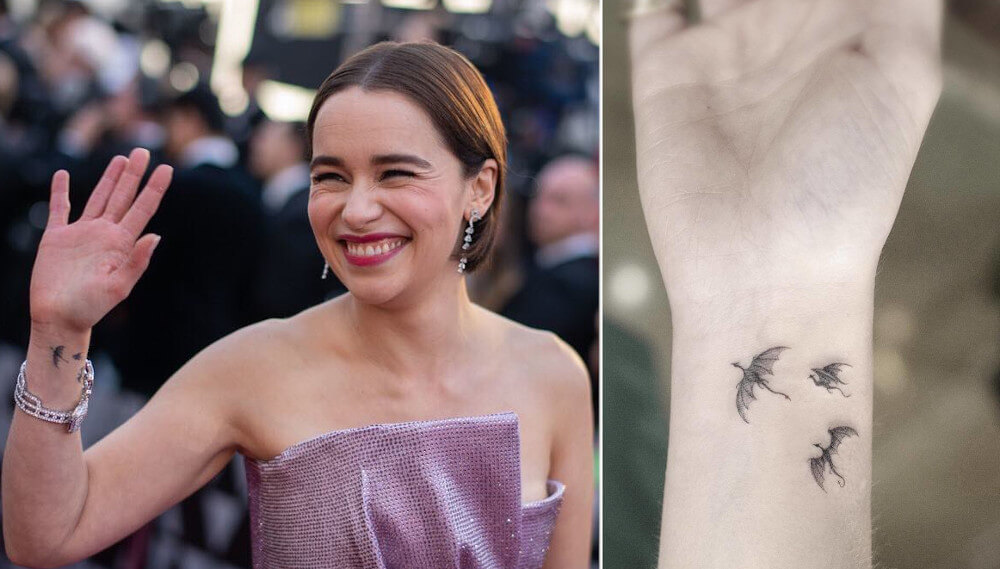
Emilia Clarke’s tattoo collection is small, with clear references to two parts of her career: dragons from her years as Daenerys Targaryen and a bumblebee linked to Me Before You. The best-known designs are the dragon on her wrist, three smaller dragons on her forearm and the bee on her little finger. Tattoo guides sometimes count the three dragons as a group or as separate designs; repeated photos can also make one tattoo look like several. This guide keeps those pieces distinct from smaller marks that are harder to confirm.

The dragon tattoo that brought Daenerys home

Emilia Clarke dragon tattoo Clarke got the small dragon tattoo on her wrist after her run as Daenerys Targaryen on Game of Thrones. It is a fine-lined tribute to the role, rather than a large fantasy illustration. Clarke has spoken warmly about the tattoo and what the character meant to her. It marks the role, and the end of that chapter. The wrist makes the design easy to see when she gestures and easy to cover with a sleeve or watch. It stays close without taking over the rest of her look.
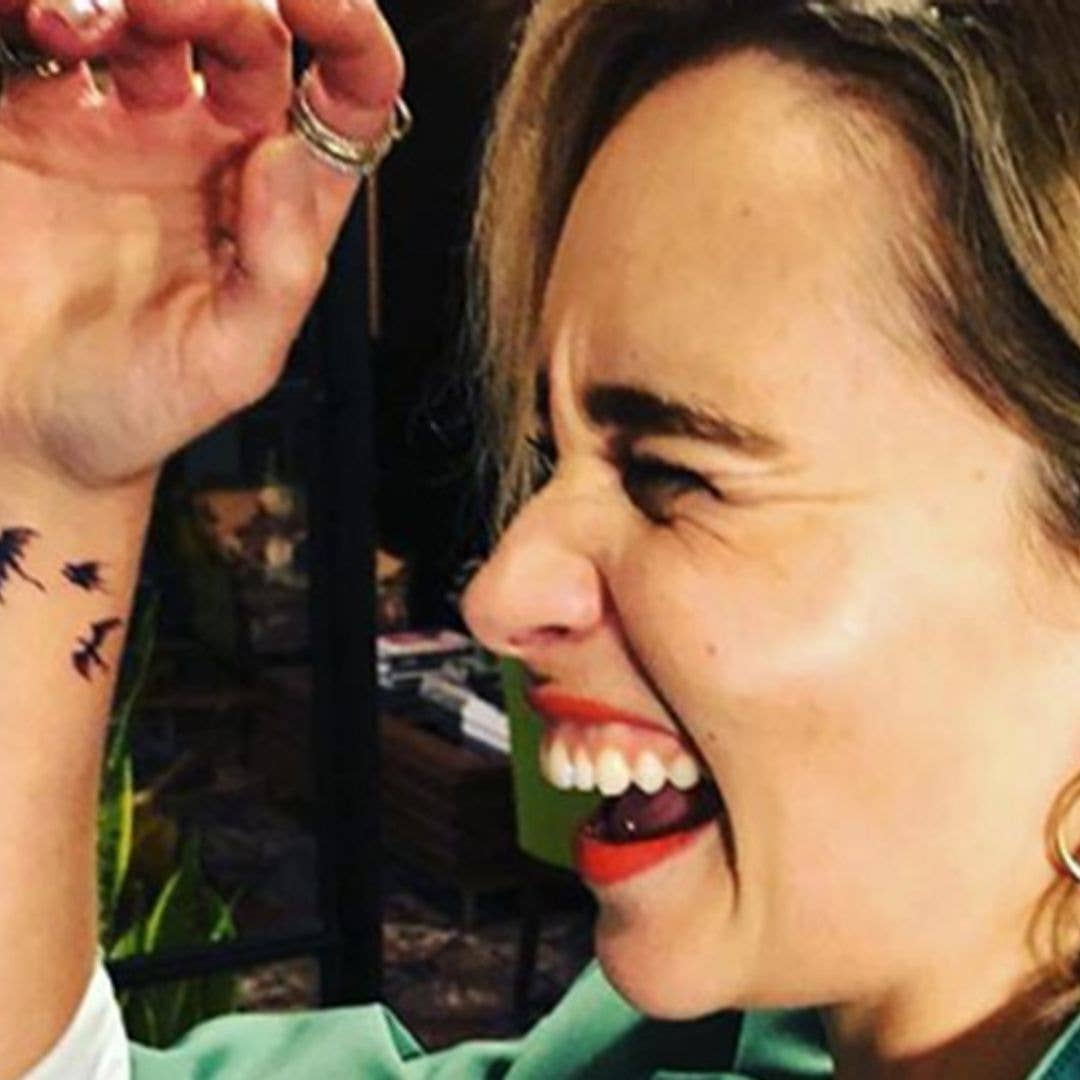
Three dragons for the Targaryen years

Emilia Clarke three dragons tattoo Clarke later added three small dragons for Daenerys’s children: Drogon, Rhaegal and Viserion. The silhouettes are usually shown together, which is why some lists count them as one group. They are three separate designs. A close-up may show only one or two, depending on the angle. The wrist dragon recalls the role as a whole; this trio refers to a specific part of Daenerys’s story. One design remembers the character; the three smaller ones name her dragons.
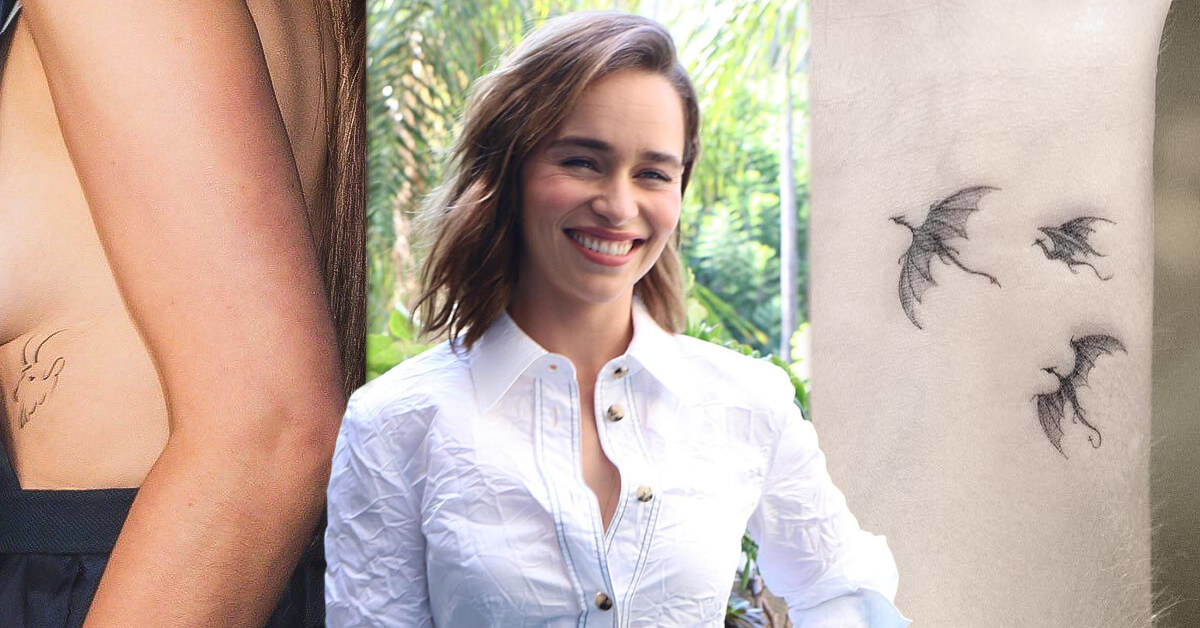
The bumblebee tattoo is a quieter acting memory

Emilia Clarke bumblebee tattoo Clarke has a bumblebee tattoo on her little finger connected to Me Before You. She has explained that she got it to remember the film and the experience of making it. Finger tattoos are easy to miss in a full-length photo; a close-up shows the design more clearly. The bee has a specific link to a film she has discussed, so there is no need to assign it a broader symbolism. It is a small mark tied to one particular chapter of Clarke’s career.
Small symbols and the tattoos that are easy to miscount

Emilia Clarke Game of Thrones tattoo Tattoo roundups mention other small marks on Clarke’s hands and fingers, but they are not always clear in the available photos. One cropped image is not enough to establish that a shadow or partial line is a separate tattoo, especially when the same picture is reposted with a different crop or contrast. The clearest set remains the wrist dragon, the three-dragon group and the bumblebee. Additional designs should stay labelled as possible unless Clarke identifies them. Clarke does not need twenty tattoos for the story to feel complete. The three confirmed designs already connect her to a long-running role and a separate film.
Why the placements work so well

The wrist and forearm pieces can show in photos and disappear under sleeves. The bumblebee sits on a finger, where it may be visible when Clarke talks with her hands but can be hard to spot in a wider shot. The placements let the tattoos surface without turning them into a costume. The wrist dragon and forearm trio refer to Game of Thrones; the bee points to another film. The strongest pieces leave room for the rest of Clarke’s life and work.

A clear inventory of Emilia Clarke’s documented ink

The clearest public record includes a dragon on Clarke’s wrist, three small dragons on her forearm and a bumblebee on her little finger connected to Me Before You. That can be counted as three tattoo moments or five individual designs, depending on whether the dragon group is counted together. They are connected by work, but each has its own reason. The wrist dragon marks her time as Daenerys; the smaller trio points to the character’s three dragons; the bee remembers a separate film. Each design is a compact marker of a real chapter. Other guides mention additional symbols, but the public evidence for their shape and meaning is less consistent. The confirmed designs are enough to describe the collection without filling gaps with guesses.
Watch Emilia Clarke talk about her tattoos

The interview below focuses on Clarke’s tattoos, including the bumblebee. It gives her room to explain the choices in her own words.

Halle Berry Tattoos: The Real Sunflower and Her Movie Ink

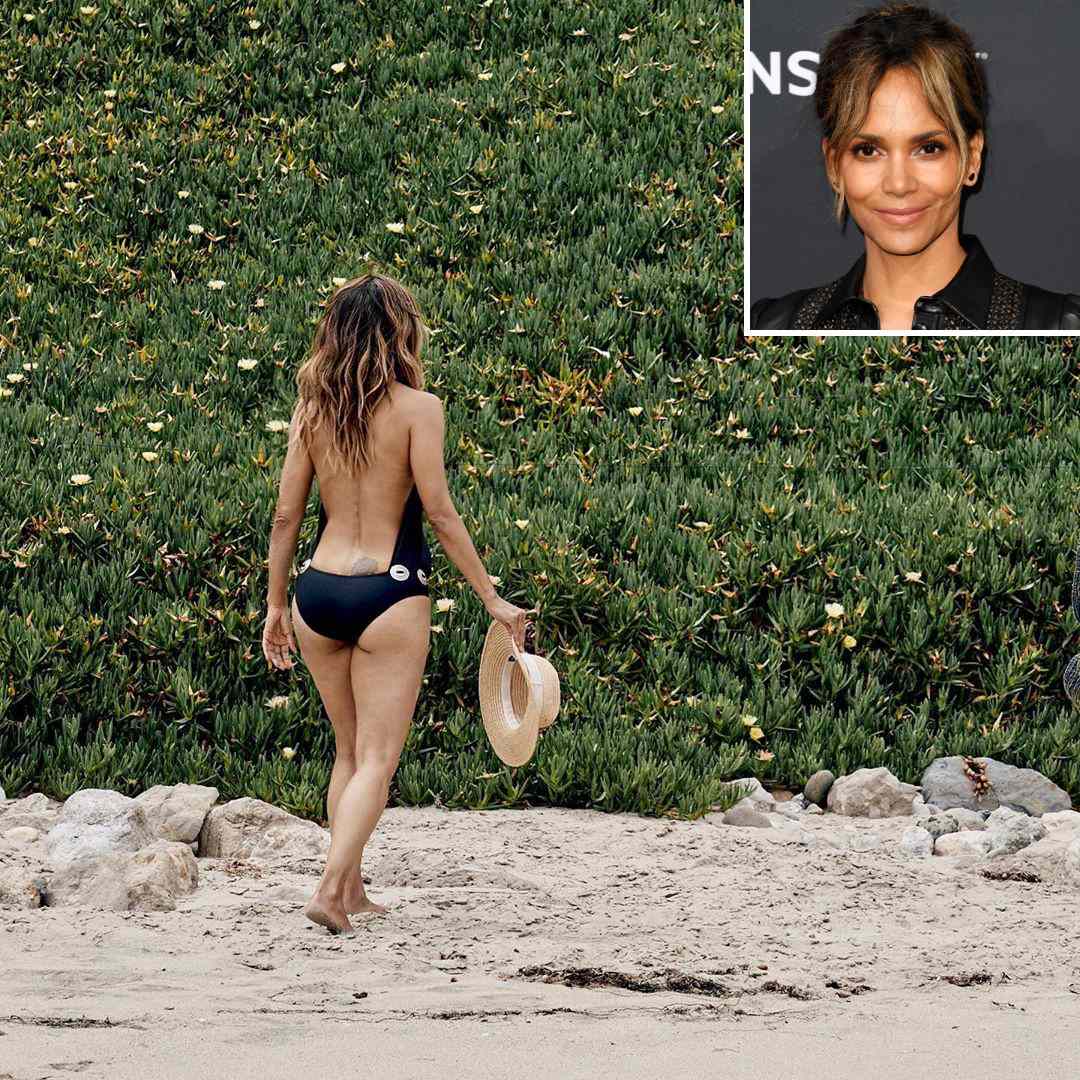
Halle Berry has one tattoo widely described as permanent: a sunflower low on her back. Several other inked looks she has shown were made for film roles, including the vine that ran down her back and the designs she wore in John Wick: Chapter 3 and Never Let Go.

Photos can make the distinction easy to miss. Here, the sunflower is separated from the temporary designs created for her characters.

Halle Berry’s real tattoo is a sunflower

Halle Berry sunflower lower back tattoo

A beach photo showed a sunflower just above Halle’s bikini line. It’s a relatively small design, placed low on her back.

Entertainment reports have described the sunflower as a cover-up of an earlier tattoo connected to her first marriage to baseball player David Justice. Berry hasn’t publicly laid out all the details, so it’s best to keep that explanation attributed to those reports.

Some accounts also give the sunflower a meaning about closing in darkness and opening in the light. The image is clear; the full story behind it is less firmly established.

The sunflower is the real tattoo most often identified as Berry’s permanent ink. The dramatic vine that appeared later was made for a role.

The giant vine down her back was movie ink

Halle Berry temporary vine back tattoo

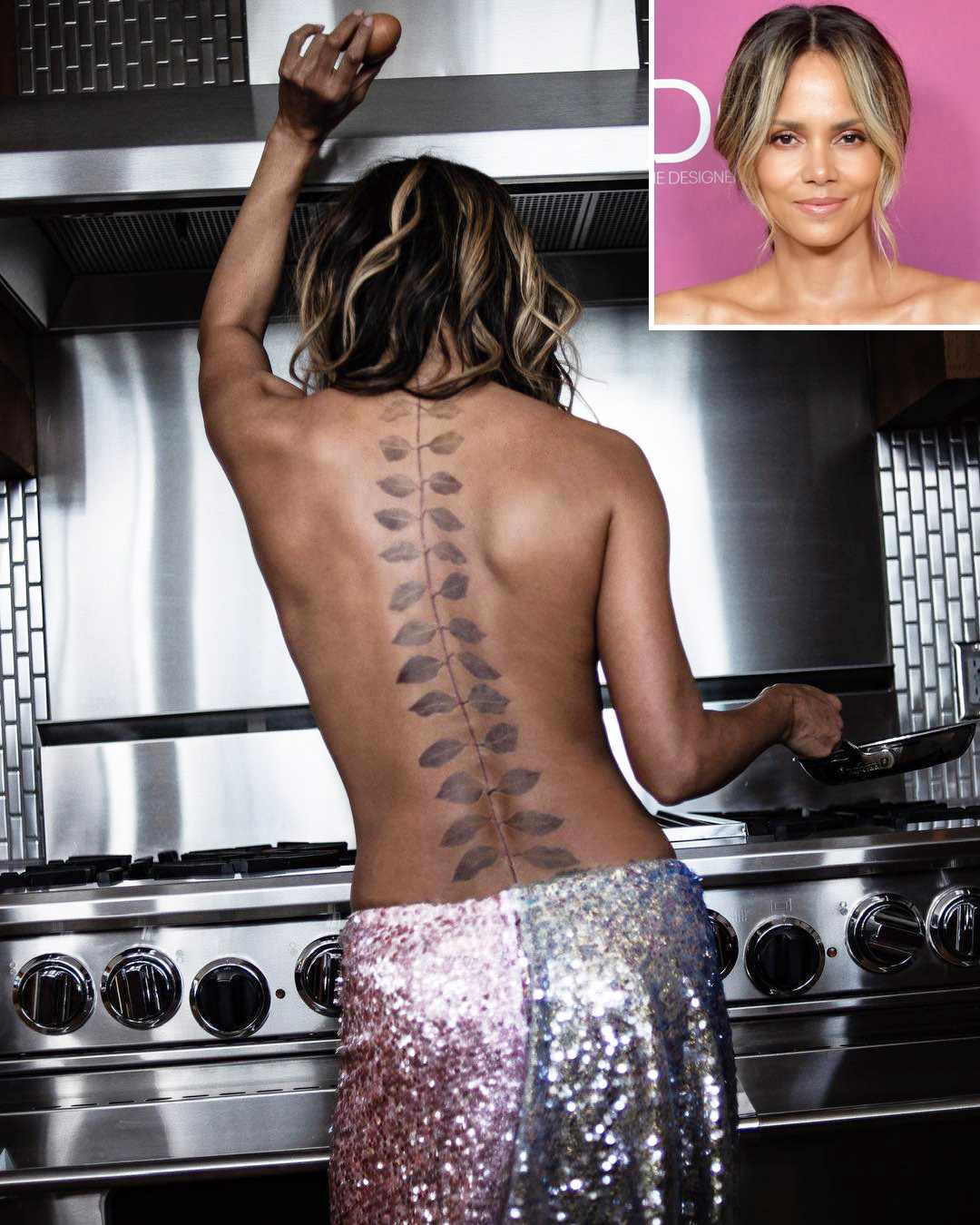
In 2019, Halle shared a photo of a large vine design stretching from the back of her neck toward her waist. Its size made it look like a permanent back piece.

She later explained that she was testing fake tattoos for a role, including during an appearance with James Corden. The vine in the photo was temporary.

The design was a test for a character’s look, not a new addition to Berry’s personal tattoo collection.

That also explains why the vine doesn’t appear in other photos of her back. It was makeup for a role, not ink that later faded or was covered.

Her John Wick neck tattoo belonged to Sofia

Halle Berry temporary John Wick neck tattoo

Berry wore dark lettering along her neck while playing Sofia in John Wick: Chapter 3. A behind-the-scenes photo shows the design just below her hairline.

The tattoo was part of Sofia’s look, not a new permanent piece for Berry. Her on-set photo makes the context clear.

Film tattoos can look convincing in close-up pictures. This one was designed for Sofia, so it belongs in the character’s styling rather than Berry’s personal tattoo history.

The neck design was a compact, visible contrast to the large vine made for a different role.

Never Let Go gave Halle Berry a fresh set of arm tattoos

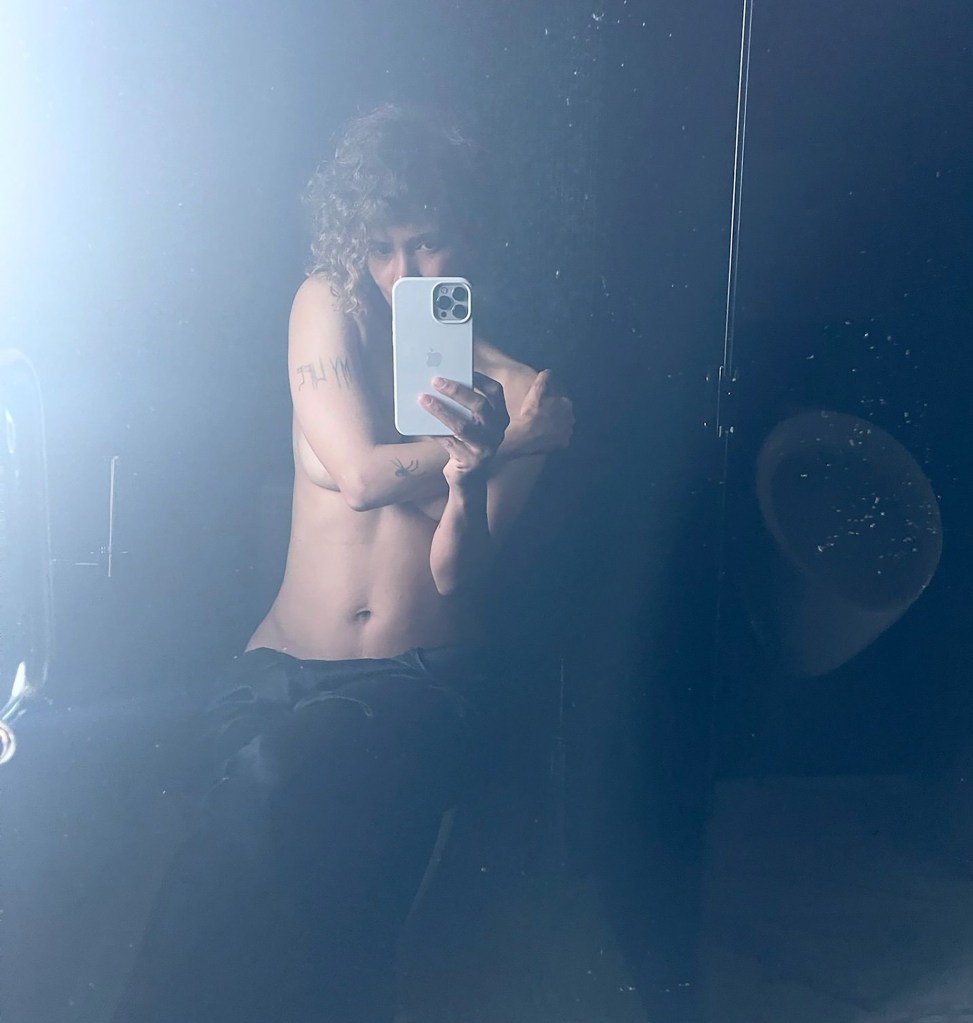
Halle Berry temporary arm tattoos in mirror selfie

In 2024, Berry shared a mirror photo while preparing for Never Let Go. Temporary tattoos covered parts of her arms as she took on the role of a mother living in harsh conditions.

The photo is dark, but the ink is visible on her upper arm and forearm. InStyle described the designs as faux tattoos and identified a black spider among them.

They were part of the film’s makeup, alongside Berry’s short blonde hair and fake armpit hair. The photo showed her character’s look taking shape, not a new set of personal tattoos.

A second film photo shows the arm designs more clearly

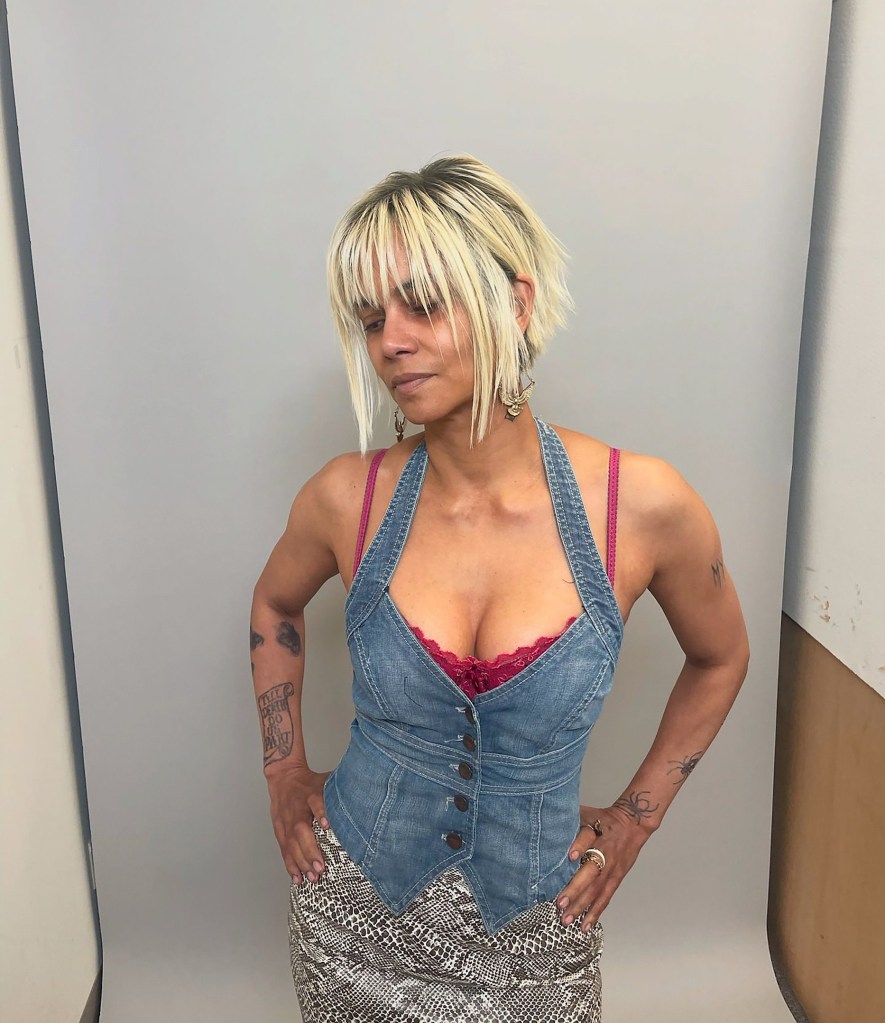
Halle Berry temporary arm tattoos

A second behind-the-scenes photo shows the temporary designs in brighter light. Berry is wearing denim and a short blonde wig; lettering runs along one forearm, with darker shapes higher on her arms and near a wrist.

The designs were made for Never Let Go. Berry’s photos presented them as part of the character, and there’s no indication that she kept them as permanent tattoos.

Across the photos, the distinction is consistent: the sunflower is the design widely reported as Berry’s own tattoo; the vine, neck lettering and arm pieces were created for film roles.

Bottom line: Halle Berry’s tattoo history includes a widely reported permanent sunflower cover-up and several temporary designs for movies. The latter look convincing in photos, but they belonged to her characters.

Watch Halle talk about the giant back tattoo:

Mena Suvari lets two quiet tattoos do the talking

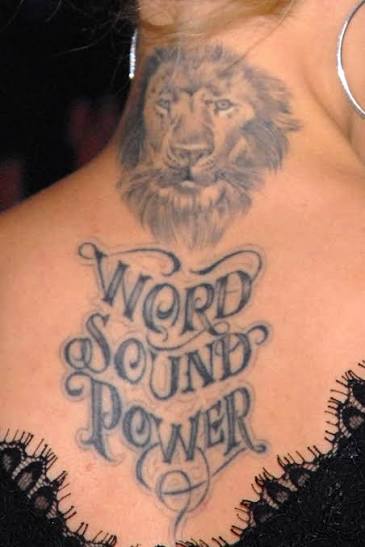
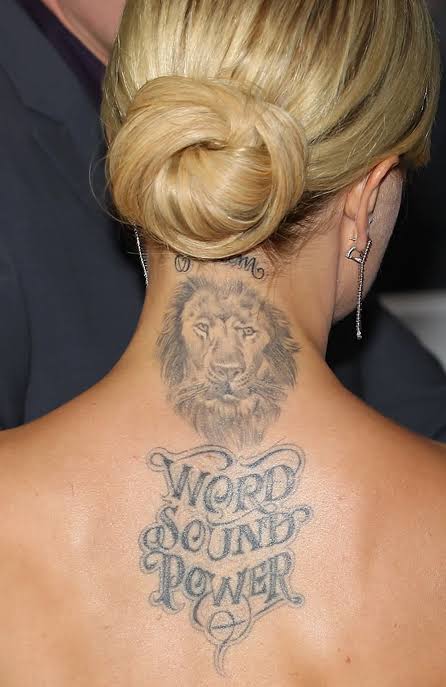
Mena Suvari’s tattoos are easy to miss until she turns around. The actress has a Lion of Judah on the back of her neck and “Word Sound Power” running across her upper back. It is a compact pairing that has remained recognizable in red-carpet photos over the years.

The lion gives the designs a visual anchor, while the words below it turn the back into a short statement. Public information about Suvari’s tattoos is limited, so it is best to stay with the pieces that appear consistently in photos and tattoo references rather than build a larger collection from blurry images.

The Lion of Judah sits at the back of her neck

Mena Suvari Lion of Judah neck tattoo

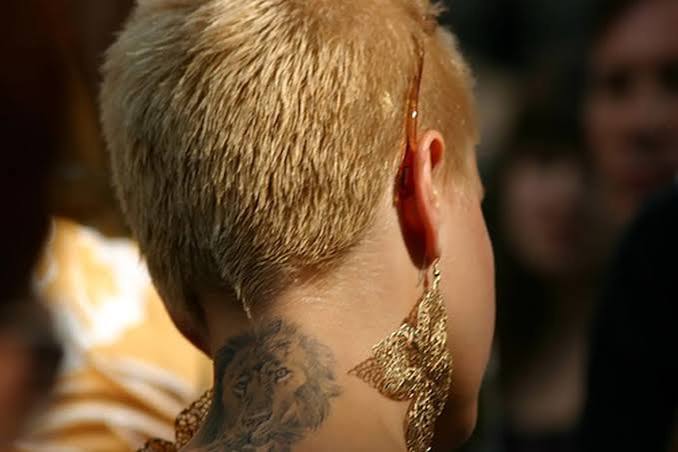
Suvari’s most recognizable tattoo is a lion on the back of her neck. Tattoo references identify it as the Lion of Judah, a figure associated with biblical tradition and Rastafari symbolism. Hair can hide it, while an updo or an open-backed outfit brings it into view.

A lion can stand for many things, but the Lion of Judah is more specific than a generic big-cat image. The Vanishing Tattoo describes Suvari’s design in terms of strength and spiritual courage, a reading that fits without claiming to know a private explanation she has not shared publicly.

The placement keeps the design compact, close to her head and shoulders rather than spread across her back. In a photograph, it can read almost like a crest. The tattoo sits where a collar or pendant might sit, but it stays with her when the styling changes.

It is easy to see why the image has become part of Suvari’s public look. A neck tattoo is memorable, yet her hair can cover it when she wants. She controls when the symbol enters the frame.

There is no need to guess at the lion’s pose or every line of the artwork. The documented details are its subject and location: Lion of Judah, back of the neck. The strength of the piece is in its clarity.

“Word Sound Power” turns her upper back into a sentence

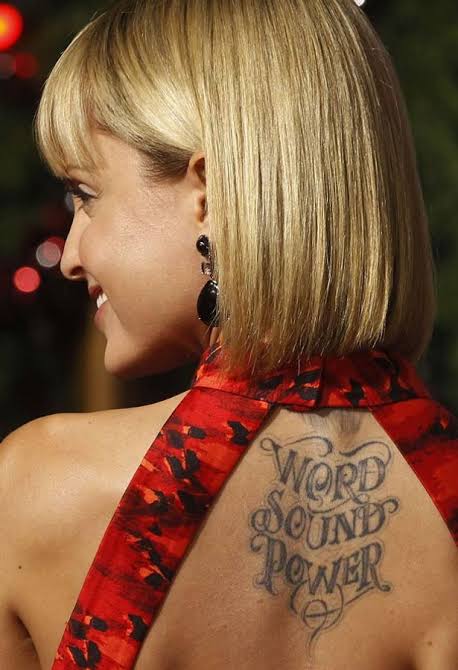
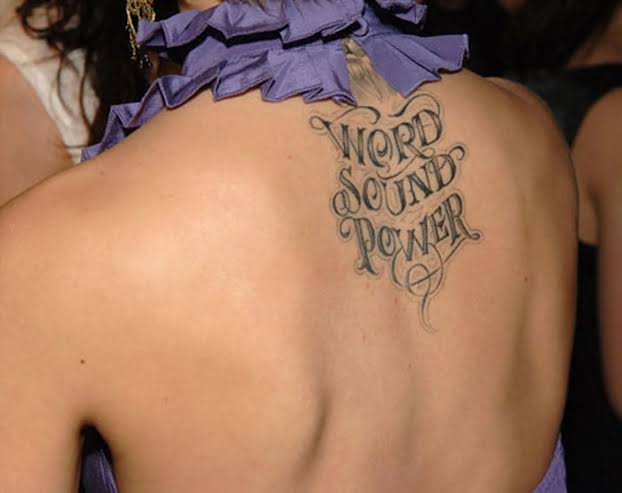
Mena Suvari Word Sound Power tattoo

Below the neck tattoo, Suvari has the phrase “Word Sound Power” across her upper back. The wording gives the collection a thoughtful edge: language, voice and expression can all carry force.

The phrase stretches across her back rather than sitting in a small block. Beneath the lion, it forms a horizontal line that makes the two tattoos feel related: one is an emblem, the other a message. That is why photos of Suvari’s back often show the pair together.

Public references do not identify a longer quotation or a specific event that inspired the words. “Word Sound Power” is documented as the wording, but the exact private origin belongs to Suvari. The idea can be understood without pretending to know what led her to choose it.

A phrase on the upper back can also change meaning as its wearer does. Suvari’s words might bring to mind speech, music, art or self-definition, depending on the moment and the photograph.

There is a natural connection to her work as an actress, since performance depends on words and sound. That is an interpretation, not a confirmed explanation of her choice, but it makes sense alongside a phrase that treats language as power.

The two tattoos are designed to be read together

Mena Suvari spine tattoo

Celebrity tattoo collections are often presented as lists: one design on a wrist, another on the ribs, a third on an ankle. Suvari’s best-documented pieces make more sense as a small composition, with the Lion of Judah above and “Word Sound Power” beneath it. Her upper back becomes one visual field.

The sources place the tattoos near each other, but do not say whether Suvari planned them as a pair from the start. The visual connection is clear even if the order and original planning are not.

The placement gives both pieces room. The lion is visible on the neck without getting lost in the script, and the words can stretch across the back without shrinking into a caption. The result reads clearly in a photograph while remaining personal in everyday life.

There is a quiet confidence in the combination. The lion suggests strength without spelling out a whole story; the phrase gives words and sound their own force. Together, the tattoos leave room for physical, spiritual and expressive ideas.

The pair also works with different styling. Hair can cover the neck, while a dress can reveal or conceal the back. Suvari can decide how much of the designs a photograph shows.

What the public record does and does not document

Mena Suvari tattoo gallery

The two tattoos most consistently named in public references are the Lion of Judah on the back of Suvari’s neck and “Word Sound Power” across her upper back. Older galleries and photo captions show the same areas, but often do not provide enough detail to build a longer, certain inventory.

A shadow, dot or partial line in a red-carpet photo is not necessarily another tattoo; hair, clothing and image quality can all mislead. Two well-documented pieces are more useful than a padded list of guesses.

The phrase’s precise meaning is similarly open. Its wording points to language and power, but there is no basis for assigning it a date, a particular spiritual tradition or a quote from Suvari that the available sources do not provide.

That care does not make the collection less interesting. The two known designs stand out because of their relationship and point of view, not because there are dozens of them.

Tattoos can also look different over time: ink softens, lighting shifts and the body changes. A photograph from the 2000s may show the same marks differently from a later image. The lion and the script remain the clearest identifiers.

The phrase gives the collection its lasting mood

If the lion is what viewers notice first, “Word Sound Power” is the thought that stays with them. The phrase has a rhythm, moving from written language to voice to influence, almost like a compact creative manifesto.

It is placed where people can see it when Suvari chooses an open-backed look, but it can also stay beneath clothing. The tattoo is personal, but it is not shy.

The words complicate the lion’s familiar association with toughness. Strength is followed by language, and language is treated as an active force rather than decoration.

There is restraint in the collection. Neither tattoo needs a dramatic origin story to create a mood: grounded, spiritual and expressive, with a little mystery left intact. Some ink invites a question instead of answering one.

Mena Suvari’s tattoos remain a small but memorable collection

Suvari’s tattoo inventory is compact and distinctive. The Lion of Judah at her neck is the emblem; “Word Sound Power” across her upper back is the message. They work separately, but the strongest photos show how the two pieces relate.

Placement matters. Hair and styling can hide or reveal the neck tattoo, while clothing can cover the phrase or make it central in an open-backed portrait. Placement gives Suvari control over when her philosophy becomes part of the image.

Beyond these pieces, the public record is less certain. There is no need to fill in the gaps: a careful tattoo feature can be satisfying without claiming access to every private choice.

In the end, the ink feels like a two-part statement. The Lion of Judah carries strength and spiritual courage; “Word Sound Power” sets language beside that strength. The result is visually clear and open to interpretation without becoming vague.

Watch Mena Suvari talk about trusting her instincts

There does not appear to be a reliable tattoo-tour video focused on Suvari’s ink, so this interview is included as a relevant fallback. The tattoo details above are based on the documented designs and placements.

The triangles tell only part of Lindsay Lohan’s tattoo story

Lindsay Lohan’s tattoos form a small collection, most of it easy to miss unless a photograph catches it. A few designs have appeared in close-ups and interviews over the years. The story is less about a full sleeve and more about a handful of symbols she keeps close.

The best-known piece is an altered triangle on her arm. Lohan has also been photographed with small script and symbols, including a newer hand tattoo linked to a line from a Disney film soundtrack. Older tattoo roundups don’t always agree on the placement of every mark, so it’s useful to separate what can be seen from what’s been reported.

The collection centres on symbols, private memories and personal energy. Not every mark has a public explanation. Sometimes the most interesting thing about a celebrity tattoo is that some of its story stays private.

The altered triangle is the design people notice first

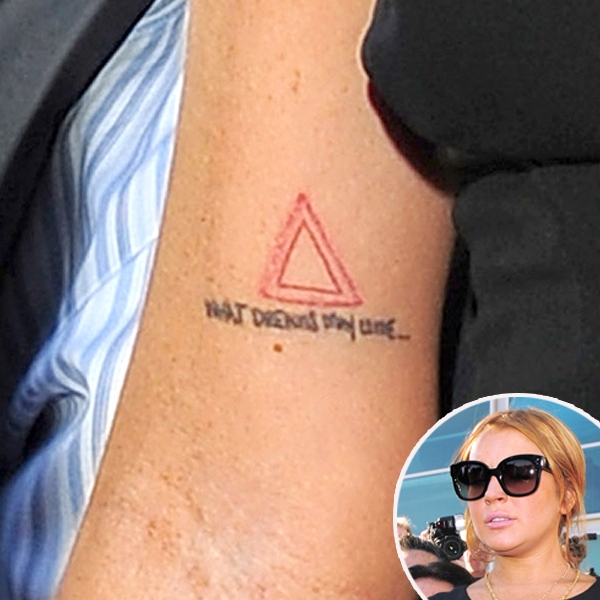
Lindsay Lohan double triangle arm tattoo

The triangle on Lohan’s arm is the clearest starting point. It’s a compact geometric design, easy to recognize even when the rest of her arm is covered. It’s often described as an altered triangle, which fits the specific line work better than calling it a generic outline.

In an interview quoted by the Huffington Post, Lohan said the triangle represented danger and hazards. She also described two spiritual energies held within one another, linking the design to two souls or hearts. That gives the image two sides: a warning on the outside and something more intimate within it. It’s a small design with a personal explanation behind it.

Triangles can suggest balance, change or direction, but Lohan’s own description makes this one more than a decorative shape. She connected risk with closeness. The tattoo also fits her broader style: small marks that can sit under clothing and come into view in a close-up.

Some older galleries show the triangle from different angles, which can make the lines look heavier or lighter. Those appear to be different views of the same piece, not extra tattoos. The design is the altered triangle on her arm.

Small symbols make the collection feel private

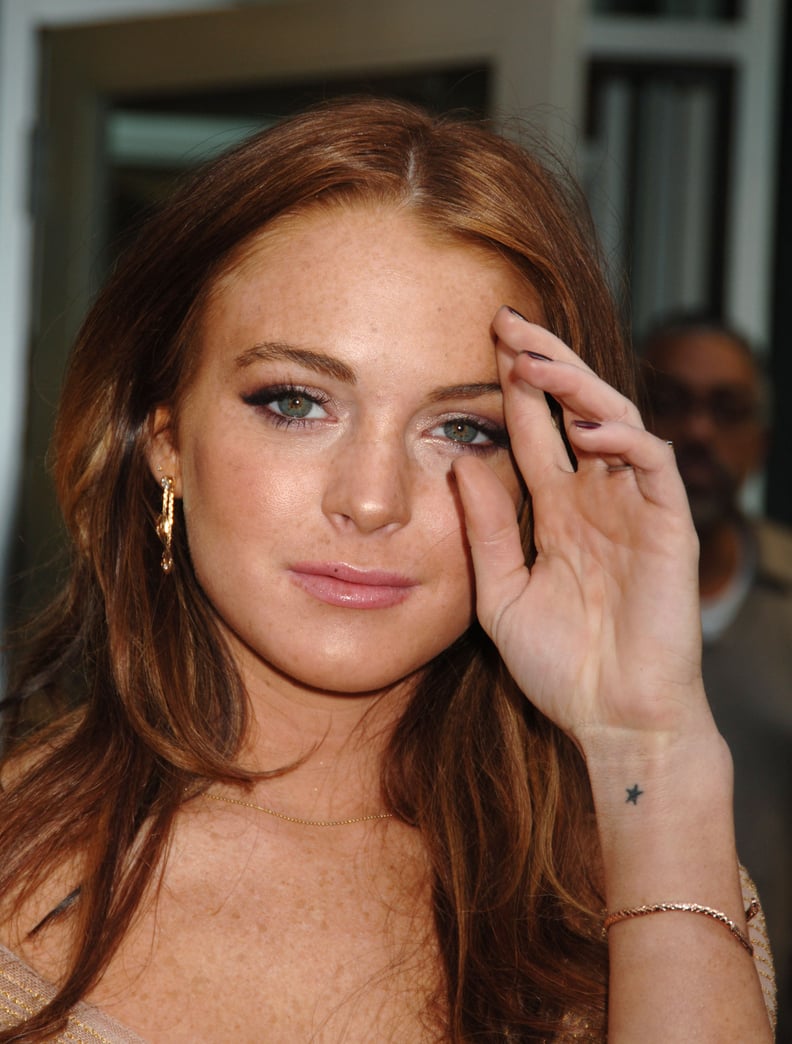
Lindsay Lohan star wrist tattoo

Photos also show smaller geometric and symbolic marks. They aren’t always clear enough to support a detailed inventory, but they share the same compact, understated feel. The tattoos seem meant to be lived with, not announced from across a room.

The triangle helps put the smaller designs in context. Lohan’s collection doesn’t follow one fixed style, such as traditional roses, large lettering or a full blackwork sleeve. It moves between geometry, script and understated personal symbols. They feel more like small notes from different points in her life than a look built for one era.

Some older tattoo guides count every dot, angle or partial mark as a separate tattoo. That can make the list grow quickly, especially when the photo is grainy. It’s more useful to distinguish designs that are clearly visible from details that are still uncertain. The triangle and the hand script discussed below are among the easier pieces to identify.

Photos can also change how a tattoo looks. Flash, studio lighting and warm filters may make the same red or dark line seem bolder in one image and finer in another. That doesn’t necessarily mean it was retouched or redone.

The script tattoo brings music and film into the picture

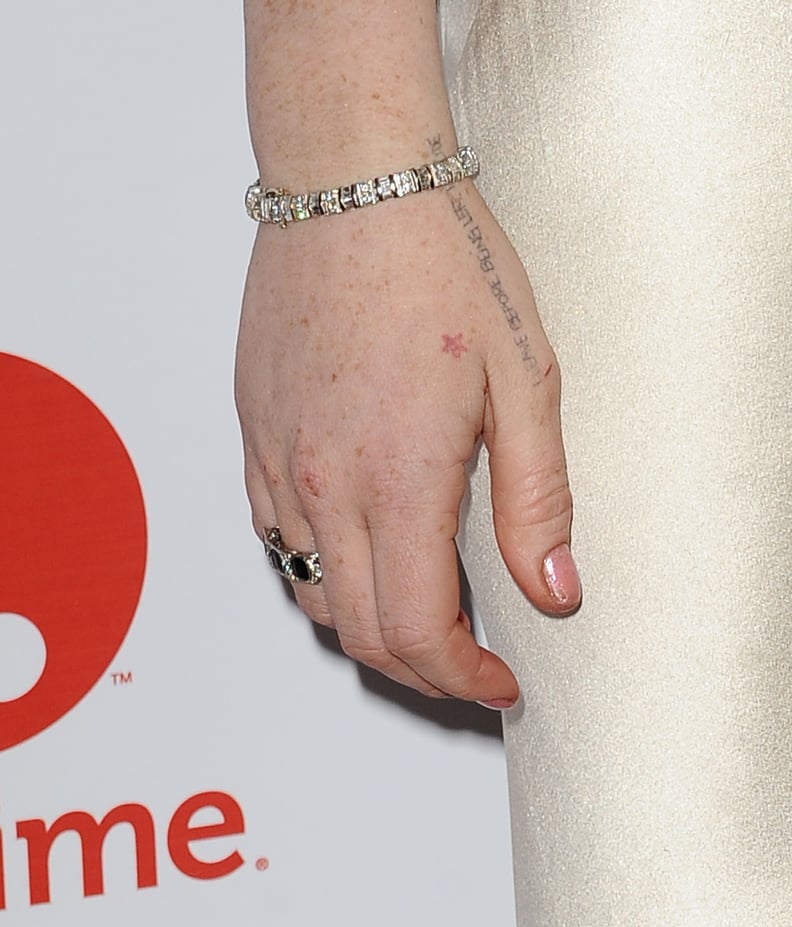
Lindsay Lohan hand script and star tattoo

Lohan has also been photographed with a small script tattoo on her hand. Recent coverage links it to a lyric from a Disney film soundtrack, giving it a different feel from the triangle. The exact lyric isn’t repeated here because the reporting and images don’t make every letter equally clear. The reported connection is still useful: this is a mark associated with a song and a memory, rather than an abstract shape.

Hand tattoos are hard to hide. They can appear when someone holds a microphone, signs something, waves or rests a hand on a table. The placement makes the tattoo part of everyday movement, visible even when Lohan isn’t posing for a tattoo photo.

The script is small and casual rather than dominant. A lyric can become a private soundtrack, even when other people can see the words. Its significance may lie less in the lettering than in the fact that a line from a film or song was worth keeping close.

The letters aren’t equally clear in every photo, partly because hand tattoos can fade and celebrity images are often softened in editing. It’s better to describe the reported connection and hand placement than to fill in a transcription the images don’t support.

Chanel and other reported details need a careful reading

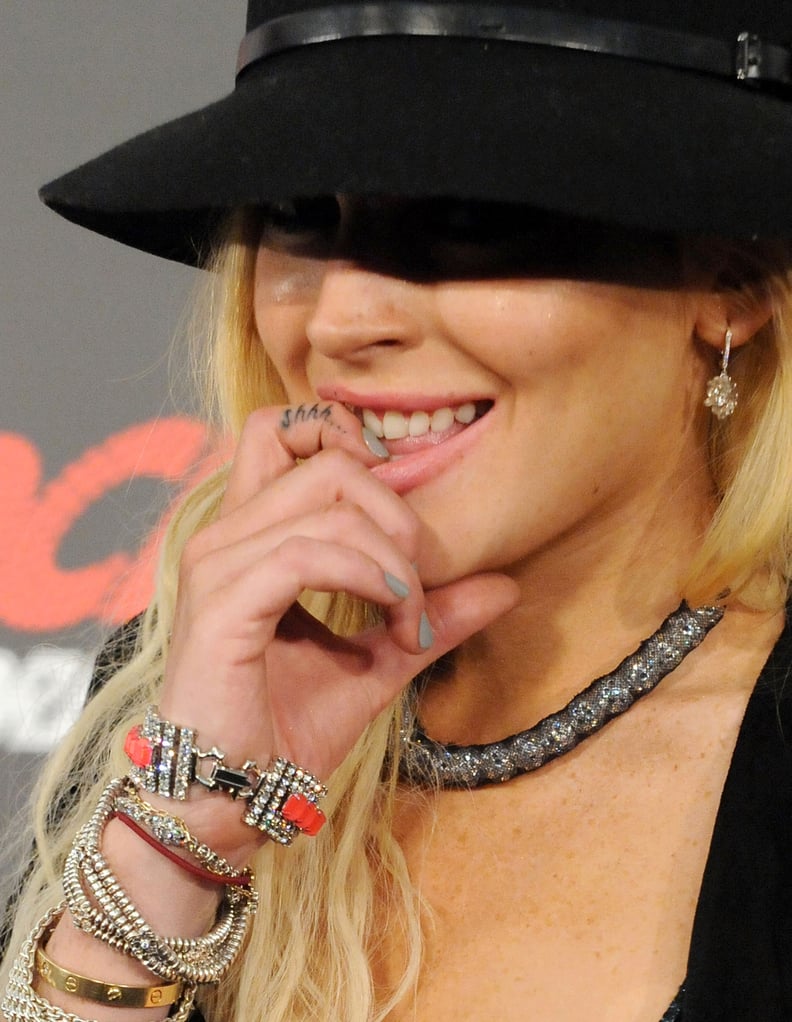
Lindsay Lohan shhh finger tattoo

Older galleries and tattoo roundups mention a Chanel-related mark, but the photos are difficult to compare and its placement isn’t described consistently. It’s safer to call it a reported Chanel tattoo or Chanel-inspired mark and distinguish it from the better-documented triangle.

That uncertainty is part of how celebrity tattoo coverage accumulates. One article labels a small mark by the brand or symbol it resembles, another describes it more generally, and later posts repeat the first account until it sounds settled. Readers should be able to tell which details have clear support and which are plausible identifications.

The same goes for lists promising ten or more “most popular” Lindsay Lohan tattoos. They can be a place to start, but popularity doesn’t prove each entry is a separate design. Cropped or mirrored photos, and repeat images from press coverage, can make one tattoo look like several. A cautious overview includes the triangle, hand script, other small symbols and the Chanel-related mark mentioned in older coverage.

A numbered list may sound more dramatic, but the interest here isn’t the size of the collection. The visible tattoos point to different moods: the triangle’s mix of danger and connection, and a song line she chose to remember.

What Lindsay Lohan’s tattoos say about her style

Lindsay Lohan forearm quote tattoo

The clearest pattern is restraint. Lohan’s tattoos don’t read as one big statement; they look like small choices made at different times. They’re easy to live with, but some have enough meaning to come up again in interviews and photographs.

The triangle brings together danger, hazards, two energies and two hearts. The hand script connects the collection to music and film. The other reported symbols add detail without needing a public explanation. Even the uncertainty around the Chanel mark shows how quickly a guess can turn into accepted fact in celebrity coverage.

The designs don’t seem aimed at making her look tougher or creating one coordinated image. They feel closer to personal reminders than branding: neat, adaptable and easy to keep private when she wants to.

That may be why the triangle keeps drawing attention. It looks simple, but Lohan’s explanation adds more to it. You notice the lines first, then the idea behind them, and the two sit together without competing.

For anyone trying to identify the tattoos, start with the altered triangle on her arm and the script on her hand. Treat the other symbols and the Chanel-related mark with the caution the photos call for. The collection leaves some room for the person behind it.
Lindsay Lohan rib cage lyric tattoo

Watch Lindsay Lohan explain the altered triangle

This tattoo interview gives context for the arm design and what it means to Lohan. It follows the visual overview so her own explanation can add to the details described above.

Vanessa Hudgens keeps her sweetest memories in tiny tattoos

Vanessa Hudgens’s tattoos are small, but they hold a lot of story. Her collection started with a butterfly at the back of her neck and grew to include fine-line lettering, flowers, friendship marks and symbols tied to people and projects she cares about. The pieces don’t look like a random mix; they feel chosen, with some easy to show and others easy to keep private.

Hudgens has talked about some of her tattoos, while others have appeared in photographs and close-up social posts. Together they point to freedom, friendship, personal courage and creative memories.

Tattoo lists don’t always agree on how to count the smallest marks or matching designs. This guide sticks to the pieces that are best documented and labels uncertain details carefully.

The butterfly was her first tattoo

Vanessa Hudgens butterfly tattoo on her neck

Hudgens’s first tattoo is the small butterfly on the back of her neck. She has said it felt personal because Vanessa is associated with the butterfly. The design is more than a pretty piece of nature imagery; it’s a visual connection to her name.

The placement lets her decide when it shows. The butterfly is visible when her hair is up and can disappear beneath her hair or clothing. That suits an actor whose look changes often, as well as a symbol associated with movement and change.

Photographs at premieres and events often catch the tattoo from behind. It can be easy to miss in a regular portrait, then clear when she turns her head. It’s a small signature that appears at just the right angle.

The butterfly is one of the easiest pieces to confirm: photos show the design and placement, and Hudgens has explained its connection to her name.

Cages or Wings turns a film lyric into ink

Vanessa Hudgens tattoo portrait from her tattoo collection

One of Hudgens’s most personal script tattoos reads “Cages or Wings”. The phrase comes from “Louder Than Words,” a song in the film Tick, Tick… Boom!, in which she played Karessa. It connects the tattoo to a creative project rather than a general quote.

The image of a cage suggests fear or restriction; wings bring to mind risk and freedom. Hudgens has described the line as meaningful to her. Placed on her upper arm, it’s more visible than the butterfly.

It also feels like more than a title stamped on skin. The phrase asks a question: are you choosing the cage, or the wings? That tension gives the words their force.

Fine-line script can fade or blur in photographs, so the letters may look different from one image to the next. The phrase, its link to the film and its upper-arm placement are the details most consistently documented.

The sunflower brought a burst of warmth

Vanessa Hudgens sunflower tattoo

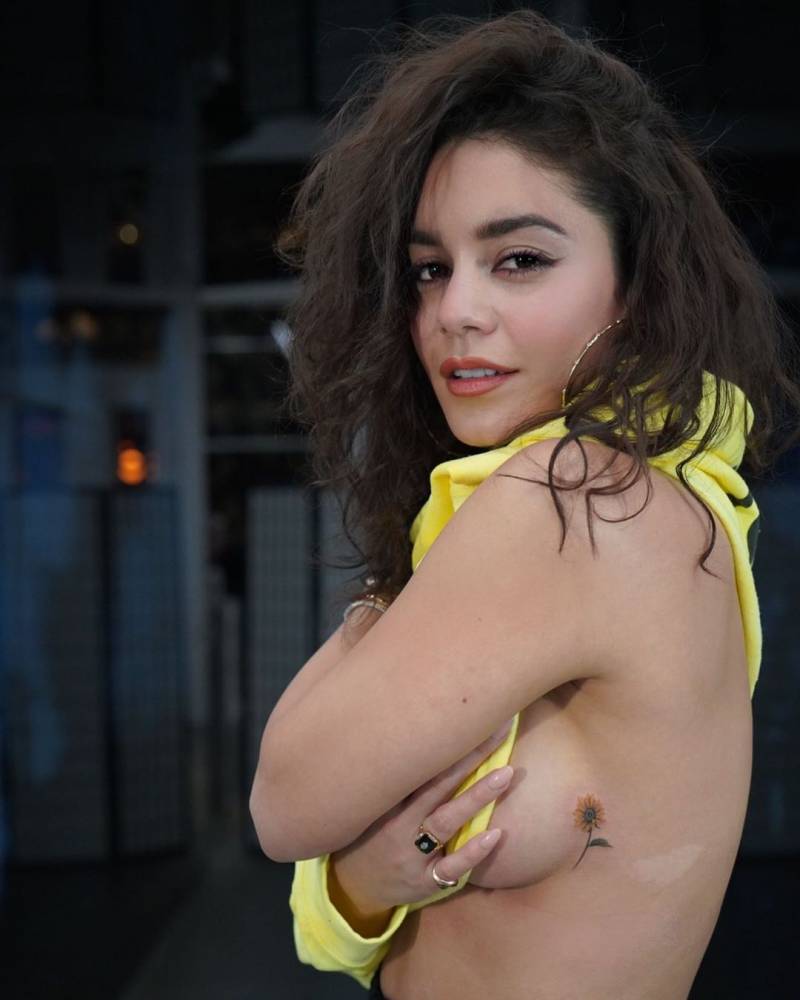
Hudgens also has a sunflower tattoo along her side. A photograph shows its placement, though the coverage most often repeated doesn’t give one definitive meaning from Hudgens herself. A tattoo can matter to its owner without coming with a public explanation.

Sunflowers often suggest brightness, growth or turning toward the light. Those are reasonable interpretations, but they remain interpretations unless Hudgens confirms them. The flower adds a warm, organic detail beside the fine lettering and butterfly.

The side placement keeps it relatively private. It may show in one outfit and remain hidden in another, much like the butterfly appears only when she turns her head.

The sunflower and “Cages or Wings” bring different things to mind: a flower associated with growth and a phrase about making a choice. Together, they give the collection a hopeful tone without making every tattoo say the same thing.

Matching friendship tattoos matter just as much

Vanessa Hudgens finger tattoos

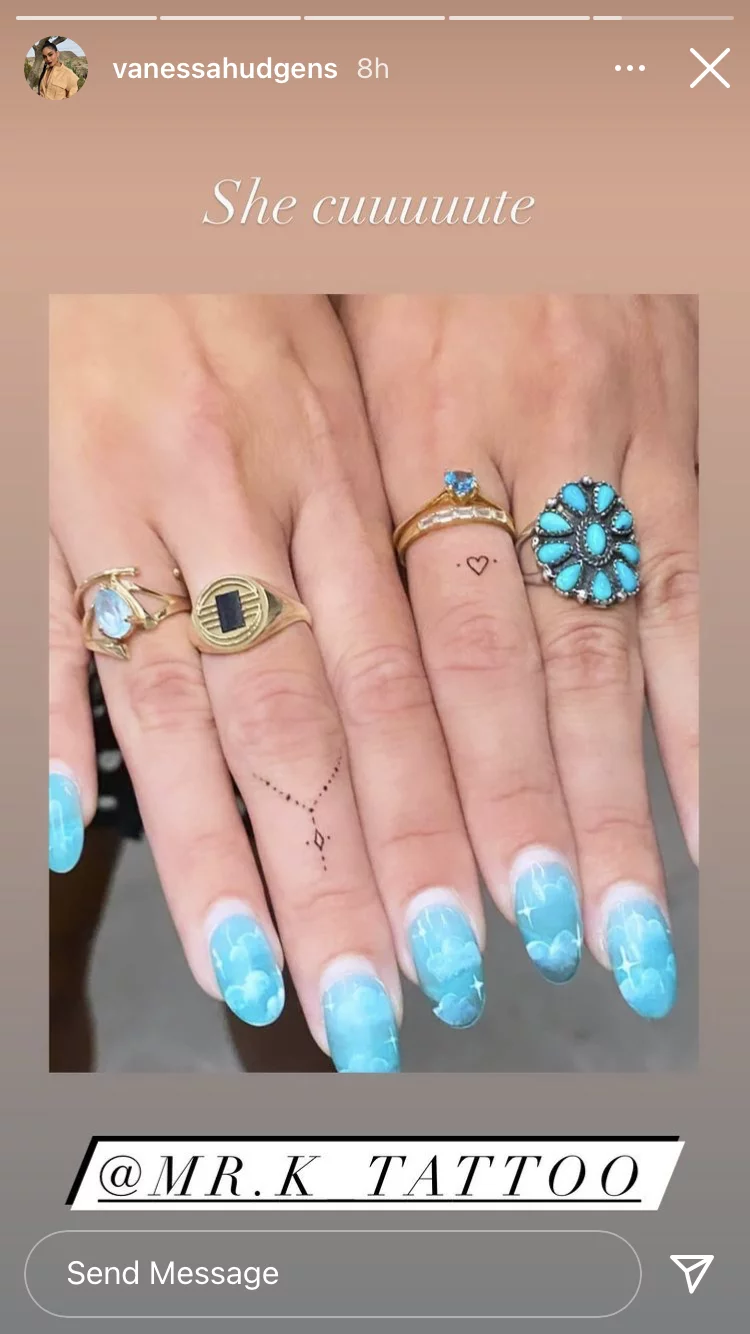
Some of Hudgens’s smaller tattoos are linked to friends and shared experiences. Matching designs may be as simple as a tiny heart or line, but their meaning comes from choosing them together. To other people, the mark may look small; to the friends, it carries the memory around it.

That helps explain why the collection doesn’t need one visual theme. A friendship tattoo can sit beside a film lyric because the connection between the designs is personal, not stylistic.

A matching tattoo can hold a promise without needing a speech. Hudgens has spoken warmly about getting tattoos with friends, and the small marks suit her preference for ink she can carry quietly.

The exact number is hard to pin down because photos don’t always show every matching partner or placement. What is well established is that friendship and shared memories are recurring reasons for her tattoos.

Small new tattoos expanded the collection

Vanessa Hudgens ear tattoo

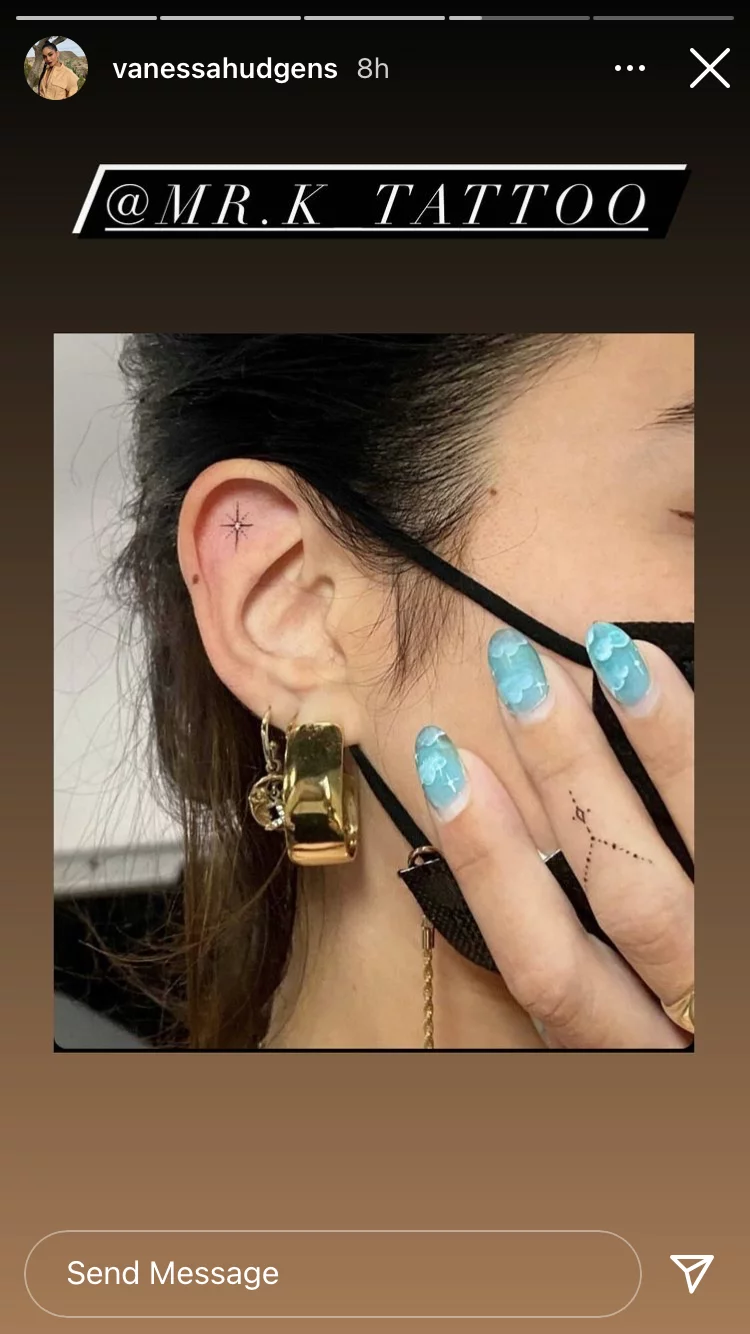
Over the years, Hudgens has added other delicate pieces, including small symbols and fine-line designs seen in social posts and event photos. Some are easy to identify; others appear too briefly or too small to describe with confidence. That’s common with fine-line tattoos.

Their value isn’t in their size. They may remind her of a person, place or creative project. The butterfly connects to her name; “Cages or Wings” to a film and a question about freedom; the sunflower adds a natural image; and the matching designs point to friendship.

A gallery that promises a complete list can make every dot look like a new tattoo. It’s better to compare photos and check whether the same design appears more than once. Two views of one tattoo don’t make two tattoos. This is especially useful with neck and arm pieces that look different under flash photography.

Some of the collection remains private. The tattoos Hudgens has explained tell us a lot; the others can stay unexplained.

Why her tattoos feel so connected to change

Vanessa Hudgens visible tattoo portrait

Hudgens’s tattoos form a loose timeline. The butterfly connects to her name and to transformation. The film lyric recalls a creative chapter and a choice between limits and freedom. The sunflower brings a warm image, while the matching tattoos hold onto friendships.

The designs don’t need to add up to one message. People change, and a tattoo can hold a memory from an earlier version of the same person. A design that felt right at twenty can still matter years later, even if the wearer sees it differently.

There’s a relaxed quality to the collection. Hudgens didn’t build a set of matching symbols from one catalogue; the pieces arrived through life, work and relationships. The ink is delicate, but the reasons behind it aren’t shallow.

Her tattoos look like small doors into memories. The design or lettering is visible, while the whole story still belongs to her.

A careful inventory of Vanessa Hudgens’s ink:

The clearest pieces include the butterfly at the back of her neck, the “Cages or Wings” script inspired by Tick, Tick… Boom!, the sunflower on her side, and several small friendship or matching tattoos. Other fine-line symbols appear in photos, but neither their exact number nor their meaning is always confirmed.

That’s enough to show a pattern: the tattoos connect to identity, creative work and people close to her. They aren’t just decorative additions for a passing trend.

For readers trying to identify them, start with placement: the butterfly behind her neck, the script on her upper arm, the sunflower at her side and smaller friendship designs on her arms and hands. Compare photos carefully, and don’t count a mirrored or cropped image twice.

Hudgens wears her memories lightly, but she does wear them. The tattoos are small enough to feel personal and clear enough to tell a story when she chooses to show them.

The butterfly still works as the starting point. It’s personal without being closed off, and later designs extend its themes of movement, affection and choosing what to carry forward. The collection feels thoughtful because the tattoos belong to Hudgens before they belong to an audience.

Watch Vanessa Hudgens explain her butterfly tattoo

This short interview focuses on the meaning behind her first tattoo and adds context to the butterfly that began the collection.